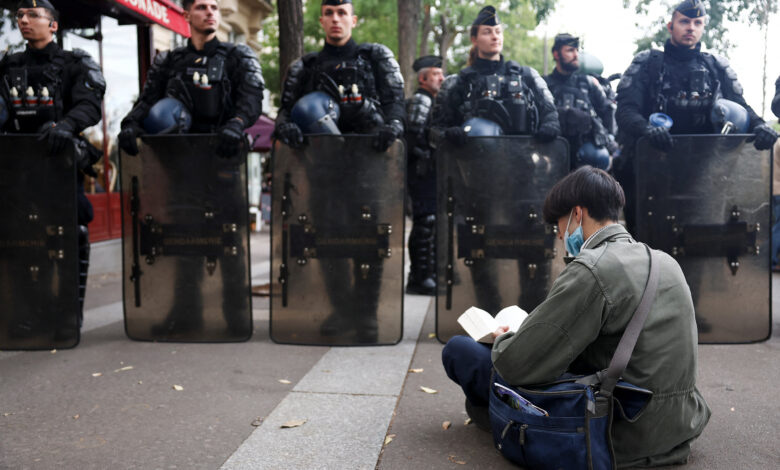
French authorities are significantly ramping up security measures and preparing to restrict weekend demonstrations as the nation braces for a fresh wave of protests following a week of severe civil unrest. President Emmanuel Macron’s administration is seeking to restore order after nationwide demonstrations last weekend degenerated into widespread looting and violence on their fringes.
France’s main student union, UNEF, has called for rallies on Saturday despite government curbs. The union movement originally grew out of high school protests last month targeting teacher shortages and deteriorating school facilities. Meanwhile, the Yellow Vest movement, an anti-establishment force that first emerged in 2018, has filed plans for a march through central Paris.
President Macron was scheduled to meet with student representatives on Friday to discuss their plans, though UNEF maintained its rallies would proceed. In an emailed statement, the union sharply criticized the government approach, stating that Macron is trampling upon the freedom to protest and disregarding republican values. The interior ministry is due to unveil its comprehensive security plans on Friday, and Macron is expected to hold a high-level meeting on defense and security.
The upcoming weekend comes on the heels of the worst violence France has seen in years. Overnight curfews implemented in parts of Paris and other cities have passed without major incident, but tensions remain exceptionally high. Macron blamed what he termed seditious ultra-left groups for the previous weekend’s unrest—allegations that the prominent far-left France Unbowed party has denied. On Thursday, the president announced that illegitimate protests would be banned in the coming days, adding that demonstrations organized by groups like trade unions could proceed but might be diverted along alternative routes.
Labor leaders have pushed back against the stricter controls. Marylise Leon, general secretary of the CFDT, one of the nation’s largest trade unions, argued that the government measures will fail to restore calm and suggested that concrete proposals addressing public anger would be far more effective. Appearing on French broadcaster TF1, Leon said the restrictions are counterproductive given the profound anger and demand to be listened to, asserting that it is not for the president to decide who can legitimately request to protest.
The underlying unrest is driven by public opposition to budget cuts alongside demands for higher wages to offset soaring living costs, high energy prices, and deteriorating public services. The government maintains that it understands these concerns but insists that spending must remain in check to contain rising borrowing costs. The financial strain has also impacted sovereign debt markets, with the risk premium on French government debt over German bonds widening to its highest level in 15 years on Thursday. Credit rating agency Moody’s is expected to announce a ratings action on France late on Friday.
Local authorities have already taken decisive action outside the capital. All protests planned for Saturday in Marseille and Lyon, respectively France’s second- and third-largest cities, have been officially banned. In central France, the city of Orleans is bracing for potential clashes as the far-right National Rally holds a party meeting, with thousands of counter-demonstrators expected to mobilize in opposition.
Despite official curbs and an interior ministry tally of 2,700 arrests since the previous Saturday, commercial and cultural institutions are taking no chances. The Marseille Chamber of Commerce has urged local businesses to shut their doors on Saturday, while organisers of Art Basel Paris announced that the prominent art fair will be shuttered all weekend. Major cultural landmarks, including the Louvre and the Fondation Louis Vuitton, will also remain closed on Saturday as the country awaits the government’s final security deployment.