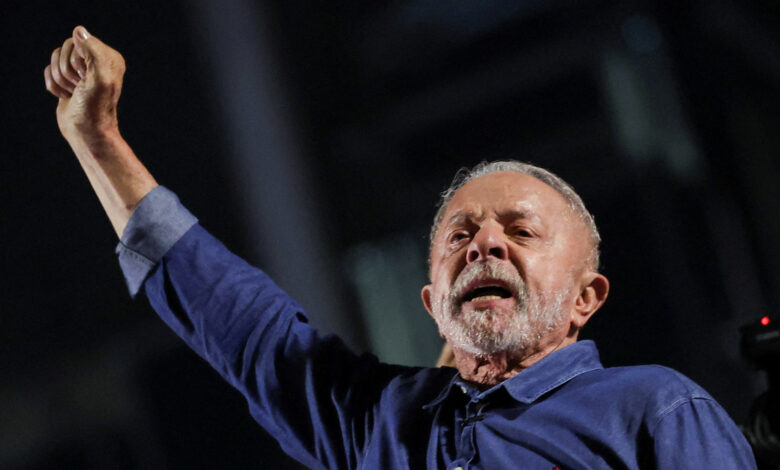
In a victory that cements his legacy as the dominant figure in modern Brazilian politics, President Luiz Inacio Lula da Silva secured a fourth term on Sunday after a narrow runoff victory. The octogenarian leader, who represents the Workers’ Party (PT), managed to overcome a first-round deficit to defeat Senator Flavio Bolsonaro, securing 51.8% of the vote. The win comes just two days before Lula’s 81st birthday, making him the country’s oldest president to take the oath of office.
While the victory is a personal and political triumph for Lula, analysts suggest his final term, which begins on January 5, will be his most difficult yet. The political landscape in Brasilia has shifted dramatically since his first electoral win in 2002, moving toward a right-wing consensus that now controls the legislative branch. The incoming Congress is widely considered the most conservative since Brazil’s transition back to democracy in the 1980s. With Flavio Bolsonaro’s party and its ideological allies holding majorities in both the Senate and the Chamber of Deputies, the executive branch faces an immediate uphill battle to enact its agenda.
International relations and political science experts indicate that Lula may find himself a “lame duck” almost immediately upon inauguration. The deep divisions were highlighted on Monday morning when Flavio Bolsonaro, the son of former President Jair Bolsonaro, had still not formally conceded the election. This refusal to acknowledge the results, combined with a legislature that may not recognize his legitimacy, presents a governing challenge that Lula did not face during his earlier presidencies.
Economic factors are further complicating the administration’s outlook. The Brazilian government is forecasting a modest 2.3% economic growth for next year, a figure that provides little room for error. National public debt has climbed past 82% of the Gross Domestic Product (GDP), its highest level since the peak of the pandemic. High interest rates continue to strain the federal budget, leaving the PT-led government with few options for the large-scale social spending that defined Lula’s previous tenures. Economists point out that the rising mandatory spending and interest costs make it nearly impossible to cut deficits without substantial legislative cooperation, which is currently in short supply.
Lula’s campaign promises included raising the minimum wage above inflation rates and maintaining robust welfare programs, but these goals are in direct conflict with growing pressure to stabilize the nation’s debt. While his aides have suggested a push to reduce tax breaks, lawmakers have historically resisted any measures that would increase the effective tax burden on Brazilian industries. This fiscal friction caused a sharp reaction in the markets on Monday morning, as Brazilian assets fell significantly while investors reassessed the fiscal stability of the country under a renewed Lula administration.
Beyond the budget, the president-elect faces a strategic blockade in the Senate. Unlike previous administrations where the executive could negotiate through broad coalitions, the new Senate is expected to be openly antagonistic. This hostility is likely to impact Lula’s ability to appoint key figures to the Supreme Court and the central bank. Furthermore, allies of the Bolsonaro family in the Senate have already signaled intentions to move for the impeachment of Supreme Court Justice Alexandre de Moraes. This escalation targets a judiciary that has frequently been a check on right-wing legislation and has often aligned with the current administration on issues ranging from internet policy to Indigenous rights.
In the lower house, the administration may have more room to maneuver by offering centrist parties cabinet positions or influence, but the Senate will likely require a painstaking, issue-by-issue negotiation process. Some political scientists warn that if the economic situation deteriorates, the campaign for Lula’s impeachment could begin in earnest, drawing parallels to the 2014-2016 crisis that led to the removal of his ally, Dilma Rousseff. As the country moves toward the January inauguration, the focus shifts from the ballot box to whether Lula can bridge the gap with a legislature designed to oppose him.