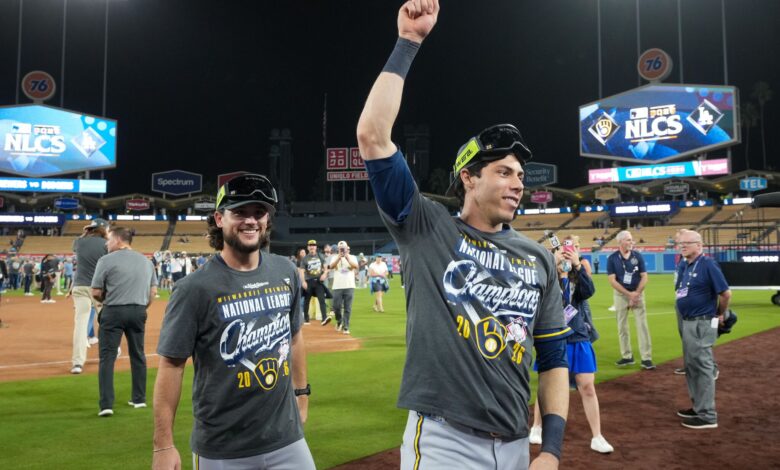
The modern landscape of Major League Baseball is shifting away from luxury-taxed payrolls and toward lean, analytical operations. The Tampa Bay Rays and the Milwaukee Brewers, two franchises operating with significantly smaller budgets, have bucked recent big-box trends by advancing to the World Series. The Brewers ranked 19th in payroll this season, while the Rays ranked 28th, yet both organizations maximized player development and strategic offensive approaches to outpace heavier-spending competition.
Following a season-ending press conference at Globe Life Field in Arlington on September 28, 2026, Texas Rangers President of Baseball Operations Chris Young acknowledged that his club missed the playoffs and needs to become more athletic and dynamic. While acquiring under-the-radar young superstars like the Rays did with third baseman Junior Caminero or drafting generational arms like the Brewers found in right-hander Jacob Misiorowski takes years of infrastructure, adopting on-field tactical approaches offers a more immediate blueprint for a Rangers team seeking a solidified offensive identity.
One primary area for potential growth is base running. The Brewers finished fourth league-wide in base running value, while the Rays tied for ninth; the Rangers, by contrast, ranked below average. Milwaukee attempted 483 extra-base advance attempts, placing fourth-most in baseball, while Tampa Bay made 445 attempts to rank 10th. The Rangers managed only 366 such attempts, ranking 30th. Furthermore, the Brewers led the league in run value via extra bases taken, and finished fourth in going first-to-third on a single, with the Rays ranking seventh. The Rangers finished last in that specific category.
Stolen base figures reflect a similar gap, with the Rays finishing second overall and the Brewers fifth, while the Rangers sat at 26th. Although the Brewers posted the fastest team sprint speed in baseball at 28.1 feet per second and the Rays registered 27.5 feet per second—leaving the Rangers below average at 27.2 feet per second—raw speed is not the sole driver of base-running success. Brewers first baseman Jake Bauers achieved a 54 percent extra-base-taken percentage, well above league average and higher than any Rangers player, despite possessing below-average sprint speed. Similarly, Rays infielder Richie Palacios stole 17 bases despite below-average speed. Across both playoff rosters, eight different players stole at least eight bases, whereas only three Rangers reached that threshold.
Beyond the base paths, both pennant contenders excelled at using the entire field. The Brewers and Rays ranked first and second league-wide in opposite-field batted balls, at 26.5 percent and 25.4 percent, respectively. This approach stretches opposing defenses, forces pitchers to utilize the entire strike zone, and reduces heavy reliance on pull-side power and slugging, which can lead to offensive blackouts. Despite below-average home run totals and hard-hit percentages, Milwaukee and Rays ranked fourth and seventh in on-base plus slugging percentage. The Rangers generated more home runs and higher exit velocities than both finalists but scored significantly fewer runs, underscoring the value of a diversified offensive attack.
Manager Skip Schumaker previously implemented a similar philosophy in 2023 with the Miami Marlins, who led baseball with a 27.1 percent opposite-field batted-ball rate and reached the postseason. While the Rangers prioritized the middle of the field at an above-average rate, situational execution differed. The Rangers became pull-heavy with runners in scoring position rather than maintaining their all-fields approach, while the Brewers stuck to their balanced strategy in all scenarios, finishing as baseball’s best offense with runners in scoring position while the Rangers remained league average.
Small-ball execution also set the finalists apart. The Rays led the majors with 45 sacrifice hits and 49 bunt hits, while the Brewers placed in the top five in both categories. The Rangers actually finished fourth overall with 39 sacrifice hits, proving they can manufacture runs without relying solely on slugging when utilizing the strategy more vigorously. While elite speed aids these tactics—such as when Rays outfielder Chandler Simpson and Brewers infielder David Hamilton utilized 95th percentile speed to lead their teams in bunt hits—elite small ball is not exclusively reserved for burners. Rays infielder Taylor Walls and outfielder Cedric Mullins combined for 41 bunt hits and sacrifices despite posting only above-average sprint speeds.
For the Rangers, whose current roster features only a few players with comparable quickness—such as outfielder Evan Carter, infielder Cam Cauley, and utility player Ezequiel Duran—cultivating a faster, more athletic roster remains a stated priority heading into future roster construction.