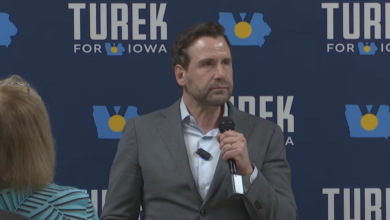
An Iowa mother and city council member who featured in a recent political advertisement targeting state legislative voting records has spoken out after her past struggles with addiction were publicized by a rival campaign.
Shellie Flockhart appeared in a political ad to challenge claims made by Iowa Democratic candidate Sarah Trone Garriott regarding policies on women’s sports and locker rooms. Flockhart stated in her account that Trone Garriott had voted twice against legislation aimed at restricting participation in female sports categories, prompting Flockhart to publicly question the incumbent’s legislative record.
According to Flockhart, the response from Trone Garriott’s campaign and a national media reporter bypassed the policy debate entirely and instead brought to light a nearly decade-old charge of driving while intoxicated involving her children. Flockhart acknowledged the past offense, describing it as a serious mistake for which she took full responsibility, noting that she entered recovery and has maintained continuous sobriety since.
Flockhart, who serves on a local city council in Iowa, stated that she has spoken openly about her recovery for years. She asserted that the campaign’s decision to publicize her past was a deliberate attempt to deflect attention from Trone Garriott’s voting record and silence her opposition.
Initially, Flockhart considered withdrawing from the public eye, but ultimately decided to continue speaking out, arguing that backing down would send a discouraging message to others dealing with addiction and allow her opponent’s legislative record to go unexamined.
During the controversy, Iowa Representative Zach Nunn reached out to offer support, calling twice and releasing a public video discussing recovery resources while managing his own competitive campaign. Flockhart contrasted this response with her opponent’s approach, criticizing the campaign for utilizing a mother’s past struggles as a political distraction rather than addressing substantive policy questions.