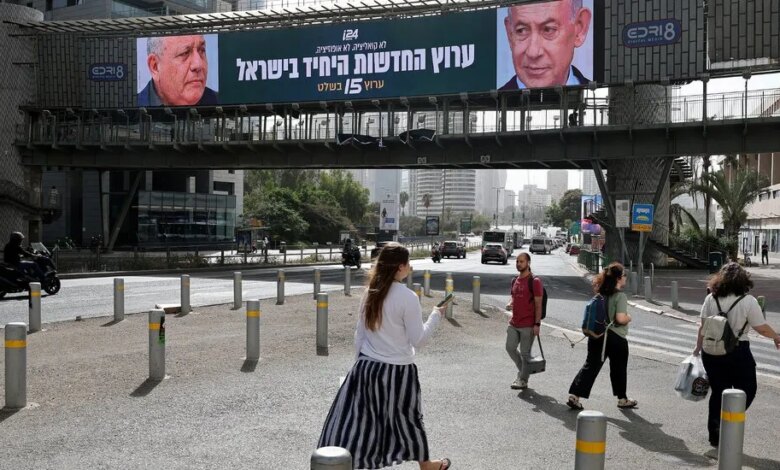
Israelis are casting ballots this Tuesday in what is being characterized as one of the most consequential elections in the nation’s history. The vote comes after a period of intense political volatility, and while the streets are active, the proportional parliamentary system ensures that a clear winner is unlikely to emerge the moment the polls close. In Israel, voters do not select a prime minister directly; instead, they choose a party or slate, setting off a complex and often protracted process of coalition building that determines who will lead the next government.
The scale of participation is the first major metric being monitored. This year, there are 7.3 million eligible voters, an increase of approximately 540,000 people compared to the 2022 general election. Recent polling suggests that turnout could match or exceed the 2022 figures, where slightly more than 70 percent of the electorate—roughly 4.8 million people—participated. That high level of engagement followed a period of four rapid-fire elections between 2019 and 2021, where turnout consistently hovered near the 70 percent mark.
A critical hurdle for every competing faction is the 3.25 percent threshold. Under Israeli law, any party that fails to secure at least 3.25 percent of the total vote is barred from the Knesset, and all ballots cast for that party are effectively lost. Because no single party is expected to capture a 61-seat majority on its own, the survival of these smaller lists is vital for building a governing bloc. This reality has led to aggressive campaigns to discourage “wasted votes” on parties that appear unlikely to clear the bar.
One specific target of this strategy is the People of Israel party, led by Ofer Winter, a former brigadier general known for his hawkish views on national security. Winter has faced significant pressure from Prime Minister Benjamin Netanyahu’s Likud party and the far-right Religious Zionism party led by Finance Minister Bezalel Smotrich. Polls indicate that Winter’s support is largely drawn from voters who typically favor Likud, leading his rivals to claim that a vote for his party could inadvertently aid his challengers if the party fails to reach the threshold.
The integrity of the vote has also become a point of contention, though election officials state there is no evidence of widespread fraud or counting irregularities. Concerns have instead shifted toward disinformation campaigns and efforts to influence who physically makes it to the polls. Unlike many other democracies, Israel mostly prohibits absentee voting, which creates a unique dynamic where tens of thousands of citizens living abroad are expected to fly home specifically to vote.
This influx of overseas voters became a legal flashpoint when Likud filed a lawsuit against a nonpartisan initiative designed to fly Israelis back to the country. Likud argued the program provided benefits that could illegally sway voters, but the party withdrew the suit this month after organizers agreed to limit flights and cease defraying costs for travelers.
Simultaneously, a battle over representation in the Arab sector continues to unfold. Arab citizens make up 20 percent of the population, and their turnout could prove decisive. In 2022, turnout in several major Arab localities lagged significantly behind national averages. This year, community leaders have launched massive get-out-the-vote efforts while bracing for potential interference.
Likud and the Religious Zionism party announced plans to deploy thousands of “observers” to polling stations in Arab communities, ostensibly to prevent fraud. Critics, however, have denounced the move as a tactic of intimidation intended to suppress the Arab vote. Abed Shahada, who coordinates turnout efforts for Arab local officials, noted that his teams are particularly focused on countering “fake news” or disinformation regarding crime and violence that might discourage people from visiting the polls.
The legal standing of Arab political groups was also tested prior to the vote. Right-wing parties filed motions to bar several candidates and lists from participating, citing their alleged support for armed conflict against Israel. However, the Supreme Court, which holds the final authority on these challenges, rejected those motions this month. This ensures that the Joint List and Raam—the historically Islamist party led by Mansour Abbas—will remain on the ballot. Abbas is running alongside Yoav Segalovitz, a former deputy minister of national security.
As the counting begins, the focus will shift from the raw vote totals to the narrow margins of the 3.25 percent threshold. If several small parties fail to make the cut, it could dramatically reshape the mathematical possibilities for a majority, potentially leading to another period of political deadlock.