A fresh round of legal battles has erupted over the dwindling waters of the Colorado River as lower basin states confront steep federal supply cutbacks and historic lows at major reservoirs. Nevada initiated federal court action in late August to block a U.S. Interior Department allocation plan, and Arizona moved to join the lawsuit last week. Arizona cautioned the court that its interests are unique and cannot be managed by another state, signaling friction not only with federal authorities but also among the regional partners themselves.
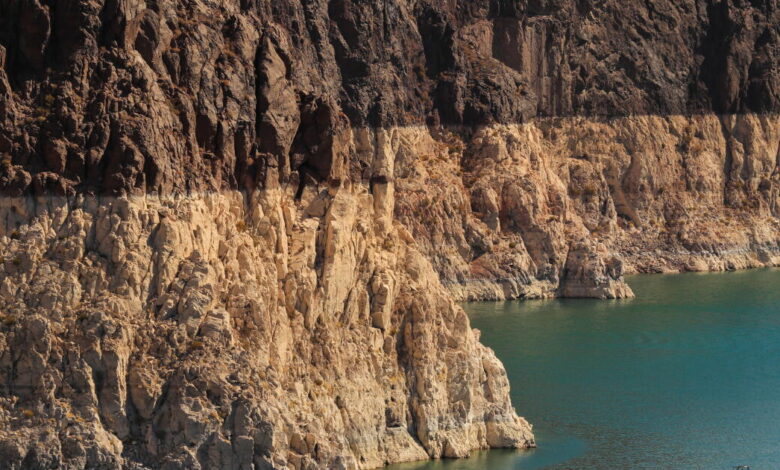
Seven Western states depend on water impounded by Hoover Dam at Lake Mead. Arizona, Nevada, and California face harsh, steep supply reductions through 2028 under the federal scheme, followed by even deeper cuts over the succeeding eight years. While California has not sought to join the current litigation, it remains the largest consumer of Colorado River water and cannot escape the escalating crisis. Lake Mead and Lake Powell have dropped to their lowest levels since initial filling, raising concerns that Hoover and Glen Canyon dams could lose the capacity to provide downstream water and power, or even sustain physical damage.
Under the government’s near-term reductions through 2028, California is mandated to cut its use by about 12%, Arizona by 31%, and Nevada by 28%. Beyond that period, total allotments to the three downstream states could face reductions of up to 40% through 2036, threatening regional economies and communities. The underlying vulnerability stems from the Colorado River Compact of 1922, an interstate treaty negotiated under then-Secretary of Commerce Herbert Hoover that guaranteed the lower three states at least 7.5 million acre-feet annually, measured as a rolling 10-year average.
The apportionment relied on calculations by Arthur Powell Davis, Hoover’s engineering deputy, who estimated the river’s annual flow at 16.4 million acre-feet based on gauge data from 1899 through 1921. That sampling period coincided with one of the wettest intervals in the river’s recorded history. Since the completion of Hoover Dam in 1935, the river’s 10-year flow has reached or exceeded that 16.4 million acre-feet average only four times, and never since 1978. An acre-foot equals 325,851 gallons, which is enough to supply one to three single-family households for a year.
Tensions and legal challenges among the states have a long history. Arizona initially refused to ratify the 1922 compact until 1944. In 1934, Arizona Gov. Benjamin Baker Moeur dispatched the state National Guard to block construction of Parker Dam, an effort that featured an armed forces detachment consisting of a single ferryboat, the Julia B., which ran aground on a sandbar before Interior Secretary Harold Ickes imposed a truce. In 1952, Arizona launched a protracted Supreme Court challenge against California. The resulting 1963 decision trimmed California’s apportionment by 20% but established that sole authority over apportionment rested with the federal secretary of the Interior, a ruling that drew a sharp dissent from Justice William O. Douglas.
Over the decades, stakes have risen dramatically alongside regional growth. California’s population grew from roughly 6.2 million in 1935 to about 34.5 million at the close of the 20th century. Phoenix experienced a surge from approximately 215,000 residents in 1940 to 5.2 million today, bolstered by the 1993 completion of the 336-mile Central Arizona Project. Nevada received a modest apportionment of 300,000 acre-feet a year in 1928, when Las Vegas was a small outpost, but now anchors a metropolis of 2.3 million residents.
In the current litigation, neither Arizona nor Nevada has proposed an alternative apportionment scheme; rather, their legal arguments contend that the Interior Department failed to follow the law in imposing its measures. Nevada’s filings warn that the federal proposal threatens community well-being, cultural identity, and recreational access, though observers note that legal challenges do not generate missing water supply. Experts and regional officials face projections that 40 million beneficiaries across the Colorado River basin will need to adapt through conservation measures, including fallowing agricultural fields, removing residential turf, and reforming industrial use as global warming drives deeper droughts.