Israeli political parties have finalized their candidate slates for the October 27 general election, setting the stage for a vote that many observers consider the most consequential in the nation’s history. The campaign is currently defined by a high-stakes struggle between Prime Minister Benjamin Netanyahu and Gadi Eisenkot, a former military chief of staff who leads the most prominent opposition party. With neither political bloc currently holding a clear majority in polling, the race remains highly unpredictable, carrying significant weight for regional security, international diplomacy, and the millions of people living in the region.
Benjamin Netanyahu, the 77-year-old leader of the Likud party, is the longest-serving prime minister in Israeli history. For many voters, this election has become a referendum on his leadership, particularly regarding his promise to achieve total victory in ongoing conflicts. Netanyahu has faced sustained criticism for failing to accept responsibility for the security lapses that preceded the October 7, 2023, attacks. His administration has also been strained by domestic controversies, including a contentious push for judicial reforms that would limit the powers of the Supreme Court and a military draft exemption for ultra-Orthodox Jews that remains deeply unpopular among secular citizens. Despite these challenges and ongoing corruption charges, Netanyahu has vowed to continue his security policies and remains firm in his opposition to a Palestinian state.
Challenging Netanyahu is 66-year-old Gadi Eisenkot, whose new centrist and center-right party, Yashar!, is targeting voters concerned about the current government’s direction. Eisenkot previously served in Netanyahu’s war cabinet during the Gaza conflict, a period during which he suffered profound personal losses, including the deaths of his son and two nephews. His platform focuses heavily on accountability, specifically calling for a formal inquiry into the failures of October 7. While he has rejected the immediate possibility of Palestinian statehood, he has advocated for a more restrained approach to settlement expansion in the West Bank and has pledged to address incidents of settler violence.
The political landscape is divided among approximately a dozen parties expected to clear the electoral threshold for the 120-seat Knesset. Because no single party is likely to win an outright majority, the real power will be determined in the post-election period, when leaders attempt to assemble a governing coalition of at least 61 lawmakers. This has led to a series of strategic alliances across the political spectrum.
In the opposition bloc, Naftali Bennett and Yair Lapid have joined forces under the B’Yachad partnership. Bennett, 54, and Lapid, 62, previously united in 2021 to lead a short-lived government that temporarily unseated Netanyahu. Their current platform emphasizes national unity, an expanded military draft for the ultra-Orthodox, and a thorough investigation into national security failures. They are joined by Avigdor Liberman, the 68-year-old leader of Yisrael Beiteinu, a secular right-wing party that represents many immigrants from the former Soviet Union. Liberman remains a staunch advocate for secular Jewish character and has long opposed the influence of ultra-Orthodox rabbis in state affairs.
On the political left, the movement has undergone a consolidation. Yair Golan, a 64-year-old former general, formed The Democrats in 2024 by merging the Labor and Meretz parties. This new entity remains one of the few remaining advocates for a two-state solution and focuses on preserving Israel as a liberal, secular state. Their influence represents a traditional ideological wing that has seen its prominence fluctuate in recent years amid a general rightward shift in the Israeli electorate.
Netanyahu’s current governing partners include several far-right and ultranationalist factions that have gained traction. Itamar Ben-Gvir, the 50-year-old leader of Otzma Yehudit and current national security minister, has built support by advocating for the voluntary emigration of Palestinians from Gaza. Similarly, 46-year-old Finance Minister Bezalel Smotrich of the Religious Zionism party has focused on the de facto annexation of the West Bank through expanded settlements and infrastructure. A new entry to the right-wing field is Amcha Yisrael, led by former brigadier general Ofer Winter, who supports Netanyahu’s security stance but breaks with him on the issue of military draft exemptions for religious communities.
The ultra-Orthodox parties, Shas and United Torah Judaism (UTJ), remain critical but increasingly complicated allies for the Prime Minister. Shas, led by the veteran political figure Aryeh Deri, 67, draws support from both religious and traditional Jews with roots in the Middle East and North Africa. UTJ, led by Yaakov Asher, 61, focuses on protecting the haredi way of life through state subsidies. However, the partnership between these groups and Netanyahu has become strained as the debate over the military draft reaches a boiling point in the middle of active military operations.
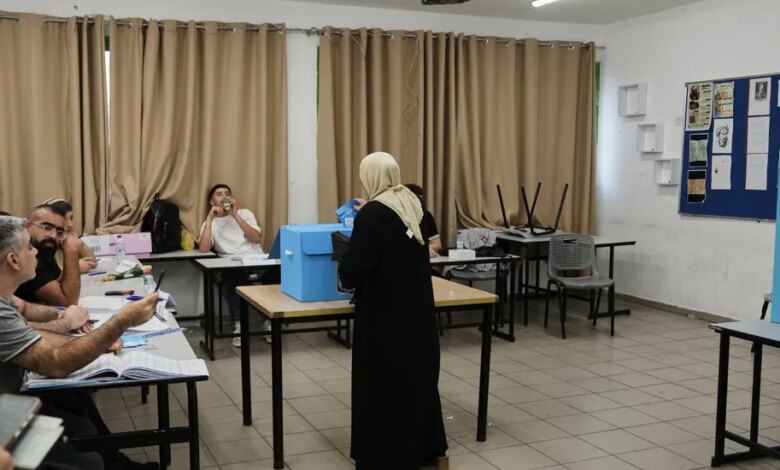
Finally, the role of Arab citizens in the electoral process could prove decisive. Mansour Abbas, the 52-year-old leader of the Islamist Raam party, has pursued a pragmatic path of coexistence and recently recruited a former senior police commander as a high-ranking candidate. Meanwhile, the Joint List, led by Yousef Jabareen, 54, continues to represent an alliance of Palestinian nationalist and communist ideologies aimed at maximizing Arab voter turnout. Should the Jewish opposition parties choose to collaborate with these factions, the Arab vote could be the factor that ultimately determines whether Netanyahu can maintain his hold on power.