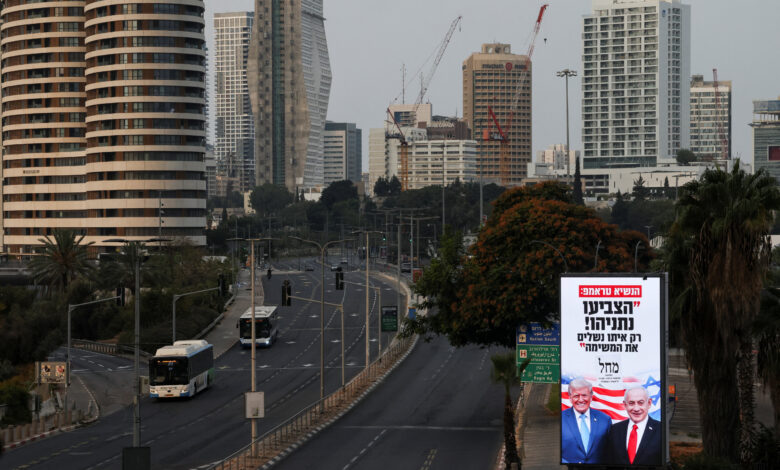
Israel’s recent national election, yielding no decisive winner, has introduced prolonged uncertainty for Washington as President Donald Trump navigates intensifying regional conflicts involving Iran and Gaza. Prime Minister Benjamin Netanyahu’s right-wing bloc secured the most seats in parliament on Tuesday but lost its overall majority, defying Trump’s pre-election endorsement of the incumbent against a rival alliance led by hawkish former military chief Gadi Eisenkot.
While Netanyahu remains in power in a caretaker capacity, neither political bloc possesses an outright path to form a new government following the country’s first election since the October 7, 2023, Hamas-led attacks and the subsequent wars in Gaza and Lebanon. The political stalemate sets the stage for protracted coalition negotiations or potentially another election, complicating diplomatic coordination between the United States and its closest Middle East ally.
The electoral outcome carries significant implications for bilateral relations, which have centered on joint efforts against Iran, stalled Gaza peace initiatives, and growing domestic political pressures in Washington. The timing coincides with a sensitive juncture as Trump and Netanyahu weigh potential further military actions against Iran. Aaron David Miller, a former Middle East adviser across Democratic and Republican administrations, noted that Israeli politics remain complex and that securing immediate clarity from a U.S. perspective is difficult.
Netanyahu, the longest-serving Israeli prime minister and a political survivor with a decades-long relationship with Trump, outperformed pre-election polls. Trump acknowledged this performance, stating that his backing had aided the Israeli leader and adding that he had not yet considered whether to involve himself in efforts to form a Netanyahu-led unity government. Conversely, Eisenkot campaigned as a security-minded centrist and political outsider—having lost a son and two nephews in the Gaza war—and while his governing prospects have dimmed, they remain active.
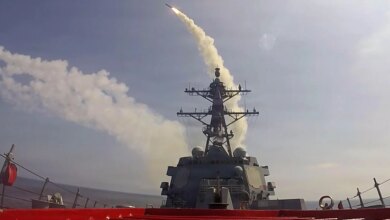
U.S. engagement with Israel centers heavily on the ongoing conflict with Iran, an eight-month-old standoff that has disrupted global energy markets, driven up American gasoline supplies costs, and weighed on presidential approval ratings ahead of the November 3 midterm elections. Trump previously stated an intention for Netanyahu to remain in office to help conclude operations against Iran, while critics suggest the caretaker leader might utilize military escalation to solidify his domestic standing. Jonathan Panikoff, a former deputy U.S. national intelligence officer on the Middle East now at the Atlantic Council, observed that any future Israeli administration would likely align closely with Washington should Trump decide to escalate the regional stalemate.
Despite potential leadership shifts, policy toward the Palestinians is projected to remain largely unchanged. This continuation threatens to maintain the diplomatic impasse between Israel and Hamas, complicating the implementation of Washington’s Gaza peace framework following extensive military destruction in the enclave. Administration officials have privately voiced frustration over Netanyahu’s insistence that Hamas must first disarm.
While Eisenkot shares the prevailing hawkish consensus on destroying Hamas’s military wing and opposing Palestinian statehood, he has pledged to curb violence by Israeli settlers against Palestinians in the occupied West Bank—a flashpoint that has drawn scrutiny from U.S. officials. Netanyahu’s current government has faced accusations of tolerating such settler actions.
Beyond immediate security concerns, Trump faces domestic political vulnerabilities, with opinion polls suggesting Democrats could capture one or both chambers of Congress in the midterms. Such a shift could increase legislative pressure to restrict billions of dollars in military aid and weapons supplies amid declining public support for Israel’s military conduct. Furthermore, elements within Trump’s base have criticized foreign military entanglements, expressing concern that Israel’s actions could pull the U.S. deeper into regional conflicts.