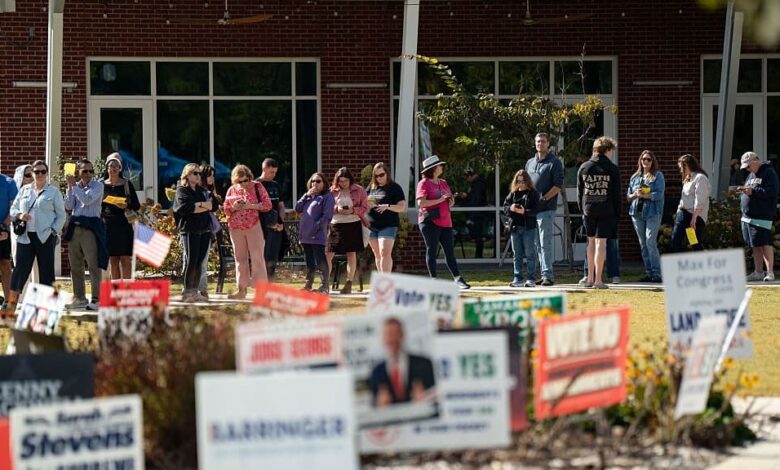
As the midterm elections approach, early voting data from across the United States is highlighting a stark contrast in how different political factions are choosing to participate. In the 27 states that utilize a formal party registration system, current figures show that registered Democrats are casting ballots at a higher rate than their Republican counterparts. However, political scientists and election analysts caution that these early numbers are not necessarily a crystal ball for the final outcome, as tens of millions of Americans are still expected to cast their ballots on the final day of the race.
The primary limitation of current early voting data is that it tracks only party registration, not the specific candidates selected by voters. While a voter might be registered with one party, their actual ballot choice remains private and can diverge from party lines. Furthermore, this specific data is only available for roughly half of the country, leaving a significant portion of the electorate’s early behavior unrecorded in these specific metrics.
Michael McDonald, a prominent election expert, suggests that the current Democratic edge is a predictable part of modern voting patterns. McDonald noted that while Democrats often build up an early lead through mail-in and early in-person options, Election Day has historically been dominated by Republican voters. This assessment is backed by data from recent election cycles, which showed that approximately 40% of registered Republicans preferred to cast their ballots in person on Election Day, compared to just 28% of registered Democrats.
This “red shift” on Election Day has become a consistent feature of American politics, meaning the early advantage established by Democrats often faces a significant late-stage challenge as the polls close. Analysts suggest that Republicans are widely anticipated to make up substantial ground during the final hours of the contest, mirroring trends seen in previous national elections.
Despite the expected Republican surge on the final day, recent polling indicates that Democratic engagement and enthusiasm remain high in the lead-up to the vote. Among likely voters, 52% have expressed support for the Democratic candidate in their respective House districts, while 44% say they would back the Republican candidate. A particularly notable data point involves independent likely voters, who currently favor Democratic candidates by a 13-point margin.
While the early turnout figures suggest a high level of engagement from the Democratic base, the ultimate balance of power will depend on whether the Republican party can successfully bridge the gap through its traditional Election Day turnout. With a high volume of voters yet to participate, the final composition of the electorate remains in flux until the last polling stations close.