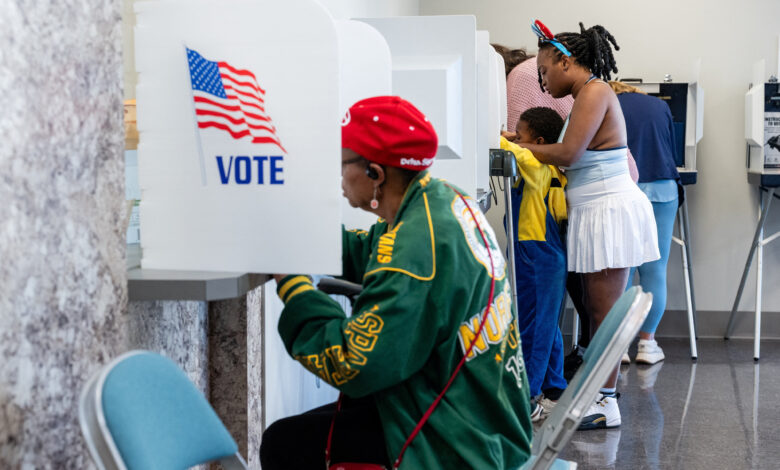
As voters cast ballots across the United States in one of the country’s most fiercely contested midterm election cycles in recent years, newsrooms are preparing to project winners long before every vote is officially tallied. Television networks, digital outlets, and wire services rely on established statistical methodologies and extensive ground operations to call races on election night.
Most broadcast networks and digital platforms depend on two primary providers for raw vote counts: the Associated Press or election-data firm Decision Desk HQ. While some outlets rely solely on the AP for race calls, organizations such as and CBS News make their own independent projections using the AP vote count alongside exit polls, early-vote totals, and proprietary statistical modeling. Other organizations take different approaches; does not make its own race calls and uses third-party sources, while cites race calls from other organizations. The Washington Post did not respond to requests for comment on its race-calling procedures.
The process begins as soon as polls close, starting with Indiana and Kentucky at 6 p.m. ET, followed shortly by Georgia, South Carolina, Vermont, and Virginia. In contests where heavy early voting has already occurred, instantaneous calls are sometimes possible.
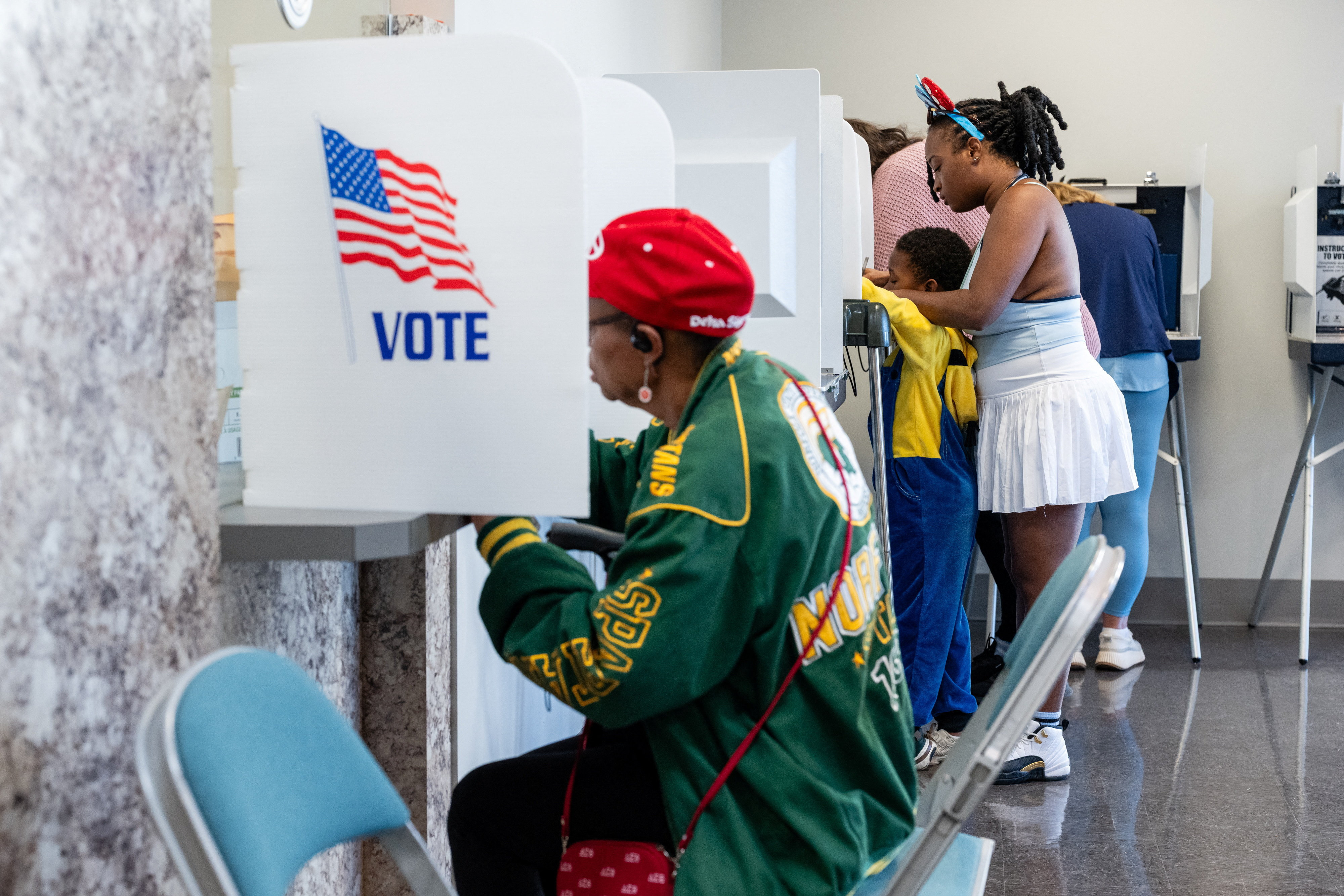
Public skepticism poses a challenge for news organizations covering elections. An October poll conducted for the Medill Local News Initiative and the Alliance for Trust in Media revealed that while more than 60% of Americans hold some confidence in news organizations to report accurate results, only 32% report high confidence, with Democratic voters showing more trust than Republicans.
To manage projections, organizations combine raw data with rigorous analysis. The AP, a nonprofit newsroom supported by member newspapers, has tracked every US election since 1848. For the 2026 midterms, the AP deployed more than 4,000 reporters to county election offices and local polling locations to feed data directly to major television networks, including ABC News, CBS News, Fox, CNN, and NBC News. These networks, alongside CNN and MSNBC, also utilize research firm SSRS, which acquired exit-polling company Edison Research in 2025. The AP estimates uncounted ballots using historical voting patterns and early-vote data, declaring a winner only when the trailing candidate mathematically cannot catch up.
Meanwhile, Decision Desk HQ gathers vote totals directly from official state sources, such as secretaries of state or state election departments, using automated software alongside reporters on the ground. DDHQ provides data to clients including NewsNation, The Hill, Newsmax, and Elon Musk’s social network X. Approximately 80% of DDHQ’s votes are pulled directly from official websites or monitored manually, with the remainder gathered by field reporters. The firm calculates turnout estimates to determine remaining uncounted votes, and final projections require unanimous team agreement and sign-off from head of data science Scott Tranter.
Although retractions are rare, major providers have occasionally withdrawn calls following shifts in late-counted votes. DDHQ withdrew a projection in the 2025 Seattle mayor’s race and retracted a primary call earlier this year in New Jersey’s 11th Congressional District. Similarly, the AP retracted a call in California’s 21st Congressional District in 2018 after trailing candidate T.J. Cox took the lead.