Krishnamoorthi Calls for Congressional Policing of Big Tech Following Violent Threats and Radicalization

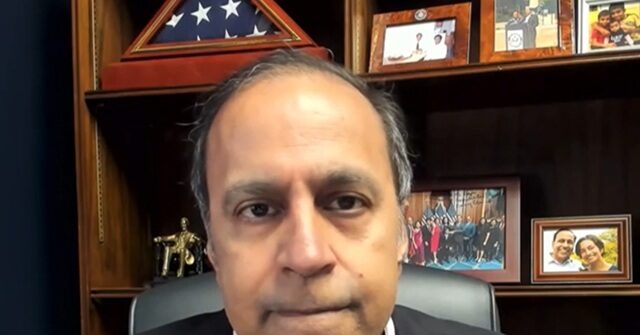
Representative Raja Krishnamoorthi (D-IL) issued a sharp warning Thursday regarding the direct link between online hate and real-world violence, arguing that the failure of social media platforms to self-regulate has created a vacuum that Congress must now fill. Speaking in the wake of a thwarted attack on a Hindu temple and high-profile threats against several members of the House of Representatives, Krishnamoorthi positioned the radicalization of young people as a direct consequence of unmonitored digital content.
The Illinois Democrat’s comments followed reports of targeted threats against Representative Keith Self (R-TX) and Representative Jared Moskowitz (D-FL). According to Krishnamoorthi, these incidents are not isolated but are part of a broader cycle where political rhetoric and digital memes serve as catalysts for violence. He emphasized that the “self-radicalization” occurring on social media platforms often targets individuals based on religious or ethnic identities, including Jews, Hindus, Muslims, Sikhs, and Christians.
“Big Tech is not policing social media,” Krishnamoorthi said during a broadcast appearance on Thursday. “That means that Congress has to police Big Tech. This hate has consequences, and that is violence right now.”
The core of the lawmaker’s argument rested on the belief that hate is a learned behavior facilitated by modern technology. He remarked that while children are not born with innate prejudices, they are increasingly exposed to harmful tropes and demeaning rhetoric via digital channels. This exposure, he argued, leads to the radicalization of younger generations who are more susceptible to the algorithmic amplification of hate speech.
Krishnamoorthi called for a bipartisan commitment to de-escalating political language. He urged members of both parties to stop using social media to attack others through tropes or memes, warning that such actions have tangible consequences for public safety. He stressed that everyone needs to denounce political violence and avoid using rhetoric that would demean or target people based on their faith.
“Our young people, they’re not born to hate—babies don’t hate,” Krishnamoorthi said. “They are taught to hate. They get self-radicalized over time. Social media contributes to that.”
The representative’s call for Congressional “policing” of the tech industry marks a significant stance in the ongoing debate over the responsibility of platforms for the content they host. By linking recent security incidents—specifically the plot against a Hindu house of worship and the threats to his colleagues in the House—to the lack of digital oversight, Krishnamoorthi is signaling a push for more aggressive federal intervention in how social media companies manage hate speech and radicalizing content.