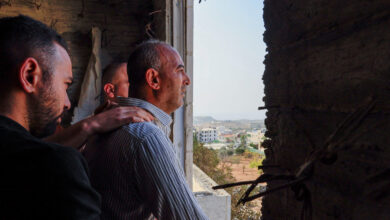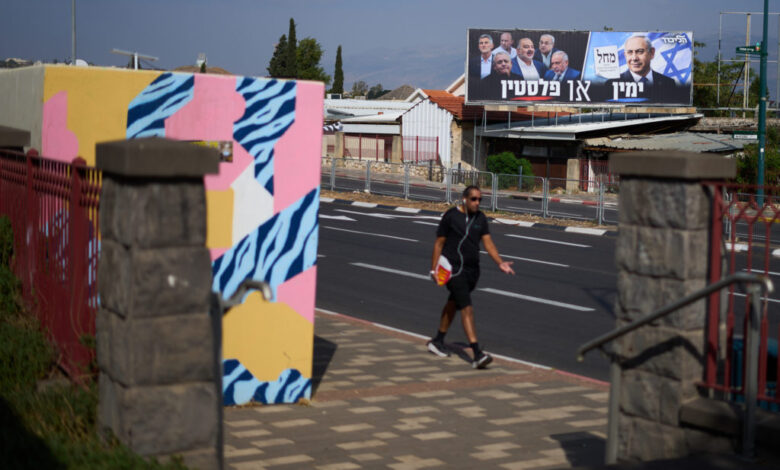
Kiryat Shmona has long stood as a bastion of support for Prime Minister Benjamin Netanyahu’s Likud party, but that political loyalty is showing signs of fraying as voters prepare for Tuesday’s election. Once a bustling commercial center, Israel’s northernmost city was temporarily evacuated three years ago after enduring heavy rocket fire from Lebanon. Even though direct attacks have mostly subsided, the town still feels half-empty and is reeling from the prolonged conflict.
While the municipality remains staunchly conservative, rumblings of displeasure are growing over Netanyahu’s handling of the war against Hezbollah. Vowing to halt the militant group’s attacks, Netanyahu led an extensive bombing campaign in Lebanon and a twofold military invasion starting in 2023. The conflict resulted in more than 4,000 deaths in Lebanon, the displacement of an estimated 1 million people, and an Israeli troop occupation in southern Lebanon. However, Hezbollah remains active, leaving residents divided between those who believe Israel should have been even tougher and those who feel abandoned by leadership.
In previous elections held in 2021 and 2022, approximately 50% of voters in Kiryat Shmona chose Likud, significantly outpacing the national average of a quarter of voters nationwide. Sami Malul, a 72-year-old retired Likud city councilor and acting mayor in 2008, noted that the city’s socioeconomic and religious makeup naturally aligns with the right wing and Likud specifically. Yet, the long evacuation order—lasting from the outbreak of hostilities following Hamas’ Oct. 7, 2023, attack until a late 2024 ceasefire—has left deep scars. Trust in Netanyahu further shattered among some residents when Hezbollah missiles resumed hitting northern Israel in March after Israel and the U.S. launched operations against Iran.
Official figures claim that nearly 80% of Kiryat Shmona’s 22,000 residents have returned, but locals estimate the actual return rate is closer to 50%. Main commercial drags feature shuttered shops and streets devoid of customers. Despite these struggles, defenders of the prime minister maintain that the government prioritized civilian safety and handled the evacuation well. Maimon Amsalem expressed enduring support for Netanyahu, stating that keeping security is paramount, though adding that leadership must better address local needs.
For others, three years of ongoing conflict has triggered a dramatic political shift. Nissan Zeevi, a third-generation northern resident and founder of the activist group Lobby 1701, is running for parliament with the Beyachad opposition party after growing furious over what he terms the abandonment of the north. Zeevi advocates for increased military strikes against Hezbollah and the maintenance of a buffer zone until the Lebanese government designates Hezbollah as a terror organization. While acknowledging that Netanyahu retains a dedicated base, Zeevi argued that people possess much greater political awareness now and that after 20 years, new leadership is necessary.
Polling data reflects this broader regional discontent. Support for Netanyahu across northern Israel dropped from approximately 29% just before the 2022 election to about 17% in a poll conducted earlier this month by Agam Labs at Hebrew University. Nimrod Nir, director of Agam Labs, noted that frustrated Likud voters are likely to defect to hardline factions such as Otzma Yehudit and the Religious Zionist Party, which push for uncompromising military action.
Meanwhile, some traditional voters are looking elsewhere. Eti Ben Shabat, a 64-year-old resident who previously voted for Likud along family lines without hesitation, plans to support Gadi Eisenkot, a former military chief and former general. Ben Shabat cited broken promises regarding northern security, dissatisfaction with Netanyahu’s connection to local residents, and an ongoing corruption trial as reasons for her shift. She also pointed to social pressure within the tight-knit, predominantly Mizrahi Jewish community, where voting for Likud has traditionally been a matter of identity rooted in historical experiences of discrimination by European-descended elites.
Netanyahu made a brief, closed-door campaign stop in the city on Tuesday, visiting a high school and university without walking downtown to mingle with residents. With no candidates offering concrete plans beyond vague promises of strong defense, voters in the north navigate a landscape defined by deep frustration, changing political allegiances, and an exceptionally tight national race.