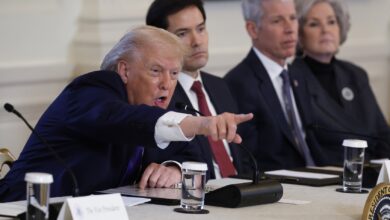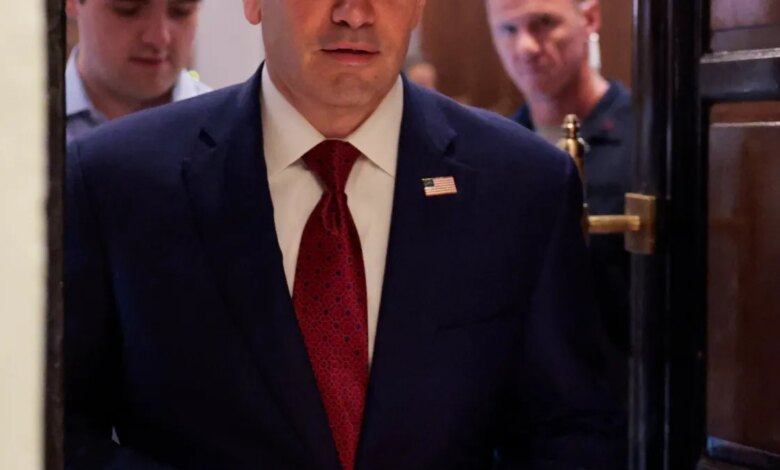
United States Secretary of State Marco Rubio issued a direct appeal to the Cuban people on Friday, calling for those seeking political reform to partner with the Central Intelligence Agency (CIA). The move marks a significant escalation in the Trump administration’s efforts to destabilize Havana’s communist government through both public recruitment and economic isolation.
In a statement shared on the social media platform X, Rubio targeted what he described as the “disappointment of failed promises” and corruption within the Cuban leadership. He characterized the current political climate as a unique window for those inside the country to take action. “To those who seek to create positive change in Cuba – now is the time,” Rubio wrote, encouraging civilians to “seize this opportunity to create the change you desire through a discreet partnership with the CIA.”
The CIA reinforced the Secretary’s message by uploading a Spanish-language instructional video. The footage provides guidance for individuals who believe they possess information of interest to U.S. intelligence, specifically advising them to visit a U.S. embassy in person if they are able to travel safely. This public overture for intelligence assets represents an unusually transparent attempt to recruit within a sovereign nation’s borders.
Reaction from Havana was swift and dismissive. Deputy Foreign Minister Carlos Fernandez de Cossio mocked the recruitment drive, characterizing it as a sign of institutional decay within the American intelligence community. “Now the United States is resorting to public recruitment for the CIA,” Fernandez de Cossio posted. “There must be a great deal of desperation or misery within the agency for it to be forced to sell its services like a tube of toothpaste.”
This diplomatic clash occurs against a backdrop of increasing U.S. aggression in the region. Since the U.S. military’s capture of former Venezuelan President Nicolas Maduro in a deadly raid this past January, Washington has redirected its focus toward Cuba. President Trump and senior officials have hinted at a potential permanent U.S. military presence in the Caribbean and have not ruled out direct military intervention to force an end to the decades-old communist administration.
Fernandez de Cossio recently warned against such an escalation, telling a Washington-based television program that using military force against Cuba would constitute an “atrocious international crime.” He emphasized that Cuba remains a peaceful neighbor and that U.S. threats are destabilizing the region.
The political pressure is compounded by severe economic measures. An oil blockade imposed by the U.S. earlier this year has triggered a humanitarian crisis on the island, resulting in acute fuel shortages and a series of blackouts that have left much of the population in the dark. The energy crisis is further exacerbated by the country’s aging and failing infrastructure, which has seen little maintenance due to the long-standing 60-year embargo.
International observers and rights experts have expressed alarm at the current U.S. strategy. United Nations experts have formally condemned the oil blockade, stating it violates international law. Meanwhile, rights advocates argue that the administration’s combination of economic strangulation and open recruitment for espionage represents an imperialist approach that places the welfare of Cuban civilians at risk. Despite these criticisms, the Trump administration appears committed to a policy of maximum pressure to force a political transition in Havana.