As the United States prepares for its next major electoral cycle, a distinct group of volunteers is mobilizing to ensure that the democratic process remains peaceful. In Arizona and eight other states, an interfaith coalition of ministers, rabbis, and imams is undergoing specialized training to serve as “poll chaplains,” a role designed to provide a calming presence and mitigate the risk of voter intimidation.
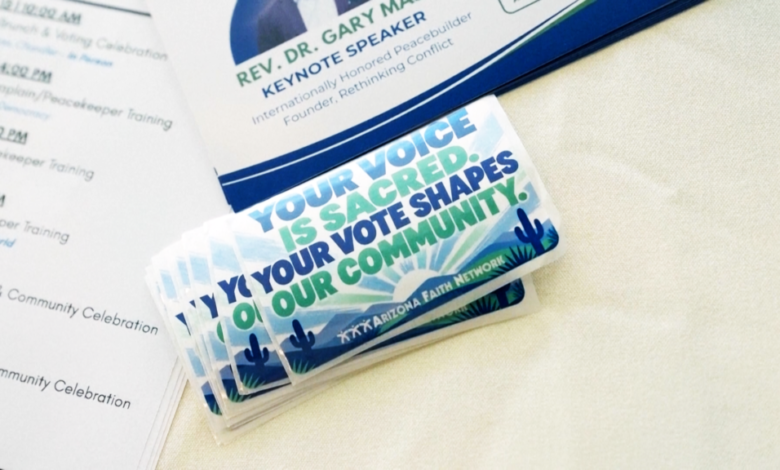
The initiative is led by groups like the Arizona Faith Network, which is part of a broader national campaign known as Faiths United to Save Democracy. This nonpartisan coalition seeks to place clergy members and faith leaders outside polling locations to help voters navigate questions and, more importantly, to serve as a buffer against the rising tide of political partisanship and potential violence.
The Reverend Katie Sexton, who leads the Arizona Faith Network, noted that the mobilization is a direct response to growing public anxiety. According to Sexton, there has been a significant rise in concern regarding the ability of citizens to vote in safety. The goal of the program is to ensure that voters’ voices are not compromised by fear or external pressure.
The atmosphere surrounding American elections has grown increasingly tense in recent years. Data indicates a shifting public attitude toward political stability; in one major survey conducted this summer, 37 percent of respondents suggested that violence might be necessary to get the country back on track. This sentiment, which has nearly doubled in the past two years, is shared by more than a third of both Republicans and Democrats, illustrating a broad erosion of the tradition of peaceful political disagreement.
Arizona, in particular, has served as a flashpoint for these tensions. During the 2022 midterm elections, a federal judge was forced to intervene in Maricopa County, ordering members of a group monitoring drop boxes to maintain their distance. The court order followed multiple complaints of individuals in masks and carrying firearms who were allegedly intimidating voters as they attempted to cast their ballots.
Rabbi Shmuly Yanklowitz, one of the leaders involved in the current training effort, explained that while many polling places are expected to see routine activity, others are high-risk areas where intimidation is likely. He noted that the specific targets of such intimidation are often the individuals who were already hesitant to show up to the polls.
The training for these poll chaplains covers a variety of scenarios, including de-escalation techniques. One specific area of focus involves how to handle the presence of federal immigration agents if they are spotted near polling sites, as such sightings can deter specific demographics from voting. On Election Day, these volunteers will be easily identifiable, wearing specialized vests and badges as they stand outside polling precincts.
For many of the volunteers, the work is a way to combat a sense of powerlessness in the face of national polarization. Cindy Weiser, a training participant, noted that the current political climate has made many feel as though they have no control, and that serving as a peacekeeper offers a tangible way to support the community. Similarly, Medina Moore of the Arizona Faith Network expressed a commitment to maintaining a positive environment, despite the history of unrest seen in previous cycles.
The interfaith nature of the movement is central to its mission. Training sessions have been hosted in synagogues, and the network actively recruits from Muslim communities and various Christian traditions. By presenting a unified front of moral authority, these leaders hope to ensure that when polls open on November 3, every voter can participate in the electoral process without fear for their personal safety.