French national team captain and Real Madrid striker Kylian Mbappé is facing a significant commercial contraction in China following controversial remarks regarding Mao Zedong. The fallout began this week as major Chinese corporations moved to distance themselves from the soccer star after he joked about a meme featuring the founding father of the People’s Republic of China during a podcast appearance.
The controversy was ignited by a video clip circulating on social media from an episode of “The Bridge,” a French podcast co-hosted by one of Mbappé’s teammates. In the interview, Mbappé discussed his reputation and the various internet memes that have followed his rise to global stardom. For several years, Mbappé has been nicknamed “The Dictator” by some fans and critics, a moniker that references his perceived level of influence and confidence within the teams he represents. This nickname has resulted in a variety of memes where his face is superimposed onto the bodies of historical and political leaders.
During the podcast, Mbappé identified a specific meme that he found particularly humorous. He described an image where his face was placed on that of “some guy — I think he’s a Chinese dictator.” The edited video accompanying the podcast segment then displayed an image of Mao Zedong with Mbappé’s likeness.
While the comment may have been intended as a lighthearted reflection on internet culture, it touched on a deep-seated political and social taboo in China. Mao Zedong, the founder of the modern Chinese state, remains a figure of immense institutional and cultural importance. Although his legacy remains a subject of international debate, he is officially revered by the Chinese Communist Party. In China, jokes or disrespectful references to Mao are not only considered a breach of social etiquette but are often met with swift institutional condemnation.
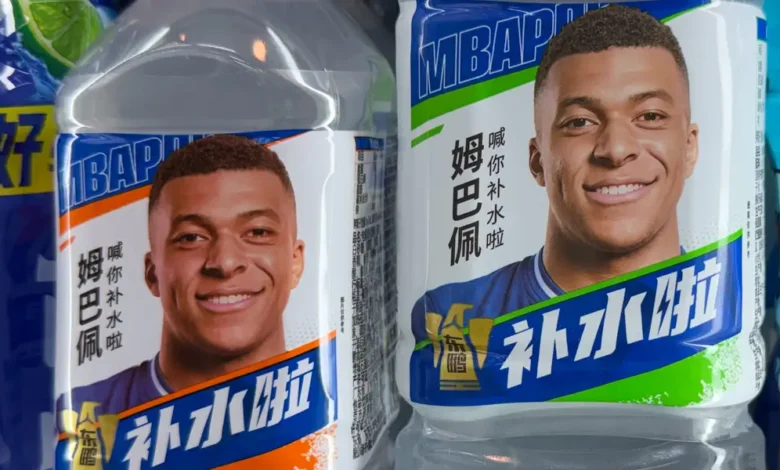
The corporate reaction in China was immediate. Dongpeng, a prominent Chinese beverage company that had utilized Mbappé’s image in extensive advertising and on its product packaging, announced on Tuesday that it was terminating its relationship with the player. In an official statement, the company framed the decision as a matter of national principle. “Our company firmly opposes and has zero tolerance for actions that hurt national feelings,” the statement read. “Effective immediately, we are ending all cooperation with Kylian Mbappé.”
Mengniu, the largest dairy producer in China and another major partner for the French star, issued a similar statement shortly thereafter, confirming the end of their business ties. The speed of the response reflects the sensitivity international brands face when their ambassadors run afoul of political norms in the Chinese market.
The incident has resonated deeply on Chinese digital platforms. Following the announcement from Dongpeng, the story quickly rose to the top of the trending topics on Weibo, China’s largest microblogging site. The backlash comes at a time when Mbappé is one of the most visible athletes in the world, having recently completed a high-profile move to Real Madrid. While his performance on the pitch remains at an elite level, this incident serves as a stark reminder of the complexities involved in maintaining a global commercial brand in diverse political environments.