European Satellite Firms Push for Alternatives to Musk’s Starlink Amid Ukraine Restrictions

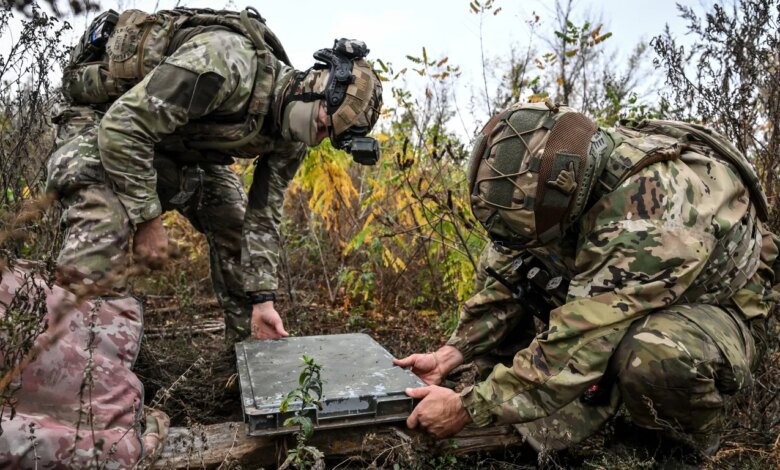
Rival satellite communications companies are intensifying efforts to challenge SpaceX’s dominance in battlefield connectivity following operational restrictions placed on Ukraine’s Starlink network. The episode, which temporarily disrupted Ukrainian drone operations, exposed significant military vulnerabilities tied to reliance on a single commercial market leader and private corporate decisions.
SpaceX currently commands an overwhelming lead in space-based connectivity, operating more than 11,000 satellites according to data from the American Enterprise Institute. By comparison, its closest major competitor, France-based Eutelsat, operates more than 600 satellites through its OneWeb network. Earlier this year, Starlink announced it had reached 12 million customers across more than 160 countries and territories, presenting a formidable barrier for European nations seeking technological independence.
In response to the disruption in Ukraine, non-U.S. competitors are aggressively pitching alternative services. Finnish technology firms ICEYE and Nokia announced an agreement with Ukraine’s defense ministry to explore sovereign satellite communications. Initial satellites under this partnership are expected to launch in 2028, according to an ICEYE spokesperson, who emphasized that the demand for reliable, independent satellite communications has been apparent for years, particularly across Europe.
Ukrainian President Volodymyr Zelenskyy underscored the strategic urgency of the initiative, stating that modern warfare has demonstrated reliable communications to be a matter of national security and that nations must rely on capabilities under their own control.
The push for alternatives follows reports that Elon Musk ordered a slowdown of Starlink service in Ukraine. Musk stated on October 24 that Ukraine had violated Starlink terms of service by employing the network for offensive drone strikes, noting that the loophole had been closed. While reports suggested White House involvement in the episode, President Trump denied those claims.
The commercial and geopolitical ramifications were swift. Following the throttling of Ukraine’s connection, shares in Eutelsat rose. Eutelsat CEO Jean-François Fallacher noted in a television interview that his company’s services are already operational in Ukraine and capable of supporting drone operations. Fallacher contrasted Eutelsat’s corporate governance with single-person control, explaining that decisions to discontinue service in any country would be made collectively by a board of directors through traditional European governance structures.
Defense analysts point to the incident as a turning point. Rebecca Wasser, defense lead at Economics, observed that the Starlink disruption triggered a broader loss of confidence in both U.S. security commitments and the reliability of U.S. commercial providers for critical military services, accelerating a European push toward sovereign space capabilities.
U.S. lawmakers have also raised alarms regarding the strategic risks of concentrated infrastructure. In a letter to Defense Secretary Pete Hegseth, Senator Richard Blumenthal warned that satellite communications have transcended supportive functions to become vital military centerpieces, demonstrating how a single point of control can jeopardize dependent forces.