Major European energy companies have posted exceptionally high third-quarter profits, driven by soaring hydrocarbon prices in the wake of ongoing conflicts in the Middle East and Ukraine. The financial surge has reignited fierce public debate and political pressure over corporate taxation and fuel costs across the continent.
French energy major TotalEnergies announced a record net profit of $8.3 billion for the third quarter, more than double the $3.7 billion recorded during the same period last year. The figure also far outpaces the company’s strong results from the first half of the year, which had already prompted political parties and advocacy groups to demand heavier levies on corporate windfalls.
TotalEnergies, alongside European counterparts Shell and Repsol, benefited heavily between July and September from historic performances in their refining and chemicals divisions. TotalEnergies reported $3.5 billion in refining-chemistry results, compared to $687 million a year earlier. Tightness in the diesel market—exacerbated by strikes and attacks on energy facilities and refineries in Ukraine, Russia, and the Middle East—fueled a steep rise in prices for the most consumed fuel in France and drove refining margins upward.
Spanish firm Repsol, whose business model is particularly dependent on refining, reported that its net profit quadrupled over the first nine months of the year, with more than half of that total generated during the third quarter alone. Meanwhile, British energy giant Shell announced a net profit increase of 126.6% year-on-year, reaching $12.1 billion. Expected reports from American firms Chevron and ExxonMobil, as well as Britain’s BP, are projected to show similarly robust earnings.
In midday trading in Paris, TotalEnergies shares gained 1.39% on the CAC 40, while Shell shares rose 3.13% on the London Stock Exchange. TotalEnergies was additionally supported by strong performance in its liquefied natural gas division, where adjusted net operating results doubled year-on-year due to higher selling prices and outperforming trading activities. European gas prices surpassed 100 euros per megawatt-hour for the first time in four years, pushed upward by transit difficulties for Middle Eastern LNG cargoes and lower European reserves compared to the previous year. However, the group’s overall oil and gas production dipped slightly by 1% year-on-year, though it would have risen by more than 4% excluding the impact of the Middle East conflict.
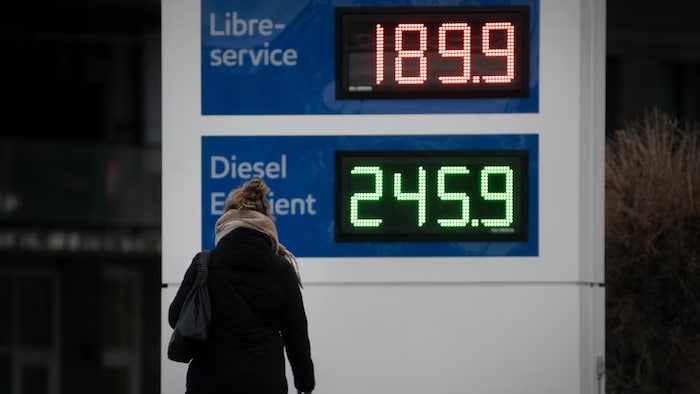
The extraordinary earnings have prompted sharp public reactions. In France, the government acknowledged the financial results while urging corporate responsibility. Government spokesperson and Energy Minister Maud Bregeon stated on television that having a major domestic energy player is an asset during a crisis, but called on the firm to be exemplary and pass on savings to consumers as lower-cost diesel destocking begins. Diesel prices surpassed 2.38 euros per litre, while TotalEnergies caps its diesel price at 2.25 euros per litre at its service stations.
Environmental and advocacy organizations offered severe criticism. Greenpeace asserted that the Middle East conflict is being used as a pretext to impose inflated prices throughout the petroleum supply chain at the expense of drivers facing record fuel costs in Europe. In parallel, coalitions including 350.org, Action Justice Climat Paris, and Attac France denounced the financial gains as indecent, noting the contrast with the rejection of amendments aimed at taxing fossil fuel profits in budget deliberations.
TotalEnergies Chief Executive Patrick Pouyanné has regularly maintained that imposing additional surtaxes on the group’s profits would force the company to lift its current fuel price caps.