European Central Bank Expected to Hold Rates Amid French Bond Turmoil and Leadership Questions

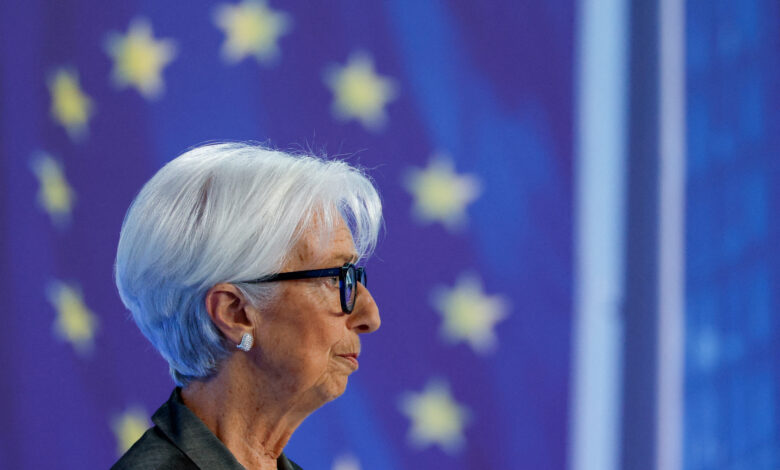
The European Central Bank is widely expected to keep interest rates on hold during its upcoming Thursday meeting, with attention instead fixed on escalating bond-market turmoil in France and mounting uncertainty regarding the future of ECB President Christine Lagarde.
Policymakers at the euro zone’s central bank have previously raised rates twice since June and are anticipated to signal a resumption of tightening in coming months. The potential policy path aims to prevent an oil-price shock stemming from the Iran conflict from cascading into broader consumer prices and wages. However, the governing council must balance these persistent inflation risks against tightening financing conditions, driven largely by a surge in government bond yields that has elevated borrowing costs for households and businesses.
Financial markets widely project that the deposit rate will remain at 2.5% this week, while officials are expected to signal that another increase could arrive as soon as December. Holger Schmieding, chief economist at German bank Berenberg, noted that the central bank will likely indicate that a recent spike in oil prices has tilted inflation risks even further to the upside compared to assessments in September. Current money market pricing factors in roughly three additional rate increases, which would lift the deposit rate to 3.25%.
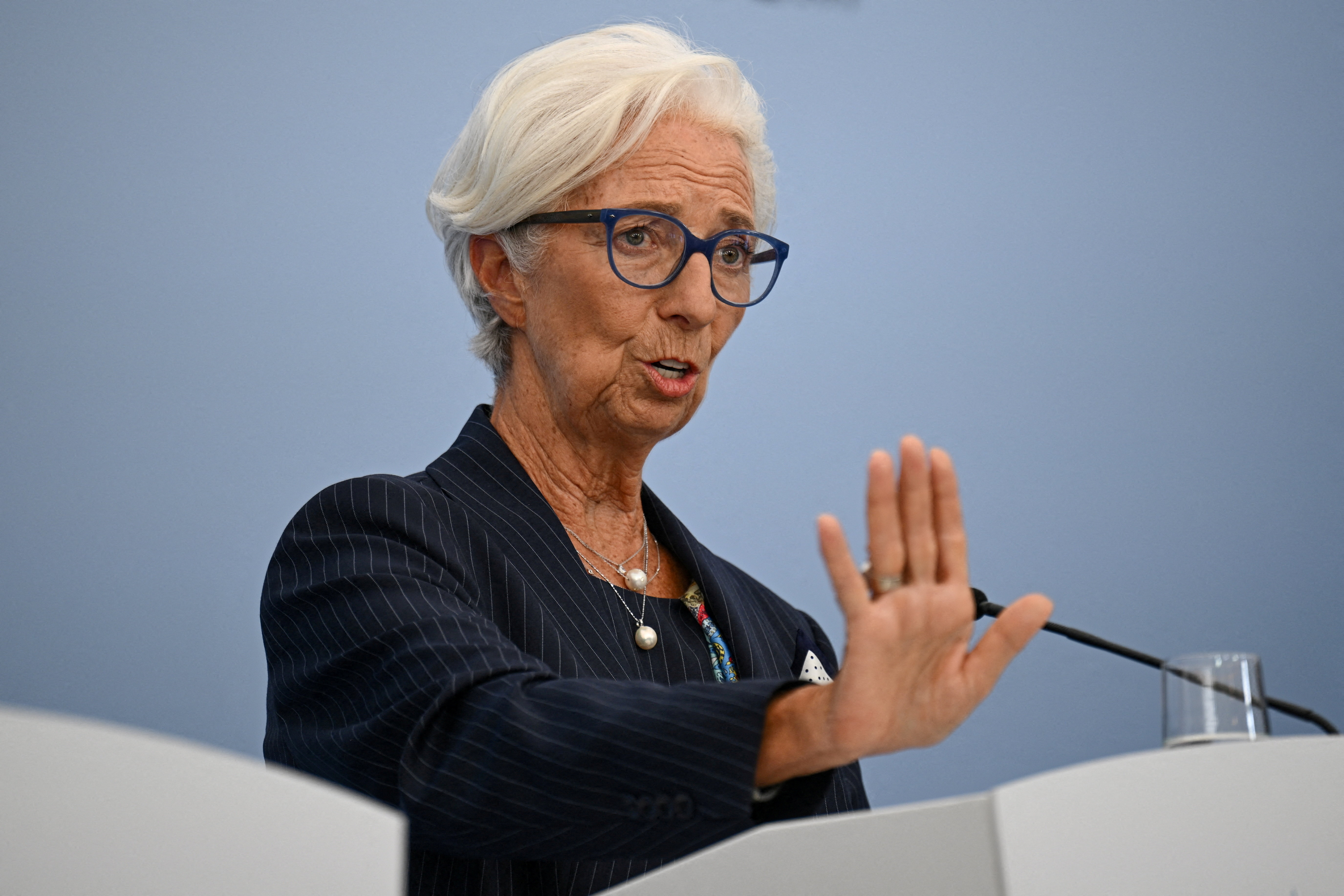
Beyond monetary policy, President Lagarde faces intense questioning at Thursday’s press conference regarding her tenure. Speculation has mounted that she may depart before the presidential elections in her native France in the spring, despite having one year remaining in her eight-year ECB term. An early departure could enable French President Emmanuel Macron and other European Union leaders to fill one of the bloc’s most influential economic offices ahead of a vote where opinion polls point to potential gains for the far right. Reports indicate that the World Economic Forum could appoint Lagarde as its next chair as soon as November, potentially accelerating her exit and triggering a wider leadership reshuffle at the Frankfurt-based institution.
Henry Cook, a senior economist at Japanese broker MUFG, cautioned that leadership uncertainty complicates an already difficult environment. “It’s far from an ideal situation to have any uncertainty around leadership while the central bank grapples with tighter financial conditions, higher energy prices and more uncertainty around the broader macro outlook,” Cook said. Potential frontrunners to succeed Lagarde include former central bank governors Klaas Knot of the Netherlands and Pablo Hernandez de Cos of Spain.
The more immediate operational test for policymakers involves acute volatility in European bond markets. A global ascent in yields, fueled by stronger growth expectations, increased debt issuance, and massive capital investments tied to artificial intelligence, has driven up borrowing costs across the currency union. In France, investor anxiety has deepened over the nation’s rising debt burden and murky fiscal outlook following elections earlier in the year. These anxieties have been further compounded by proposals from factions of the political left suggesting that sovereign debt held by the ECB could be written off.
Consequently, French borrowing costs have climbed sharply. France currently pays some of the highest yields in a quarter-century to raise capital, and the risk premium demanded by investors to hold French debt over benchmark German bunds exceeds that of any other euro zone member state. This divergence has triggered speculation over whether the ECB might be compelled to intervene, even if initially through verbal reassurance.
Gilles Moec, chief economist at French insurer AXA Group, emphasized that preserving the possibility of central bank intervention remains vital. Nevertheless, any direct market intervention appears distant. The ECB’s primary defense mechanism would likely involve the flexible reinvestment of proceeds from bonds purchased during past asset-purchase programs. Beyond that, policymakers could consider deploying the Transmission Protection Instrument, an untried backstop designed to counter unjustified market pressures.
Economists at fund-management firm Algebris suggested in a note that French risk currently appears contained domestically, though a wider spillover could prompt the ECB to consider deploying the TPI while maintaining strict policy lines elsewhere.