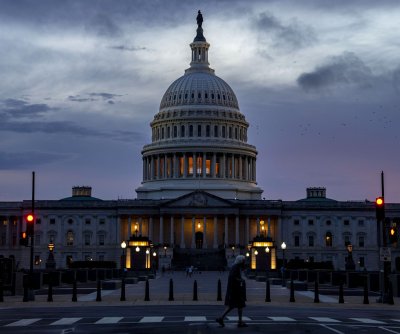
As millions of Americans prepare to turn their clocks back this weekend, lawmakers on Capitol Hill are advancing competing legislative proposals aimed at ending the biannual ritual of shifting time twice a year. While bipartisan agreement exists on abolishing the practice, lawmakers remain deeply divided over whether the country should transition to permanent standard time or permanent daylight saving time.
Sen. Rick Scott, R-Fla., has championed the Sunshine Protection Act, a measure designed to lock in permanent daylight saving time. When introducing the bill in the Senate Commerce Committee, Scott argued that the twice-yearly shift has outlived its usefulness. “The American people are sick and tired of changing their clocks twice a year,” Scott said. “It’s confusing, unnecessary and completely outdated.”
Conversely, Rep. Mary Gay Scanlon, D-Pa., introduced the Sunshine for Our Kids Act in July to advocate for permanent standard time. Scanlon pointed to decades of scientific and medical research highlighting the negative physical and mental health consequences associated with shifting time, particularly for children and adolescents. “The Sunshine for Our Kids Act will not only help children and teens during the most important years for mental and physical development, but will also promote public health and safety in our communities,” Scanlon stated.
While neither federal law nor public policy can alter the total amount of daylight, legislative action dictates when those daylight hours occur. Medical experts and sleep researchers have increasingly weighed in on the debate. Dr. Karin Johnson, a sleep physician and spokesperson for the American Academy of Sleep Medicine, noted that the abrupt transition into daylight saving time carries documented risks. “We see more heart attacks, more strokes, more car accidents,” Johnson said, adding that adopting a single, permanent time would eliminate the shocks of the biannual switch.
The American Academy of Sleep Medicine officially supports abolishing daylight saving time in favor of permanent standard time. According to Johnson, permanent standard time aligns more closely with human circadian rhythms and offers significant safety advantages, such as providing morning sunlight for children walking to school or waiting at bus stops during winter months.
Public opinion polling reflects growing fatigue with the status quo. A 2023 survey conducted by the sleep medicine academy found that more than 60% of respondents favored eliminating seasonal time changes, with over 40% expressing strong support. Furthermore, a 2025 Gallup poll indicated that public sentiment against daylight saving time has steadily grown since the turn of the century.
The two proposals would create starkly different daily schedules across the country, with sunrise and sunset times shifting by minutes or even more than a dozen minutes depending on geographic location and elevation. Under permanent standard time, the earliest sunrises and latest sunsets would occur in mid-June, while winter months would bring the earliest sunsets and latest sunrises. In major metropolitan areas such as New York City, Chicago, and Los Angeles, the sun would consistently rise before 8 a.m. throughout the year.
By contrast, permanent daylight saving time would push both sunrises and sunsets later into the day. Under this model, the sun would set after 8 p.m. for a greater number of days annually, but large portions of the country would experience dozens—and in some regions more than 100—days where the sun does not rise until after 8 a.m. In New York City, for instance, nearly 70 days would feature post-8 a.m. sunrises.
Johnson cautioned that permanent daylight saving time fails to deliver genuine benefits and instead shifts natural light to periods less favorable for human sleep. “All you do is shift that light to a time that is worse for sleep,” Johnson said. “You really don’t get real benefits of moving light later but you get real harms.”
Permanent standard time already holds federal approval, and states possess the legal authority to adopt it independently. Arizona, Hawaii, and five U.S. territories currently observe standard time year-round. While individual states can opt out of daylight saving time, broader adoption has stalled because states frequently prefer to maintain synchronized timekeeping with neighboring jurisdictions for commercial and logistical reasons, such as coordinating flight schedules.
The debate over federal time policy traces its origins back more than a century. The United States first experimented with daylight saving time in 1916 during World War I to conserve wartime energy. However, utility companies reported negligible energy savings, and the measure was repealed in 1919. The policy returned briefly during World War II under President Franklin D. Roosevelt before ending in 1945. Following decades of fragmented state and local policies, Congress enacted the Uniform Time Act in 1966 to standardize the transition dates.
A subsequent attempt at permanent daylight saving time occurred in 1974 during a national oil crisis, when Congress authorized a two-year trial. That experiment was abandoned after only a few months due to public backlash and safety concerns, including a traffic accident in Florida that resulted in the deaths of eight children.