With Election Day set for Tuesday, November 3, early voting figures have surged past 42 million nationwide as of Thursday afternoon, according to data from the University of Florida Election Lab. Major political figures are fanning out across the country in the final stretch of the 2026 midterm elections, where control of both chambers of Congress hangs in the balance.
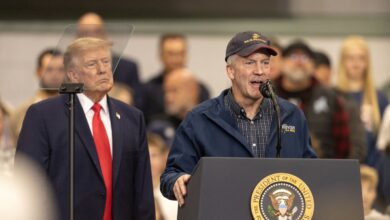
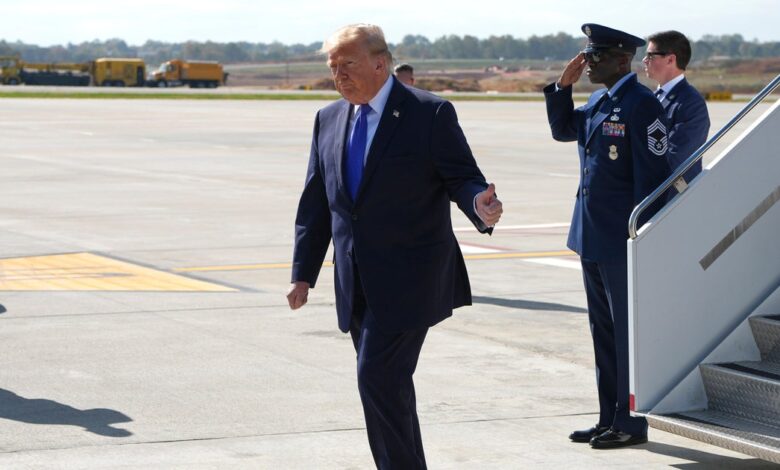
President Trump campaigned in South Carolina on Tuesday for Republican Sen. Darline Graham, who faces a competitive challenge from Democrat Annie Andrews, before returning to the White House for annual Halloween events. During his remarks, Mr. Trump urged supporters to treat the midterms as a referendum on his administration, telling the crowd to pretend he was directly on the ballot. The president also made stops in Texas to support Attorney General Ken Paxton in his toss-up Senate race against Democrat James Talarico, while planning a Wednesday visit to Ohio to rally for Republican Senate candidate Jon Husted and gubernatorial nominee Vivek Ramaswamy. Meanwhile, a planned Saturday rally for Mr. Trump in Salina, Kansas, was abruptly called off by the Salina Airport Authority, with organizers stating the Republican National Committee canceled the event without providing a reason.
Federal and local election administration faced legal battles as well. A federal judge in California on Wednesday rejected a push by the Trump administration to force state officials to set aside mail-in ballots from approximately 20,000 voters alleged not to be U.S. citizens. U.S. District Judge David Carter ruled that the Justice Department’s demand violated constitutional principles granting states authority over their own election procedures. In Alaska, Republican Gov. Mike Dunleavy ordered an investigation into Democratic Senate candidate Mary Peltola’s campaign following a report alleging that individuals aligned with her campaign helped recruit a secondary candidate bearing the exact same first and last name as incumbent Republican Sen. Dan Sullivan. Peltola’s campaign strongly denied the allegations, dismissing the report as a distraction from affordability issues.
Control of the U.S. Senate centers on ten competitive seats, divided between seven held by Republicans—including in Maine, North Carolina, Ohio, Kansas, Iowa, Texas, and Alaska—and three held by Democrats in New Hampshire, Michigan, and Georgia. In New Hampshire, Democratic Rep. Chris Pappas and Republican former Sen. John E. Sununu sparred over the economy, foreign policy, and Social Security during a debate Wednesday evening. In Michigan, the high-profile Senate race between Democrat Abdul El-Sayed and Republican Mike Rogers has been marked by contentious rhetoric, including sharp attacks from GOP Sen. Ted Cruz during a campaign stop outside Detroit.
House control remains equally volatile. Analysts have identified 47 battleground districts that will likely determine the majority, split between 20 seats currently held by Democrats and 27 by Republicans. Both parties continue aggressive closing pushes to mobilize voters before polls close next week.