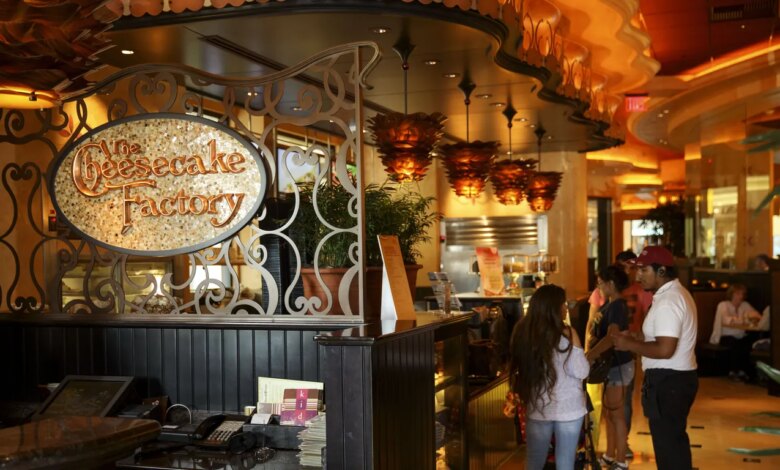
With less than a week remaining before a potentially historic midterm election, American political discourse has found itself sidetracked by an unlikely focal point: the Cheesecake Factory. Culture wars regularly swarm national political discussions, particularly when personal style and taste become the targets of partisan jibes.
The latest firestorm erupted over the weekend when former President Barack Obama took aim at President Trump’s controversial White House renovations during a campaign appearance. Poking fun at the president’s personal taste, Obama remarked, “He’s got the White House looking like Saddam Hussein opened a Cheesecake Factory.”
John Murphy, a professor emeritus at the University of Illinois Urbana-Champaign who studies political rhetoric, noted that he immediately recognized the remark’s potential for longevity. Murphy observed that Obama “can get under Trump’s skin like no one else in the world can,” noting the unique dynamic between the two figures. Obama is no stranger to how trivial moments can balloon into sustained political talking points; in 2014, his decision to wear a tan suit instead of a traditional dark one during a foreign policy briefing became a multi-year sartorial controversy that still nets pop culture references and even maintains its own Wikipedia page.
Days after Obama’s quip, the news cycle and social media continue to amplify the joke. The White House responded by posting “Lo-fi” beats accompanied by a cartoon image of Trump standing in front of a Cheesecake Factory.
Conservative critics quickly seized on the comment to frame Democrats as elitists. Treasury Secretary Scott Bessent, a multimillionaire, publicly criticized Obama while standing outside a Cheesecake Factory, stating that he “had a great meal, and I would tell the Martha’s Vineyard set to give it a try.” Professor Murphy characterized this response as part of a classic red-versus-blue playbook designed to generate culture-war friction through conscious strategy in conservative media.
President Trump’s own pushback focused less on the class divide highlighted by conservative commentators and more on defending his administration’s physical changes to the executive mansion. Speaking to reporters on Monday, Trump argued that his predecessor failed to appreciate the historic building’s needs. “We have to explain to Obama that the White House is a symbol of America,” Trump said. He continued by asserting, “Guys like Obama don’t see it … he doesn’t see filth. He doesn’t see broken ornaments on a building,” before concluding that describing the executive residence as a restaurant chain “just shows why you were a lousy president.” When approached for comment, the White House directed inquiries to Trump’s previous remarks.
The unexpected political crossfire ultimately drew in the restaurant chain itself. Rick McCormack, the company’s former longtime vice president of design, lamented “the pettiness of politics” in comments to reporters, expressing disappointment that the dining chain became entangled in the partisan dispute.