Television political dramas have long served as a mirror for Washington power dynamics, capturing the complex interplay between professional ambition and personal partnership. Through four seasons of the transatlantic political series “The Diplomat,” viewers follow the resilient, if deeply strained, union of career diplomat Kate Wyler, played by Keri Russell, and her politically seasoned husband, Hal, portrayed by Rufus Sewell. The series opens with the couple contemplating divorce just as Kate is appointed ambassador to Britain. Instead, Hal manipulates her into staying, initiating a multi-season arc of political maneuvering that ultimately positions him for the vice presidency under the autocratic and corrupt President Grace Hagen Penn, played by Allison Janney.
While the Penn administration operates with few qualms about upending international alliances, President Penn’s devotion to her husband, Todd, portrayed by Bradley Whitford, remains a constant anchor. Despite subplots involving Todd fleeing to London to escape his wife’s autocratic behavior and seek purpose beyond wallpaper swatches, the couple maintains daily affectionate check-ins. When Grace survives an assassination attempt, Todd is visibly shaken, providing an emotional backstop and engaging in his own brand of quiet diplomacy when needed.
These complex fictional partnerships stand in sharp contrast to real-world political optics. The dynamics on screen often evoke nostalgia for eras when presidential spouses were intellectual forces and prominent policy advocates. Former first ladies such as Michelle Obama and Dr. Jill Biden maintained their professional achievements without bowing to partisan characterizations, following in the footsteps of Hillary Clinton, who chaired a massive health reform task force when her husband entered the White House.
That historical legacy contrasts with modern political photo-ops, such as a recent appearance featuring Donald Trump and Melania Trump signing an executive order to establish a task force on women’s health. During the event, the president remarked on his wife’s temperament and intelligence before handing her the pen, while a subsequent interaction saw the first lady turn her head away as he attempted to seal the moment with a kiss.
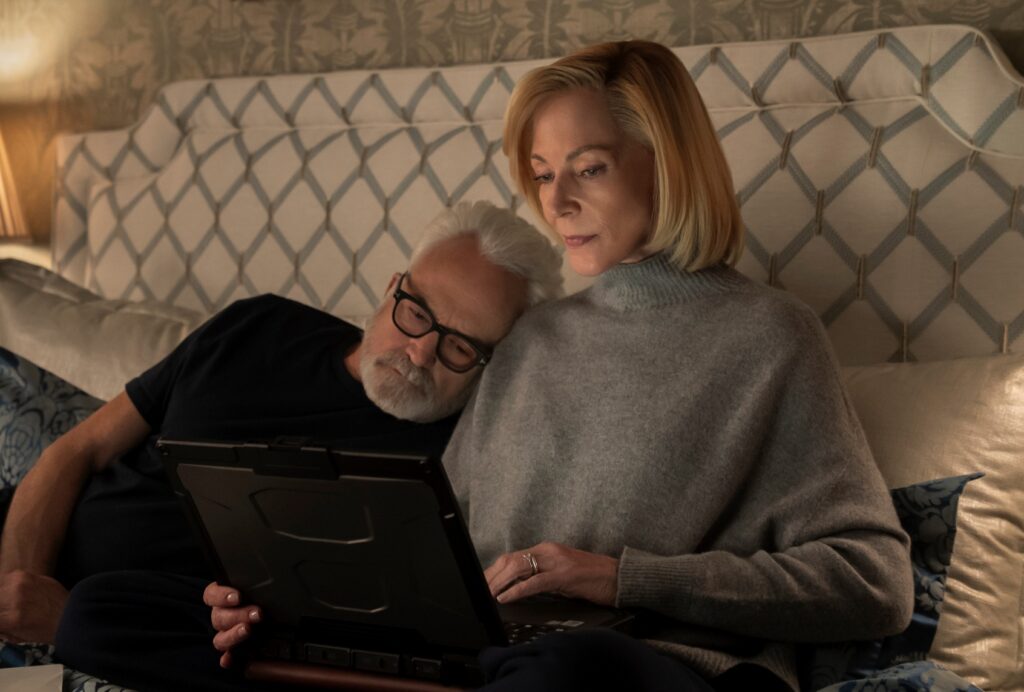
In the fictional universe of “The Diplomat,” Kate Wyler frequently finds herself cleaning up the messes created by Hal, whose involvement in secret geopolitical plots—including purloining a Russian doomsday weapon from a sunken submarine—places immense stress on her. Her physical reactions to the constant prevarication and blackmail highlight the grueling toll of Washington’s high-stakes maneuvering. Yet, despite Kate’s extramarital flings and Hal’s penchant for skullduggery, their shared devotion and working partnership remain more plausible and reassuring to viewers than the strained dynamics often observed in real political life.
Drawing comparisons to earlier political television like Aaron Sorkin’s “The West Wing,” contemporary dramas continue to captivate audiences by exploring how powerful figures navigate both governance and marriage. While the Penn administration lacks the idealism that defined Josiah Bartlet’s fictional presidency, the ability of couples to maintain an effective alliance amid institutional chaos provides a compelling narrative hook for audiences navigating today’s political climate.