Federal law enforcement actions targeting prominent political figures have once again illuminated deep divisions in how mainstream American media organizations mobilize editorial outrage. The contrast is particularly stark when comparing the intensive national press reaction to executive branch actions against elite Washington insiders versus progressive lawmakers who operate outside traditional institutional circles.
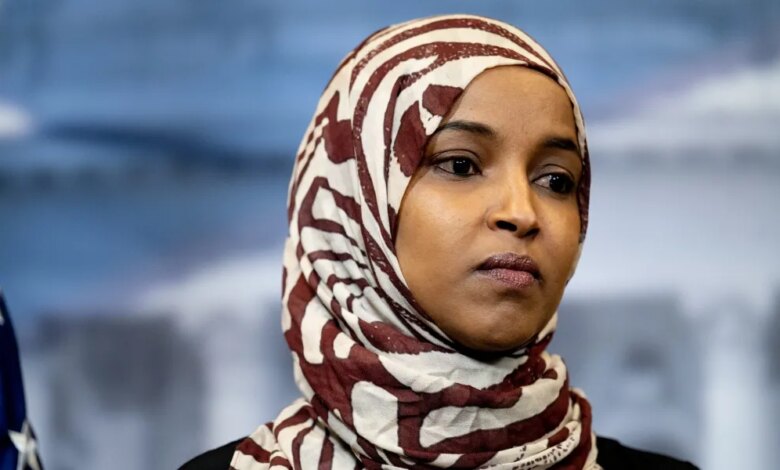
On Monday, agents from the Department of Homeland Security executed a raid on the Washington, D.C., residence of Representative Ilhan Omar, a Democrat from Minnesota. The operation was authorized by a federal judge following negotiations with law enforcement officials and was ostensibly tied to a criminal investigation into her childhood immigration to the United States. Civil rights organizations immediately condemned the maneuver as highly suspect and politically motivated.
The pressure escalated further on Wednesday as federal agents issued subpoenas to several of Omar’s relatives, including her sister Sahra Noor. Reports indicated that the administration’s broader objective involves exploring avenues to strip the congresswoman of her citizenship and pursue deportation. This latest escalation follows years of targeted threats, racist rhetoric, and repeated public demands for her removal from the country.
Despite the gravity of these developments, the mainstream media response has largely been confined to neutral, down-the-middle reporting without the sweeping editorial interventions typically reserved for high-profile abuses of power. Major daily newspapers and opinion outlets have published standard news accounts of the events, but they have notably abstained from the type of scathing, uniform condemnation that greeted previous executive actions against establishment figures.

A prominent point of comparison involves the August 2025 federal raid targeting John Bolton, former national security adviser and a prominent neoconservative commentator. Within twenty-four hours of that operation, major editorial boards published severe denunciations, characterizing the move as an authoritarian perversion of the justice system designed to intimidate critics and enact political retribution. Over the subsequent week, leading national publications featured multiple dedicated opinion columns questioning the legitimacy of the raid and warning against the erosion of institutional norms.
While the editorial board of a major financial publication previously published sharp rebukes during the Bolton investigation, coverage of the actions against Omar took a sharply divergent path. Instead of opposing the move, that same publication ran a column by an assistant editorial page editor endorsing the federal scrutiny and utilizing pointed rhetoric to cast doubt on the lawmaker’s background.
Observers point to a long-standing pattern within U.S. media institutions where the consistent application of principle often defers to professional and social alignments. Traditional institutional figures who share background characteristics, ideological consensus, or establishment status with elite newsroom leadership frequently elicit widespread, sustained defense when targeted by state power. Conversely, lawmakers who challenge foreign policy consensus, represent marginalized communities, or occupy positions outside the traditional political center often receive significantly more muted institutional backing.