President Luiz Inácio Lula da Silva’s re-election in Brazil has triggered swift criticism from Donald Trump’s inner circle, creating fresh friction between Washington and Brasília just as high-stakes trade negotiations were beginning to thaw.
Lula secured a victory in the country’s presidential runoff following the defeat of far-right candidate Flávio Bolsonaro. The outcome immediately drew skepticism from prominent MAGA figures and Trump allies who questioned the integrity of the vote. Trade adviser Peter Navarro characterized the result as a cautionary tale, while adviser Jason Miller amplified a Bolsonaro campaign statement declaring the election results impossible to recognize. Andrew Kolvet, a spokesperson for Turning Point USA, also voiced doubts regarding voter shifts between the first and second rounds.
President Trump himself echoed those concerns during remarks to reporters, describing the Brazilian election as appearing corrupt and rigged. However, Trump stopped short of pledging direct intervention, noting that he does not run Brazil and emphasizing that he maintains a relatively warm working relationship with Lula.
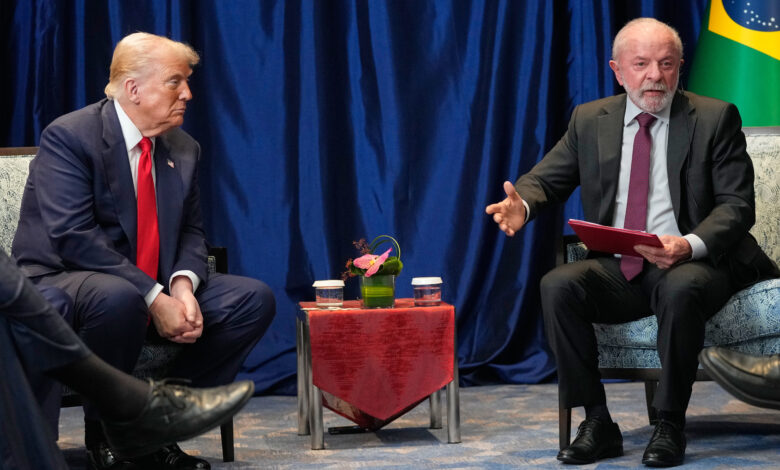
The diplomatic friction arrives at a delicate moment for bilateral economic relations. The Trump administration previously imposed a 50 percent tariff on Brazil in July 2025 following a political persecution investigation involving Flávio’s father, former President Jair Bolsonaro. Relations later warmed after direct talks between Trump and Lula, highlighted by an embrace at the United Nations General Assembly and subsequent trade negotiations.
Renewed hostility or intervention by the U.S. could jeopardize ongoing trade talks and risk economic fallout. The U.S. remains a major importer of Brazilian agricultural products including coffee, cocoa, and oranges. Furthermore, the White House recently signed an August proclamation permitting increased beef imports from countries including Brazil to help curb domestic consumer prices.
Beyond agriculture, rare earth minerals represent a central pillar of recent U.S. engagement. Brazil holds the world’s second-largest reserves of rare earth minerals after China, making cooperation with Brasília a strategic priority for Washington as it seeks to reduce reliance on Beijing for materials essential to electric vehicles and fighter jets.
Mark Langevin, a senior adviser focused on Latin America and energy policy at Horizon Engage, noted that Lula enters this term in a significantly stronger position regarding critical minerals. Langevin emphasized that Washington stands to gain substantially from cooperation but must accept the electoral outcome to move forward constructively.
Meanwhile, allies of the Brazilian president dismissed the criticism from U.S. conservatives as ephemeral. A source close to the Brazilian administration asserted that right-wing attempts to contest the vote would quickly fade and fail to alter the nation’s political trajectory. The same source indicated that Brasília is currently awaiting further engagement from the Office of the U.S. Trade Representative regarding a trade working group established during meetings in Milwaukee.