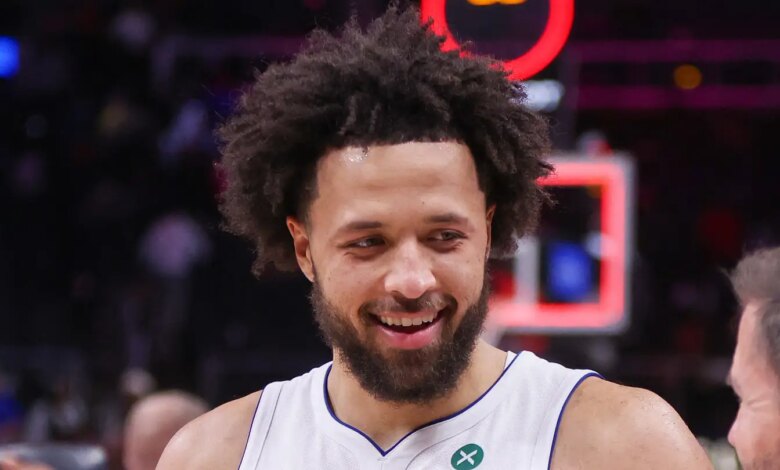
The Detroit Pistons are exploring a new offensive dimension for franchise star Cade Cunningham, utilizing secondary ball-handlers to transform him into a potent off-ball threat. Traditionally known for a heavily ball-dominant style, Cunningham showcased his capabilities as a catch-and-shoot scorer and off-the-dribble attacker during Sunday night’s matchup against the Philadelphia 76ers.
The strategic shift was made possible by the insertion of Daniss Jenkins into the starting lineup. Jenkins delivered a strong performance, consistently breaking down the Philadelphia defense and creating scoring opportunities for his teammates, which notably included Cunningham.
While Jenkins excelled in his playmaking duties, the broader takeaway for Detroit’s long-term trajectory centers on Cunningham’s efficiency away from the ball. Operating primarily as a focal point in previous seasons, Cunningham buried multiple catch-and-shoot three-pointers and capitalized on opportunities in the post and off the catch on Sunday.
Expanding Cunningham’s responsibilities to include off-ball scoring could alleviate the team’s ongoing creation challenges. Sports analysts note that allowing secondary players to run the offense while keeping Cunningham as an elite release valve could establish a more unpredictable and dangerous playoff scheme. Although Cunningham possesses a diverse individual shot diet and rarely struggles to find his own rhythm, his teammates often require greater offensive flow and floor space to hunt their own shots.
Historically, Cunningham has anchored the Detroit offense through pick-and-roll lobs and kick-out passes to open shooters. By sharing ball-handling duties, the team can offer teammates expanded space while allowing Cunningham to operate in a less demanding role.
However, basketball operations experts emphasize that Cunningham’s long-term success off the ball relies entirely on the steady development of reliable secondary distributors. Cunningham has flashed off-ball proficiency in past stretches, but team roster requirements have previously limited those opportunities.
Jenkins demonstrated the necessary poise and confidence as a point guard to manage on-ball responsibilities and distribute effectively. Under normal circumstances, Jenkins begins games on the bench while Ausar Thompson occupies a starting role. Although Thompson represents a developing ball-handling option who could potentially command increased playmaking duties by the playoffs, he remains early in that developmental curve.
Consequently, the primary hurdle for Detroit across the remainder of the season involves cultivating trust and execution in its secondary playmakers. While prioritizing this developmental strategy may occasionally yield uneven regular-season outcomes, coaching staff and analysts agree it provides the structural flexibility necessary to diversify the Pistons’ offensive attack ahead of postseason competition.