Contemporary artists are increasingly turning to ancient folklore, ritual, and physical materiality to interrogate the rapid expansion of digital culture and artificial intelligence. This tension between familiar human traditions and speculative technological spaces was recently examined in the group exhibition “Phantasmagoria: Folkloric Sculpture for the Digital Age” at the Henry Moore Institute in Leeds, which explored what modern technology reveals about folk rituals through sculptural works.
Curator Sean Ketteringham noted that new technologies carry deep questions about history, observing that some of the most urgent artistic statements on the subject are emerging from creators working with digital media. Rather than treating folklore as a mere retreat from contemporary culture, the exhibition sought to maintain a critical eye on both the past and possible technological futures.
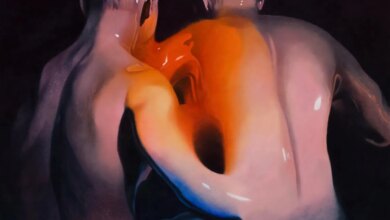
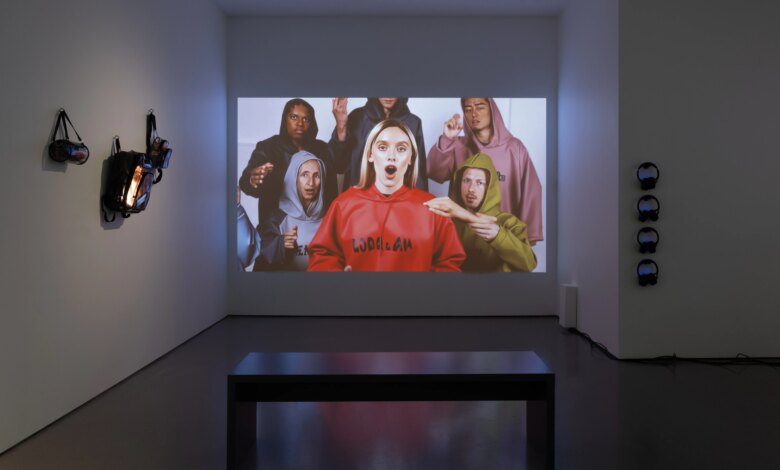
Several featured works investigated the shifting boundaries between physical bodies and digital spaces. In the video work Precursing (2023), artist Nina Davies reframes TikTok dances as a form of folk choreography, transforming flesh-and-blood bodies into polygons while a fictional podcast plays. Davies also explores ancient concepts of mimicry in Image Syncers (2025), where a fictional group evades security by mimicking artificial intelligence movements to mask their identities.
The interplay between temporal states and material production is also central to Isaac Lythgoe’s sculpture Why can’t we remember the future? (2023). Standing two meters tall, the piece combines carved wood high heels, carved walnut horns, and carbon fiber wings. Lythgoe distinguishes between digital modeling as conceptual work and the physical creation as labor, spending hundreds of hours to render animalistic hybrids tangible. He suggests that while traditional animal fables once explored ethics and philosophy, speculative fiction and future narratives have shifted those stories toward aliens and robots, allowing artists to tell stories of the future for the present.

Other artists engage with historical memory by examining the persistence of older imagery. Jürgen Baumann’s emergency exit VI (2022) places the familiar green running man from a building sign on the threshold of ruins, using outmoded visual markers to preserve fragments of humanity against the rapid march of time. Meanwhile, Danielle Brathwaite-Shirley’s site-specific installation PIRATING BLACKNESS?BLACKTRANSSEA.COM (2021) places users inside a model boat to navigate uncanny narratives of the slave trade. By introducing a deliberate glitch that prevents players from drowning, the installation traps users in a liminal space where an infection overtakes both ship and player.
Materiality and historical recovery also anchor the work of Claye Bowler, whose touring exhibition “Dig Me A Grave” featured sites of rest alongside recordings of traditional folk songs. Bowler engages with what he describes as an “anti-archive,” where folk songs are understood through recordings and ongoing interpretation rather than rigid digital storage. Interestingly, Bowler sourced the various soils adorning his installation through digital platforms like Instagram and from a planter outside the Henry Moore Institute.

As digital culture accelerates, artists such as Joe Moss emphasize the importance of tangible history, drawing on traditions like the Roman practice of making mosaics from older architectural fragments. By foregrounding physical materiality, these creators position the digital shift not as an inevitable replacement for human art, but as an open-ended possibility.
Ketteringham cautioned that tradition can carry socially conservative burdens that require careful handling, noting that the past remains a malleable, living thing. Through exhibitions like “Phantasmagoria,” artists continue to navigate a liminal cultural moment by simultaneously naming the lessons of history and the uncertainties of tomorrow.