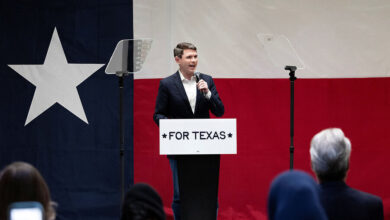
Democratic Operatives and Peltola Aides Accused of Recruiting Spoiler Candidate in Alaska Senate Race

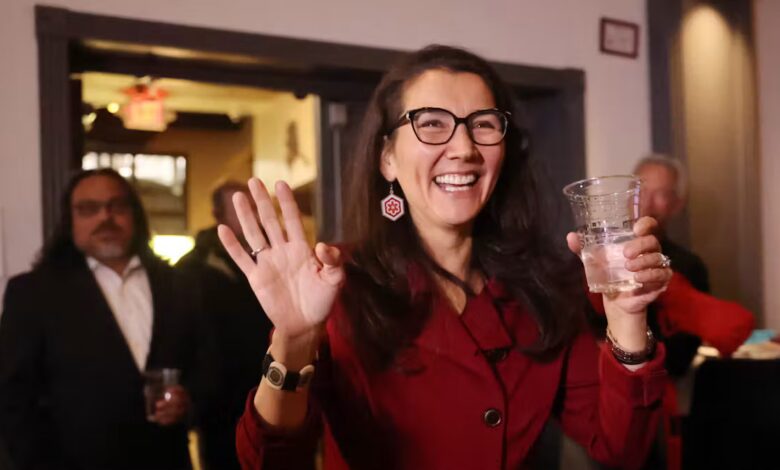
An investigative report published Wednesday details coordinated efforts by Democratic operatives and aides to Mary Peltola’s Senate campaign to recruit a second candidate named Dan Sullivan in Alaska, an operation designed to challenge the incumbent Republican senator and potentially confuse voters in a pivotal race.
The reporting outlines what participants described as a “ballot composition project.” The effort reportedly brought together Peltola campaign staff, Democratic Senatorial Campaign Committee officials, political consultants, and an operative who traveled across Alaska under an assumed name to approach potential candidates. Republicans have spent months accusing Democrats of orchestrating the scheme to introduce a name-matching spoiler into the contest, a charge that counters repeated denials from the Peltola campaign regarding any role in candidate recruitment.
According to the published findings, the effort traces back to the summer of 2025, when a Peltola staffer received instructions from senior campaign aides to comb through voter records to identify individuals named Dan Sullivan. That search eventually led to Dan J. Sullivan, a retired teacher from the remote fishing village of Petersburg, who announced his Senate candidacy in the spring. Dan J. Sullivan has consistently maintained that he entered the race independently.
Former Peltola campaign manager Elisa Rios stated that Democratic operatives identified Dan J. Sullivan as a recruitment target and discussed whether his presence on the ballot could aid Peltola. Rios added that Peltola herself was not directly involved in the project but was aware of it. The Alaskans for Mary campaign reiterated its denials, stating it had no involvement with either Sullivan campaign and did not recruit any candidates. The DSCC similarly denied any role in recruiting Sullivan or other Republican contenders.
National Republican figures quickly condemned the campaign tactics. Tim Scott, chairman of the National Republican Senatorial Committee, asserted that Peltola would face accountability for what he termed dishonesty and deception, expressing confidence that voters would support the incumbent. President Donald Trump also criticized the maneuver in a video statement, describing the inclusion of a candidate sharing the senator’s exact name as an unfair tactic to confuse the electorate.
The investigative findings draw upon text message exchanges and interviews with 12 individuals who participated in or were briefed on the operation. The records reportedly show campaign aides and DSCC officials discussing the project over several months to shape the candidate field. One operative, identified as Jerid Kurtz, traveled through Alaska using the name “Zane” to approach leftist candidates. Matthew Salisbury, a former congressional candidate who ultimately declined a Senate run, identified Kurtz from a photograph and noted that the recruiter offered potential outside support without disclosing the funding source.
The project extended beyond the second Sullivan. Operatives reportedly sought other candidates to draw support from Republicans. After Democrat David Leslie withdrew in August, Republican Gerald Heikes advanced to the general election ballot, leaving Peltola as the sole Democrat facing three candidates identified as Republicans or unaffiliated.
Financial records reviewed in the report show that the pro-Peltola super PAC, 49th State PAC, paid approximately $87,000 to Wingspan Strategies, a firm co-owned by Kurtz, though the PAC denied hiring or paying Kurtz for services. Political consultant Jim Lottsfeldt also denied participating in a scheme to support spoiler candidates.
Internal discussions also explored forming a new political party to attract conservative voters. Text exchanges from January show then-campaign manager Anton McParland floating the idea of a “MAGA party” to DSCC campaign director Andrew Piatt, who responded favorably, though the proposal did not move forward.
The ballot situation previously faced legal challenges when Alaska election officials initially removed the challenger over good-faith concerns, but the Alaska Supreme Court ruled that he could remain. The ballot distinguishes the two candidates using their full names, party affiliations, and incumbent status.
In a related federal development, the Justice Department has filed a lawsuit against Alaska election officials, seeking to block the certification of Senate results if the incumbent loses and subsequent investigations determine that voter confusion affected the outcome. President Trump stated he personally directed the department to pursue the legal action, which has drawn criticism from Peltola, state officials, and election-law experts who question federal authority over state certification processes. White House Director of Communications Steven Cheung also criticized the strategy on social media following the report.
The race between Peltola and the incumbent remains competitive, with recent polls indicating a narrow lead for Peltola.