California Proposition 37 Targets Housing Crisis with $25 Billion Down Payment Assistance Plan

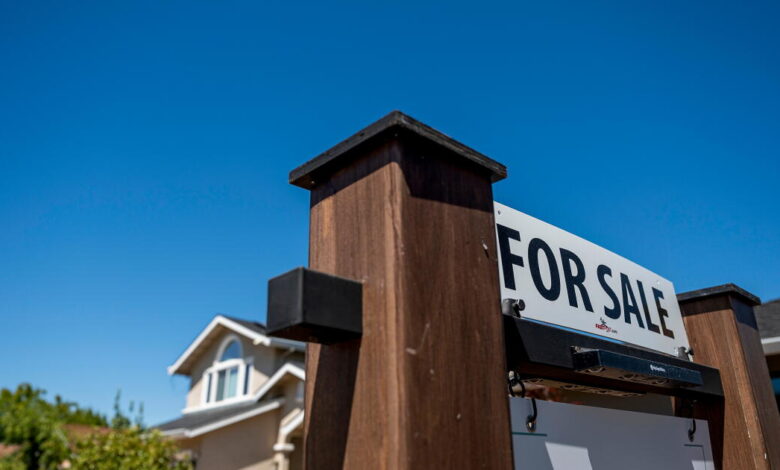
California voters heading to the polls on Nov. 3 will decide on Proposition 37, a massive $25 billion ballot measure designed to bridge the homeownership gap for middle-class residents. The proposal seeks to address a housing market where the median price of a single-family home has climbed to $900,000 statewide, making the traditional 20% down payment an insurmountable $180,000 hurdle for many working families. In Los Angeles County, that median sits at $935,000, while in Orange County, it has surged to $1.5 million.
Proposition 37 would create a down payment assistance program of unprecedented scale. For comparison, the state’s existing California Dream For All program launched with $500 million—only about 2% of the funding proposed by this new measure. If approved, the program would allow qualified residents to borrow up to 17% of the purchase price of a home as a second mortgage. Borrowers would be required to contribute 3% of the down payment from their own funds, bringing the total down payment to 20% and helping them avoid costly private mortgage insurance.
The program is designed to be self-funding. Unlike many government initiatives, Proposition 37 would not rely on taxpayer dollars. Instead, the state would issue revenue bonds to investors. The proceeds from these bonds would fund the down payment loans, and the interest paid by homeowners on their second mortgages would be used to repay the investors. Governor Gavin Newsom has endorsed the measure, calling it a “historic opportunity” to expand ownership for working families at zero risk to taxpayers. The measure also counts unions, chambers of commerce, and mayors from Santa Monica to San Jose among its supporters.
However, the program includes a significant restriction: it applies only to new construction. This includes newly built single-family houses, as well as commercial buildings that have been converted into residential units, such as townhomes or condominiums. Bob Hertzberg, the former Senate Majority Leader who authored the proposal, stated the narrow focus is intentional. By limiting the loans to new builds, the measure aims to stimulate housing supply in a state estimated to be short by 840,000 to 3 million homes. Hertzberg argues that by fueling demand for new products, builders will be incentivized to increase production.
Eligibility for the program is broad compared to other state aids. Applicants do not need to be first-time homebuyers, though they must intend to live in the property as their primary residence. To qualify, a borrower must have lived in California for at least one year and earn no more than 200% of the local median income. In Los Angeles County, this means a family of four could earn up to $216,200 annually and still be eligible for assistance. The program would also set price caps on qualifying homes, which are expected to range between $1 million and $1.5 million depending on the specific county.
Despite the widespread support, the measure has faced criticism. The League of Women Voters opposes Proposition 37, citing concerns that the program could saddle middle-class families with excessive debt. The group also criticized the lack of specific terms in the ballot language, noting that interest rates and exact loan conditions would be determined by the California Housing Finance Agency (CalHFA) only after the measure passes. Because the program relies on revenue bonds—which are often viewed as riskier by investors than general obligation bonds—some analysts worry that the interest rates offered to homebuyers might be higher than expected to attract sufficient investment.
Skepticism also exists regarding whether the measure will actually solve the supply crisis. Matthew Lewis, director of communications for California YIMBY, expressed concern that the program might simply increase the number of bidders for a limited pool of houses without effectively lowering the cost of building. Other developers, like Paul Schon of Los Angeles, suggested that addressing permitting delays and administrative red tape would have a more substantial impact on the housing shortage than down payment assistance alone.
To encourage participation from the construction industry, Proposition 37 offers a “qualified builder” designation. Developers who agree to the program’s price caps and specific labor requirements would receive protection from certain types of buyer-initiated defect lawsuits for 10 years following construction. While this provides some relief from litigation costs, some builders remain uncertain if it is enough to significantly accelerate the pace of new development.
The financial structure of the plan relies heavily on finding socially-minded investors. Hertzberg has suggested that foundations and tech leaders might be willing to purchase the bonds at lower rates to help keep the program’s interest rates affordable. One of the measure’s primary financial backers is the nonprofit Building a Better California, which has received support from high-profile figures such as Google co-founder Sergey Brin.
If successful, California would join a growing list of states attempting to tackle affordability through down payment aid. Since 2020 and 2021, Massachusetts and New York have distributed $146 million and $70 million, respectively, in similar assistance. However, the $25 billion scale of Proposition 37 represents a far more aggressive intervention into the housing market than any program currently operating in the United States.