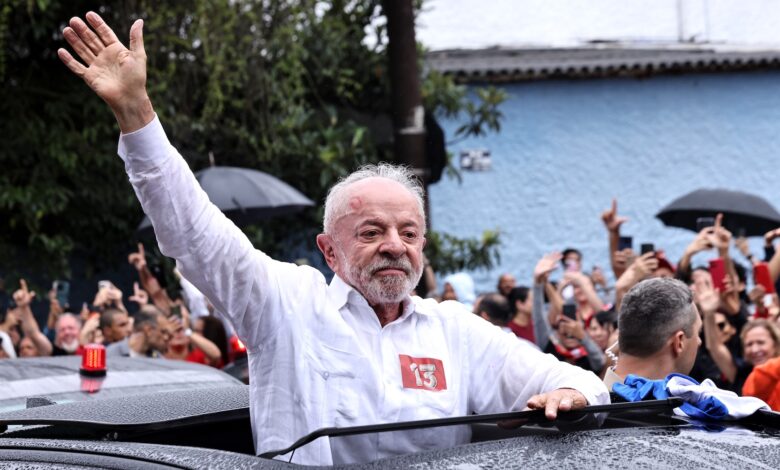
Brazilian President Luiz Inácio Lula da Silva secured a historic reelection on October 25, narrowly defeating Senator Flávio Bolsonaro in a high-stakes runoff that has significant implications for Latin American geopolitics. The victory marks a dramatic reversal for the region’s right-wing momentum and represents a personal triumph for Lula, a veteran labor leader whose political career has survived imprisonment and multiple high-profile corruption probes.
With nearly 97% of the ballots counted, official results show Lula garnered 51.79% of the vote compared to 48.21% for Flávio Bolsonaro, the eldest son of the former president. The outcome, representing a margin of approximately 4 million votes, concludes a tense campaign that tested the resilience of Brazil’s democratic institutions. This election marks the first time since the country’s return to democratic elections in 1989 that a candidate who finished second in the initial round of voting managed to win the presidency in the runoff.
Lula’s win effectively halts a streak of seven consecutive victories by right-wing candidates across Central and South America over the last 18 months. While leaders from France to Russia were quick to offer congratulations, the international response reflected sharp ideological divisions. Among those welcoming the result were newly elected right-wing presidents Keiko Fujimori of Peru and Abelardo de la Espriella of Colombia. However, Donald Trump and Argentine President Javier Milei notably withheld their congratulations. Trump, speaking before a rally in Mississippi, alleged without evidence that the election appeared “rigged,” claiming the process “looked very bad.”
The transition of power remains fraught with political tension. Flávio Bolsonaro initially signaled a refusal to accept the outcome, citing a decision by a Supreme Court justice to extend voting hours on Sunday due to alleged transportation irregularities. Despite these claims, which observers noted were unlikely to have altered the final margin, Bolsonaro effectively conceded late Monday after it became clear he lacked broader international backing. His concession comes as Brazilian authorities intensify investigations into his personal finances; officials have already seized his passport in connection with an alleged money laundering scheme.
The shadow of the Bolsonaro family’s legal troubles looms large over the election’s aftermath. The candidate’s father, Jair Bolsonaro, is currently serving a 27-year sentence under house arrest for crimes related to an attempted coup following his own 2022 loss. That incident culminated in a mob assault on government buildings in Brasília on January 8, 2023, an event widely compared to the January 6 Capitol riot in the United States.
Lula’s own path back to the presidency has been equally tumultuous. A co-founder of the left-wing Workers’ Party, he served two terms before being caught in a 2014 anti-corruption probe. He was sentenced to 12 years in prison in 2018, but was released in 2019 after reports suggested the judge and prosecutor in his case had conspired to prevent him from running for office. Since returning to the presidency in 2022, Lula has made environmental protection a cornerstone of his administration, overseeing a 71% decrease in the rate of deforestation in the Amazon rainforest.
Despite the executive victory, Lula faces a challenging domestic landscape. While his campaign successfully mobilized 33 million citizens who sat out the first round of voting on October 4, conservative voters used that same election to fill the Brazilian Congress with allies of the Bolsonaro family. In the first round, Flávio Bolsonaro had actually led Lula by two percentage points, 47% to 45%.
Political analysts suggest that while Lula has secured the presidency, “Bolsonarism” remains a potent force among conservative voters. The narrowness of the defeat indicates that the right-wing movement continues to command significant loyalty, meaning Lula will have to navigate a legislature that has pushed further to the right as he attempts to implement his social and environmental agendas.