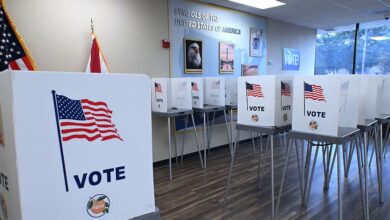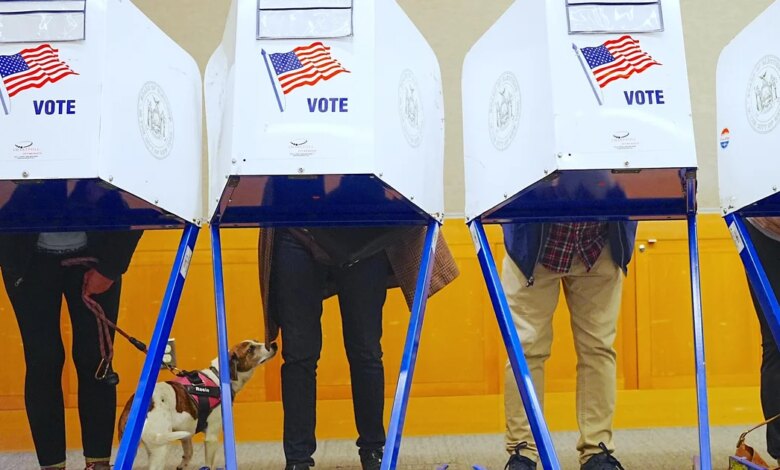
Early voting is underway across the United States for the 2026 midterm elections, with Election Day scheduled for Tuesday, Nov. 3. Voters will decide all 435 seats in the House of Representatives, while voters in 35 states will elect senators and 36 states will hold gubernatorial races. Additionally, more than 150 ballot measures are certified across 40 states, addressing issues ranging from data center buildouts to state policies.
Despite the significant scope of the ballot, midterm elections historically draw millions fewer participants than presidential contests. In the 2022 midterms, 46% of eligible voters cast ballots, compared with 65% in the 2024 presidential election. However, Columbia University political scientist Donald Green, who has studied voting for three decades, notes that midterms are arguably more opportune moments for voters to shape policy because relatively small shifts in vote totals can lead to dramatic shifts in governance.
“The smaller the electorate, the more weight each ballot carries,” experts note, pointing to historical razor-thin margins. In the 2022 midterm cycle, Republican Rep. Lauren Boebert secured her Colorado seat by just 546 votes, while Democrat Adam Gray won California’s 13th Congressional District by 187 votes in 2024. In 2020, Republican Mariannette Miller-Meeks won an Iowa House race by a margin of six votes. Similar tight contests are anticipated in the current cycle.
Control of both chambers of Congress hangs in the balance. Republicans hold a narrow majority in the House, where Democrats require a net gain of just three seats to claim control. In the Senate, Democrats need a net gain of four seats to flip the chamber. The resulting congressional alignment will determine whether the legislative branch acts as a check or an enabler on presidential power for the final two years of Donald Trump’s presidency, influencing decisions on potential funding for the Iran War, artificial intelligence regulation, and other major legislative priorities.
At the state level, more than 30 gubernatorial races feature competitive contests from Georgia to Ohio. Governors hold substantial influence over the fate of data center developments through their authority to approve moratoriums, grant tax breaks, and appoint utility commissioners. Across 13 states, 41 ballot initiatives specifically address data centers.
Public sentiment surrounding the elections reflects widespread voter cynicism. A poll conducted by CBS News and YouGov found that most voters do not believe either major political party has a clear plan to improve their financial well-being, leading some to consider sitting out the election. Kansas farmer Mandy Sieren expressed disillusionment, stating that she does not trust candidates from either party. Green counters that despite dissatisfaction with political parties, voters ultimately face individual choices among specific candidates and that politicians pay close attention to which demographic groups turn out reliably.
“It may be surprising to them how attentive politicians are to which groups vote at high rates and which groups don’t,” Green said, noting that older citizens vote at high rates, whereas issues important to young and low-income voters, who participate less frequently, are often devalued.
Individual motivations for participating vary widely. Kansas college student Brody Saner views voting as a civic duty to prompt change, while Kansas voter Tracy Preisser describes the ballot as an individual voice that shapes community rules. For New York City poll worker Sandra Strother, participation carries a personal historical weight rooted in family tragedy; her uncle was killed in Alabama in the 1950s while attempting to vote as an African American, serving as her primary motivator to ensure both her own participation and the voting rights of others.