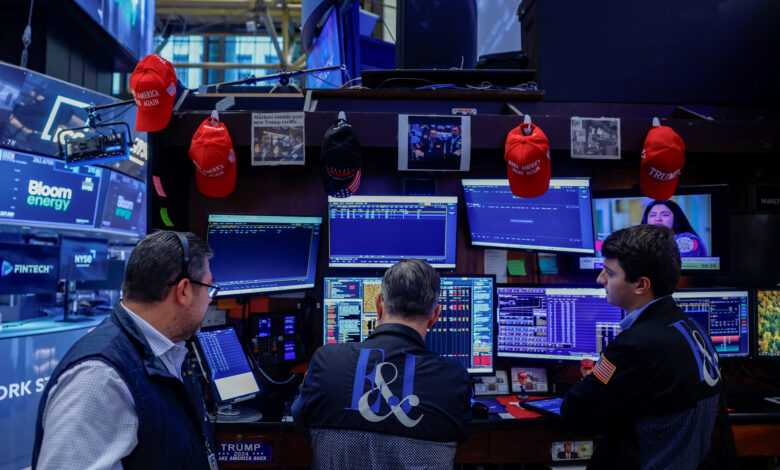
A prolonged rally on Wall Street is showing signs of exhaustion as cooling sentiment around artificial intelligence and a sharp spike in energy prices revive concerns over stagflation. The shift in market dynamics has prompted a sudden return to U.S. Treasuries, which are once again serving as a sanctuary for investors looking to insulate portfolios from a potential economic slowdown. This reversal comes at a sensitive time for the Federal Reserve, which faces a dual threat of stagnant growth and persistent price pressures.
Throughout 2026, the U.S. bond market has been pressured by a combination of aggressive fiscal spending, rising energy costs, and the momentum of the AI sector. For much of the year, bond yields moved steadily higher. However, that trend broke last week as the 10-year Treasury yield fell below 5% for the first time in more than a month, recording a steep 20-basis-point decline on Thursday alone. The retreat in yields suggests that fears of an AI bubble burst are beginning to outweigh the inflationary concerns traditionally associated with high oil prices.
The souring mood surrounding AI follows a period of massive investment that has yet to yield clear, broad-based economic returns for some sectors. While no single event triggered the shift, recent earnings reports from major technology firms have focused heavily on gargantuan capital expenditure plans. This spending has fueled anxieties about the long-term sustainability of the AI boom, and those tremors are extending into debt markets. If the AI sector, which has been the primary engine for both stock market gains and broader economic optimism, begins to sputter, investors expect a significant ripple effect across Main Street.
Compounding these growth concerns is a renewed surge in the energy sector. Last week, U.S. crude futures jumped 10%, reaching a six-month high above $110 a barrel. The volatility in energy remains tied to the geopolitical shocks of earlier this year. The 10-year Treasury yield saw its lowest close of 2026 at 3.96% on February 27, just one day before the military escalation involving U.S. and Israeli attacks on Iran. That conflict sent global crude, gas, and fuel prices soaring, eventually pushing Treasury yields to a two-decade peak of 5.36% earlier this month.
Under normal market conditions, a spike in energy costs acts as a tax on the economy, slowing growth and driving investors toward the safety of government bonds. However, for most of the current year, the sheer strength of the AI narrative kept the economy humming despite rising costs. Now that the AI sector is showing signs of vulnerability, the historical correlation between oil and yields has broken down. Even as oil prices rebound, yields are retreating, signaling that investors are prioritizing protection against a potential recession over the fear of “higher-for-longer” interest rates.
This creates a significant dilemma for the Federal Open Market Committee (FOMC). The Federal Reserve is scheduled to meet this Wednesday, just ahead of next week’s midterm elections. While the central bank raised rates in September, policymakers are widely expected to hold steady this week. Current market-based inflation expectations, measured by one-year inflation swaps, climbed to 2.80% last week—the highest level since June. While longer-dated inflation expectations remain more stable, the immediate pressure on prices is undeniable.
Internal economic data further complicates the picture. Producer prices are currently rising at their fastest clip in four years, and the gap between producer and consumer price inflation is at its widest point in the same period. Furthermore, consumer price inflation has remained above the Fed’s 2% target for nearly six years. Economists at UBS have warned that inflation measures are likely to rise in the coming months due to base effects from last year’s government shutdown in October and November. These analysts do not expect a meaningful cooling of inflation until the spring of 2027, when the base effects from the start of the Iran conflict begin to impact the year-over-year data.
As the Fed prepares its next move, the question remains whether policymakers can afford to ignore the latest energy spike while hoping that AI-related market instability does not snowball into a broader economic contraction. The return of the stagflation narrative suggests that the path forward for both the central bank and the wider market is becoming increasingly narrow.