A persistent stalemate in the conflict between Rwanda and the Democratic Republic of Congo is casting fresh doubt on the Trump administration’s diplomatic leverage in Central Africa. The United States imposed targeted financial penalties this week against Rwanda’s Ministry of Defense and a commercial bank utilized by its security services, accusing Kigali of direct military support for M23 rebels in eastern Congo.
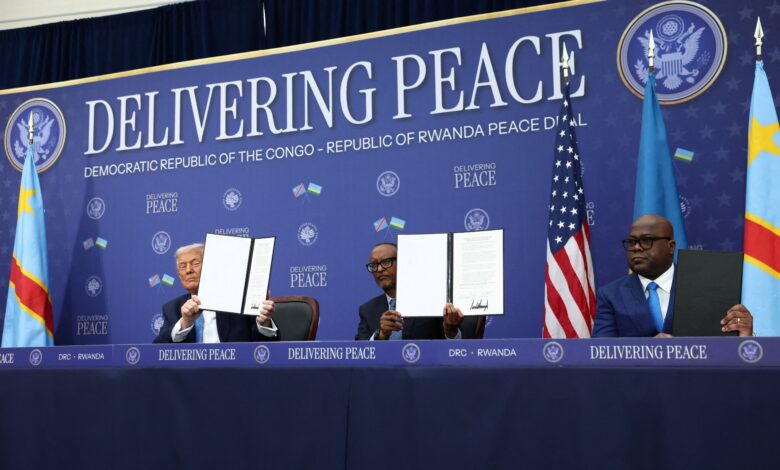
The punitive measures arrive nearly a year after U.S. President Donald Trump hosted Rwandan President Paul Kagame and Congolese President Félix Tshisekedi in Washington to sign a series of accords intended to conclude the hostilities. Despite those high-level agreements, active fighting has continued unabated.
“It will continue raising questions about U.S. leadership within these matters, because the U.S. is the guarantor of this particular agreement,” said Mvemba Phezo Dizolele, a senior fellow at Johns Hopkins University’s Foreign Policy Institute, regarding the ongoing military deadlock.
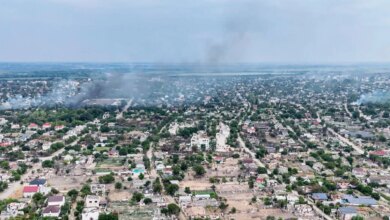
According to the U.S. State Department, thousands of troops from the Rwanda Defense Force remain active inside Congolese territory. U.S. officials also reported that some of these deployed forces have introduced surface-to-air missiles and advanced jamming equipment into the region, posing direct risks to civilian aviation.
In announcing the latest financial restrictions, the U.S. Treasury Department specifically targeted the Zigama Credit and Savings Society. The agency accused the institution of helping finance the Rwandan military’s operations in support of the Congolese rebels, including facilitating the illicit extraction and movement of gold originating from M23-controlled zones.
This week’s actions build upon a broader pattern of recent economic pressure from Washington. In March, the U.S. levied sanctions against the Rwandan army and four senior military commanders, followed by additional measures directed at a Kigali gold refinery in June.
Despite the mounting economic pressure, analysts suggest the latest sanctions are unlikely to alter Rwanda’s strategic calculus significantly, though they carry diplomatic friction. Dizolele noted that while the penalties will sting and force adjustments, the Rwandan government is likely to absorb the impact while remaining mindful of its Western reputation.
Unlike many of Trump’s foreign policy initiatives that frequently draw fierce partisan division, the administration’s stance on the Great Lakes conflict has secured bipartisan backing in Washington. Senator Jeff Merkley, a Democrat from Oregon, expressed clear support for the new sanctions. Merkley recently joined Senator Marsha Blackburn, a Tennessee Republican, in pressing the National Basketball Association regarding its corporate partnership in Rwanda.
Meanwhile, the Rwandan government continues to place the onus for compliance back on Kinshasa. Rwandan government spokesperson Yolande Makolo maintained that her nation remains prepared to execute the Washington Accords fully, provided the Democratic Republic of Congo meets its corresponding obligations and international mediators hold all participants accountable.