Prime Minister Mark Carney stated that Canada is working toward becoming an “associate member” of the European Union, adopting the terminology during a business roundtable in Montreal despite ongoing internal divisions within the bloc over the designation. The remarks came on Thursday as Carney hosted European Commission President Ursula von der Leyen and other top EU delegates for a two-day summit aimed at strengthening bilateral ties, trade, and security as both economies seek to reduce reliance on the United States under President Donald Trump.
“We share a common mission. We’re in the process of forging a new alliance — alliance for the future — with Canada as an associate member,” Carney said ahead of the meeting with Canadian and European executives. The stance marked a shift for the prime minister, who had previously downplayed the nomenclature by telling reporters that the proposed partnership’s “name doesn’t matter” and that the focus should remain on affordability, youth opportunity, and research networks.

The concept of an associate membership for Canada was first championed last month by von der Leyen, who described it as “an association without accession.” In a keynote speech earlier on Thursday, she told attendees that she envisions a partnership “that comes closer to membership than anything we’ve done before.” Von der Leyen explained that the status would entail close policy alignment across artificial intelligence, climate, energy, security, and governance, alongside deeper institutional cooperation between the European Commission, the Canadian government, parliaments, and courts.
However, the label has triggered friction within the 27-member European Union. Germany, in particular, objects to the “associate member” title, viewing it as a red line, according to sources. The dispute over terminology briefly removed the phrase from a proposed joint statement on Wednesday, where it was replaced with a commitment to an “ever closer association.” A source noted that while EU member countries have largely finalized the statement, Canada could still request further changes before the summit concludes on Friday.

David Plunkett, a former Canadian ambassador to the European Union, dismissed the naming debate as an unhelpful distraction. He argued that both sides should focus on securing the broadest and deepest substantive package possible before deciding on a label.
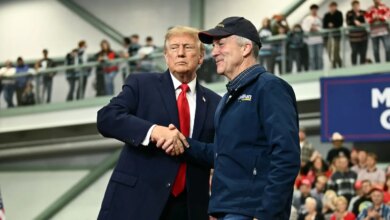
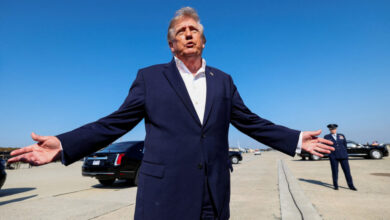
The push for closer ties has also drawn external scrutiny, with President Donald Trump having previously threatened retaliation if he interpreted closer integration as a hostile act. Asked about potential fallout, a senior Canadian government official speaking on background maintained that the summit is not directed against any third nation but reflects mutual interests between Canada and the EU.

Alongside high-level political talks, the summit yielded tangible economic developments. On the sidelines of the meetings, Carney announced a federal investment of up to $1.6 billion in Cohere, a Toronto-based generative artificial intelligence firm. “We’re not waiting for the future of AI to be decided somewhere else by those we don’t know or by whom we don’t trust,” Carney said.
The evolving joint statement also outlines plans to secure a predictable trade environment, deepen collaboration in the Arctic, counter foreign information manipulation, and maintain support for Ukraine. Both sides also committed to launching negotiations toward broader participation in Erasmus, the European Union’s youth and student exchange program.

Domestic critics, however, dismissed the high-level gathering. Opposition Leader Pierre Poilievre criticized the meetings on social media as theatrical, arguing they would do nothing to lower mortgages or grocery bills. He urged the government to press European nations to lift barriers against Canadian beef and cancel planned carbon tariffs.