The total foreign-born population in the United States experienced almost no growth in 2025, marking a sharp departure from historic trends as President Donald Trump’s administration implemented stricter border enforcement and a low-migration economic strategy. According to an October 30 report from the Center for Immigration Studies utilizing U.S. Census Bureau data, the immigrant population—encompassing both legal and undocumented residents—stood at 50.4 million, representing a marginal increase from the 50.2 million recorded in the 2024 survey alongside 290 million U.S.-born Americans.
Without these policy shifts, the Center for Immigration Studies estimated that the migrant population would have expanded by 2.4 million in 2025. Instead, the overall foreign-born count grew by just 174,000 between mid-2024 and mid-2025, a dramatic deceleration compared to the 2.4 million increase recorded from 2023 to 2024 under the previous administration. Furthermore, interim data spanning March 2025 to March 2026 indicates a subsequent decline of approximately 790,000 in the resident migrant population.
This slowdown represents a substantial pivot from decades of federal policy dating back to 1965 and 1990, as well as the tenure of former President Joe Biden, whose administration oversaw the arrival of at least 8 million migrants. Historically, federal economic strategies relied on a steady influx of consumers, workers, and renters from developing nations to stimulate growth. This annual inflow typically combined roughly 1 million legalized immigrants, about 1 million temporary workers, and significant numbers of undocumented migrants, complementing approximately 3.6 million annual U.S. births.
For many employers and investors in real estate, hospitality, food service, and entertainment, the historical model of high-migration labor supply provided an abundant source of affordable workers. The continuous arrival of foreign graduates over the past two decades also benefited white-collar sectors including banking, insurance, and technology. Critics of the previous approach, however, argued that this economic framework generated significant domestic trade-offs, such as downward pressure on wages, reduced incentives for workplace capital investment, and escalating housing costs. Proponents of the current shift also point to broader societal pressures, including public infrastructure strain, increased government debt, and altered political dynamics.
Following his 2024 election victory, Trump’s appointees moved to restrict legal migrant arrivals at airports and curtail unauthorized crossings at the southern border. This tightening of the labor supply has compelled certain business sectors to reevaluate operational models, prompting calls for greater investment in labor-saving technologies and higher wages to attract domestic workers.
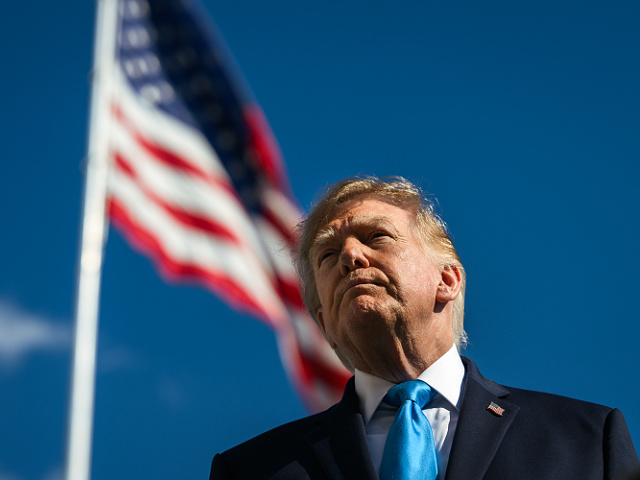
Addressing the nation’s labor demands in an August interview, Trump emphasized the necessity of technological adaptation. “We’re going to need robots … to make our economy run because we do not have enough people,” he said, adding that increased efficiency and automation will help offset workforce constraints.
Supporters of the administration’s approach also argue that reduced emigration from developing nations allows those countries to retain skilled professionals and encourage wealth-generating domestic investment, though economists continue to debate the long-term domestic productivity impacts of restricting labor pools.