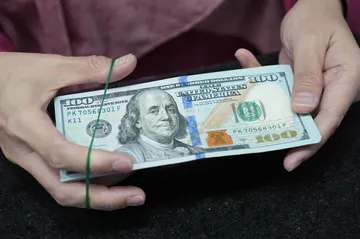
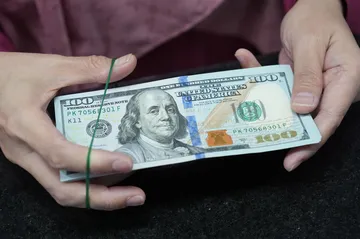
The US dollar’s robust rally appears well-positioned to withstand potential political gridlock resulting from the upcoming US midterm elections, supported by high interest rates and heavy capital spending on artificial intelligence.
Investors are preparing for the Nov. 3 vote to produce policy paralysis, with polls pointing to potential Democratic victories in at least one chamber of Congress. Historically, such divided government outcomes have not favored the greenback. Even so, the Dollar Spot Index touched its highest level since May 2025 this month, propelled by stronger-than-expected inflation figures.
Market participants and currency strategists argue that the primary drivers of the currency’s strength remain intact regardless of election results. Nathan Thooft, a senior portfolio manager at Manulife Investment Management, noted that while electoral outcomes can shift short-term sentiment, long-term currency values are dictated by relative economic growth, inflation, interest rates, and capital flows. A divided government could even reduce policy uncertainty, offering a degree of financial market stability.
Citigroup Inc. strategist Daniel Tobon observed that historical midterm patterns suggest the dollar typically softens following the vote under a divided government, but he expects any weakness to be short-lived. Meanwhile, Alex Cohen, a strategist at Bank of America, noted that while a Democratic-led Congress might attempt to block spending or AI-related regulations during the remainder of President Donald Trump’s term, presidential vetoes could protect key market drivers. Cohen added that any post-election dip in the AI trade and subsequent dollar sell-off would represent a buying opportunity.
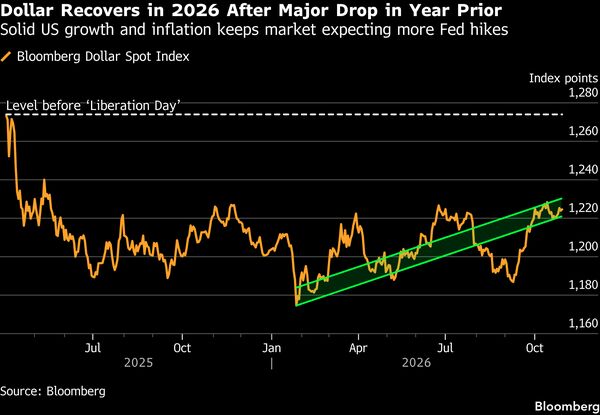
Additional momentum could arrive from the Federal Reserve, which is widely anticipated to resume raising interest rates after the November vote. The central bank maintained rates on Wednesday, with Chairman Kevin Warsh indicating officials’ readiness to act following a September rate increase—the first in three years. That move drove the dollar to its strongest month since March, keeping the currency on track for its second consecutive monthly gain and a roughly 1.8% rise for 2026. The shift has prompted Wall Street to revise its outlook, with Morgan Stanley reversing earlier forecasts of currency depreciation.
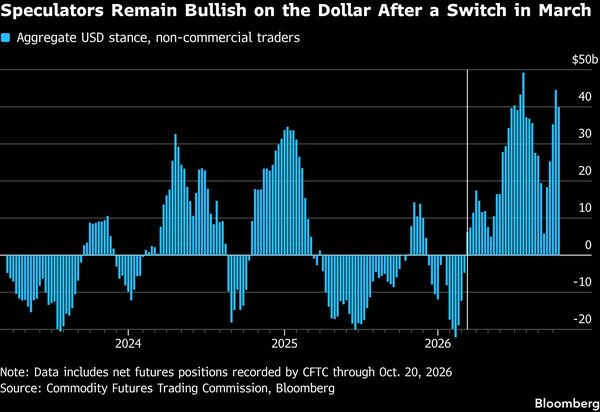
Steven Englander, the bank’s global head of G-10 FX research, explained that markets are comfortable with a split Congress or a narrow Senate majority unable to override presidential vetoes, provided the Fed maintains low inflation and high real rates. Data from the Commodity Futures Trading Commission through the week of Oct. 20 shows non-commercial asset managers holding nearly $40 billion in bullish wagers on the dollar, maintaining a positive outlook since mid-March.
Longer-term challenges remain visible on the horizon. Kristina Hooper, chief market strategist at Man Group, warned that a potential slowdown in AI capital expenditure could weigh heavily on economic growth and pressure the currency downwards, even though safe-haven demand might offer short-term support during electoral disputes.
Geopolitical factors are also in play. Oil prices have surged about 80% this year amid conflict with Iran, bolstering the dollar while weakening currencies in energy-importing regions such as Europe and Japan, where France’s fiscal challenges have further burdened the euro. President Trump stated earlier this month that the US would not strike Iran before the vote, leaving open the possibility of military escalation afterward. Noah Buffam, a strategist at CIBC Capital Markets, emphasized that currency markets are closely watching post-election developments regarding Iran, noting that a more limited military response than currently anticipated could trigger a simultaneous sell-off in both the dollar and oil prices.