Urban Wildfires Release Dangerous Concentrations of Lead and Toxic Metals Far From Burn Zones

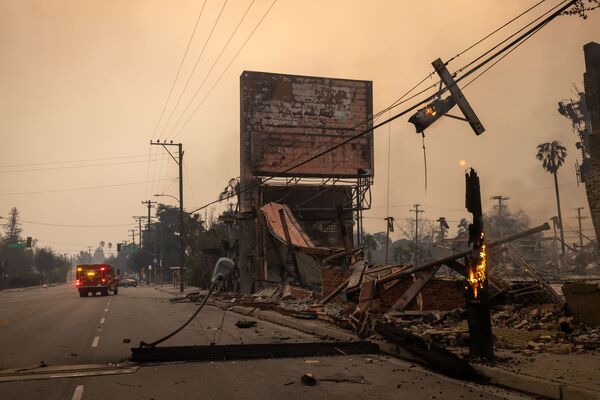
A comprehensive new scientific study reveals that the catastrophic 2025 Los Angeles firestorm exposed roughly seven million people to elevated concentrations of airborne lead and other toxic heavy metals originating from incinerated homes, vehicles, and urban infrastructure. Published Wednesday in the journal Science Advances, the research examines smoke dynamics from the Eaton fire, providing real-time data on how urban infernos project dangerous pollutants far beyond active flames.
The findings stem from measurements captured by an environmental monitoring station that happened to be positioned directly downwind when the Eaton conflagration ignited in January 2025. The monitoring site belongs to the Atmospheric Science and Chemistry Measurement Network, a project funded by the National Science Foundation that had established stations across the country months before the disaster. The Eaton fire ultimately destroyed more than 9,400 buildings and resulted in 19 deaths in the Los Angeles suburb of Altadena.
While a separate blaze, the Palisades fire, ignited 34 miles away hours earlier, unfavorable wind directions prevented the monitoring equipment from capturing data on that specific plume. However, the data successfully gathered from the Eaton event allowed researchers to track real-time changes in the chemical composition of the smoke as the disaster evolved.
Over a 24-hour monitoring window, the smoke plume carried lead concentrations 80 times higher than typical background atmospheric levels. Lead is a potent neurotoxin known to cause severe health complications, particularly among children. In addition to lead, sensors recorded significantly heightened amounts of arsenic and other toxic elements. Driven by wind patterns, the resulting smoke blanketed eastern Los Angeles and the San Gabriel Valley, affecting approximately 70 percent of the county’s total population.
Nga Lee (Sally) Ng, a co-author of the study and a professor of environmental science and engineering at the California Institute of Technology, noted that while long-term, chronic exposure to metals like lead has been extensively examined by scientists, the physiological consequences of acute, short-term exposure to intensely concentrated airborne toxins remain largely unclear. Researchers hope that capturing real-time measurements will enable the scientific community to better characterize these acute health risks.
Haroula Baliaka, the study’s lead author and a California Institute of Technology PhD candidate at the time of the research, stated that the findings should prompt municipal leaders and emergency management officials to reevaluate evacuation planning. Because wind-driven toxic smoke can present severe health hazards across vast geographic areas untouched by flames, future emergency protocols may need to account for airborne contamination zones.
As climate change drives an increase in destructive urban firestorms, researchers emphasize that communities must adapt quickly to the expanding footprint of wildfire pollution. Establishing dedicated evacuation parameters for smoke exposure represents a necessary step in addressing this modern hazard.