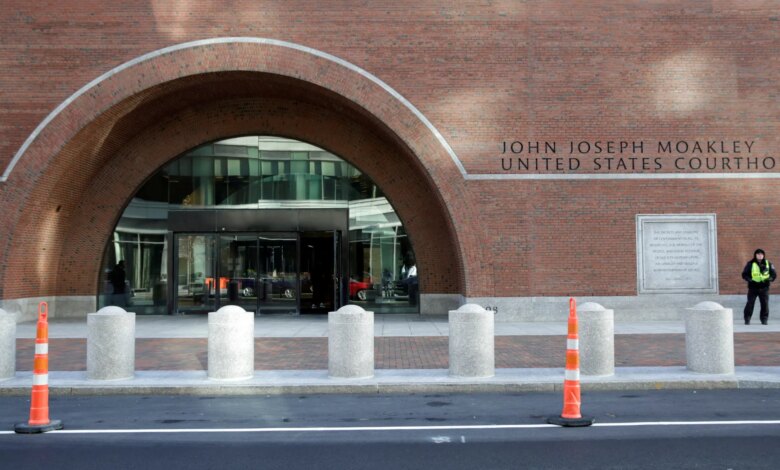
A federal jury in Boston has convicted a 55-year-old Rwandan American man of perjury and obstruction of justice after determining he lied about his involvement in the 1994 Rwandan genocide. Eric Nshimiye, a U.S. citizen and father of four, was found guilty on Tuesday of four counts of perjury and one count of obstruction of justice following proceedings in Boston federal court.
Investigators from the U.S. Department of Homeland Security arrested Nshimiye at his Ohio home in 2024, alleging he had fabricated details during an interview regarding his whereabouts in Rwanda during the 1994 violence. Prosecutors initially brought multiple charges against Nshimiye, including immigration fraud, asserting he had falsely claimed on naturalization paperwork that he took no part in the genocide before gaining U.S. citizenship in 2009. Prosecutors dropped the immigration charge prior to the trial.
The case stemmed from testimony Nshimiye provided during a 2019 Boston trial for Jean Leonard Teganya, his former medical school roommate. Teganya was later convicted of helping perpetrate the genocide. During that 2019 trial, Nshimiye testified that neither he nor Teganya participated in the killing and rape of Tutsis in Butare, where the two men were students at a medical university.
During the recent trial, prosecutors presented expert testimony and witnesses from Rwanda. Jurors heard accounts from witnesses who stated they recalled Nshimiye taking part in killings and other violence directed at minority Tutsis in Butare in 1994. The nationwide outbreak of genocidal violence by hardline majority Hutus resulted in the deaths of more than 800,000 people over approximately 100 days. Additional witnesses testified that Nshimiye was associated with the pro-Hutu National Revolutionary Movement for Development and the Interahamwe, the paramilitary organization responsible for the majority of the killings.
Assistant Attorney General A. Tysen Duva of the Department of Justice’s Criminal Division addressed the outcome in a statement, emphasizing that the defendant concealed his involvement and acts of violence, including clubbing individuals to death, for nearly three decades before lying to immigration authorities and a federal jury.
Defense attorneys contested the government’s case by pointing out that Nshimiye had never been implicated by domestic or international tribunals following the genocide, including the International Criminal Tribunal for Rwanda or Rwanda’s informal transitional gacaca courts, which tried over a million people. The defense also highlighted inconsistencies in government witness testimony, presented defense witnesses who placed Nshimiye elsewhere in the country, such as Kigali, during the violence, and argued that Rwandan authorities interfered with the investigation by meeting with certain witnesses prior to their testimony in Boston.
Following the verdict, Nshimiye’s defense team filed a request asking the court to credit the two and a half years he has already spent in pre-trial detention toward any eventual sentence, arguing that time served exceeded typical sentences for the convicted offenses. Members of Nshimiye’s family, including his U.S.-born children, attended the proceedings.
Nshimiye’s prosecution is part of a broader series of recent U.S. legal actions concerning individuals accused of concealing roles in the 1994 genocide. In April 2025, authorities charged Faustin Nsabumukunzi, a 65-year-old beekeeper in Long Island, New York, with concealing his role while applying for citizenship. In June 2025, officials charged 65-year-old Vincent Nzigiyimfura of Dayton, Ohio, under similar circumstances. Both men had previously been listed publicly as fugitives by Rwandan authorities.