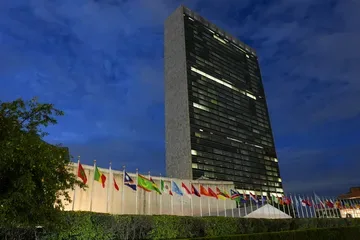
The United Nations has failed to renew the mandate of its peacekeeping mission in the disputed territory of Western Sahara for the first time in 35 years, heightening risks of renewed conflict between Morocco and Sahrawi independence fighters.
The deadlock at the UN Security Council on Friday followed competing resolutions that collapsed under mutual vetoes. A US-backed proposal sought to modify the mission so it would no longer be bound to commit to an eventual referendum on the territory’s political future. That measure was vetoed by Russia. A rival resolution sponsored by Moscow secured only three supporting votes before facing a US veto.
The mission’s mandate is scheduled to expire on Saturday, placing the future of its 534 deployed personnel across the vast desert region in immediate jeopardy.
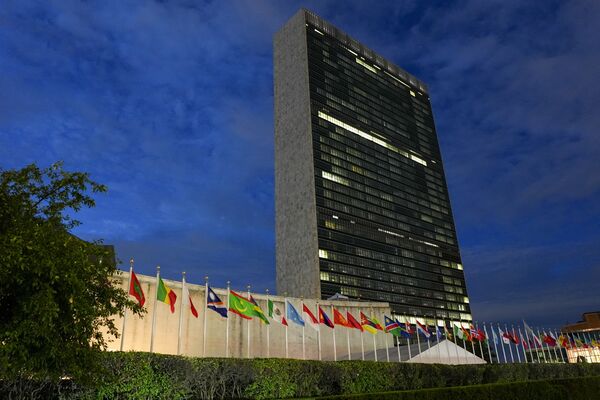
Established in 1991 following a conflict between Morocco and the Algeria-backed Polisario Front that killed at least 9,000 people over roughly 15 years, the mission was originally designed to organize a self-determination referendum. That vote never materialized due to prolonged disagreements over voter eligibility.
“This is a mission that unfortunately became a permanent monument to something that could not work,” said Michael Waltz, the US ambassador to the United Nations.
Conversely, Russian UN envoy Vasily Nebenzya characterized the defeat of his country’s resolution as the “political murder of the mission,” contending that the American proposal would have entirely reversed the established resolution process for the territorial dispute.
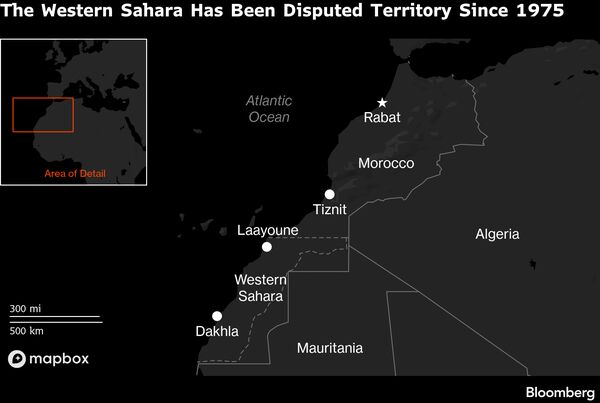
Western Sahara, an Atlantic coastal territory larger than the United Kingdom, has been contested since Spanish colonial forces withdrew in 1975 and Morocco moved to annex the region. Morocco currently administers approximately 80% of the territory, designating it as its Southern Provinces and arguing it forms part of the kingdom’s historic realm prior to 19th-century European expansion. The indigenous Sahrawis are a collection of nomadic tribes, while neighboring Algeria maintains a broader geopolitical struggle for influence in North and West Africa alongside its support for the Polisario Front.
Following the vote, the cabinet of Morocco’s King Mohammed VI expressed satisfaction with the outcome, describing the non-renewal as a significant step toward closing the issue at the United Nations, and called for a prompt withdrawal of all mission personnel, vehicles, equipment, and symbols from the region.
In contrast, the Polisario Front had vowed in an October 23 statement to escalate the fight to expel the occupation and achieve full sovereignty, declaring that denying the right to self-determination cannot form the basis of any viable peace agreement.
Diplomatic alignments surrounding the territory have shifted in recent years. During Donald Trump’s first presidential term, the United States became the first permanent Security Council member to endorse Morocco’s sovereignty claim under a 2020 agreement tied to the kingdom’s normalization of ties with Israel through the Abraham Accords. France, the United Kingdom, and Spain subsequently voiced support for Morocco’s autonomy plan. These foreign endorsements have catalyzed an investment boom in Moroccan-controlled areas, funding billions of dollars in infrastructure projects including a deep-water port and a southern section of a 660-mile highway named after Trump.