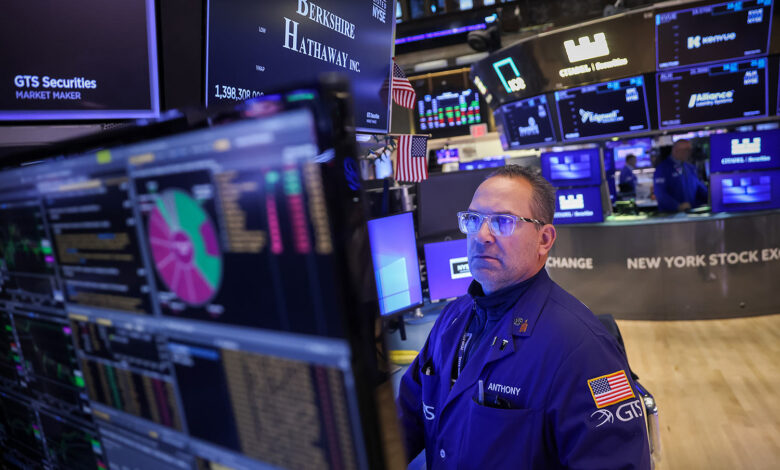
Technology shares suffered a severe downturn on Friday morning, putting the Nasdaq 100 index on course to shed more than $1 trillion in market value when trading opened at 9:30 a.m. Eastern Time in New York. The broad market sell-off was accompanied by a sharp decline in futures tracking the S&P 500, which dropped by more than 1.1% ahead of the opening bell.
The steep declines were spearheaded by heavyweights Amazon and Intel, both of which released quarterly earnings reports during the week that failed to appease analysts and investors. Amazon shares fell 7% after the e-commerce and cloud computing giant revealed that its capital expenditures on artificial intelligence continued at a faster pace than anticipated during the previous quarter, even as growth in its core online retail business decelerated. The latest financial update contrasted sharply with the market’s reaction three months prior, when investors rewarded an earlier upward revision to Amazon’s AI spending budget by driving shares up more than 15%.

Market sentiment has cooled significantly as major corporate customers that pay to use AI models begin tightening their token budgets and questioning the tangible returns on their substantial investments of time and resources. This growing skepticism has prompted some investors to reevaluate the massive capital outlays dedicated to AI infrastructure by major technology firms.
Despite the shifting market mood, Amazon Chief Executive Andy Jassy advised shareholders on Thursday to prepare for even heavier spending. “We still expect 2026 cash [capital expenditures] of approximately $220 billion, the majority for AWS, and expect to spend meaningfully more in 2027,” Jassy stated during an earnings call, noting that Amazon’s spending was already slated to double from 2025 levels.

Intel experienced an even steeper decline, with its stock plunging 26% after management projected that fourth-quarter profits and sales would fall short of expectations. The semiconductor manufacturer’s troubles also dragged down the broader sector, with the Philadelphia semiconductor index sinking 7% in premarket trading and other major chip stocks following suit. A specialized exchange-traded fund tracking computer memory and storage tumbled 6%.
Intel Chief Executive Lip-Bu Tan pointed to significant supply chain hurdles as a primary factor in the company’s lackluster quarterly performance. “I’m disappointed that we were not able to meet strong customer demand in this quarter,” Tan told investors on an earnings call from Taipei, Taiwan, citing manufacturing constraints, supply shortages, an unprecedented memory crunch, and subsequent softness in personal computer demand. Analysts at Citigroup characterized the earnings report as representing “two steps forward, one step back.”

Friday’s losses followed a historic sell-off in shares of Alphabet a day earlier. The Google parent company shed approximately $500 billion in market value in its worst single-day drop ever, marking the second-largest wipeout of market value in financial history. Alphabet shares fell an additional 1% in premarket activity on Friday.
Intel’s recent struggles occur against the backdrop of a sweeping management overhaul aimed at turning around the company. In the midst of that turnaround effort, the federal government acquired a stake in Intel, making it the firm’s single largest shareholder. Even accounting for Friday’s anticipated losses, the value of the government’s stake has appreciated by 280%.

The widespread correction in equities also produced ripple effects in the debt markets, triggering a rally in U.S. Treasuries. Major tech corporations borrowing hundreds of billions of dollars to finance massive AI data center construction have increasingly tapped debt markets, generating competition for capital. Because these technology firms have frequently offered higher rates than the federal government, Treasury yields had climbed notably in recent months. On Friday, however, the benchmark 10-year U.S. Treasury yield—which heavily influences consumer borrowing costs—eased to around 4.89%, falling from just under 5% on Thursday.