As technology companies race to build increasingly powerful artificial intelligence systems, major developers are seeking guidance from an unexpected source to teach chatbots right from wrong: global religious traditions. Executives sounding alarms about the destructive potential of artificial intelligence and debating how to develop morally sound models are increasingly consulting philosophers, theologians, and faith leaders. These industry leaders operate on the premise that religious traditions can help inform AI models in an environment where cultural fears about technology’s societal impact continue to multiply. Because these companies do not pledge allegiance to any single faith, their stated goal is broad engagement—assembling an aggregate of moral ideas intended to inform their models.
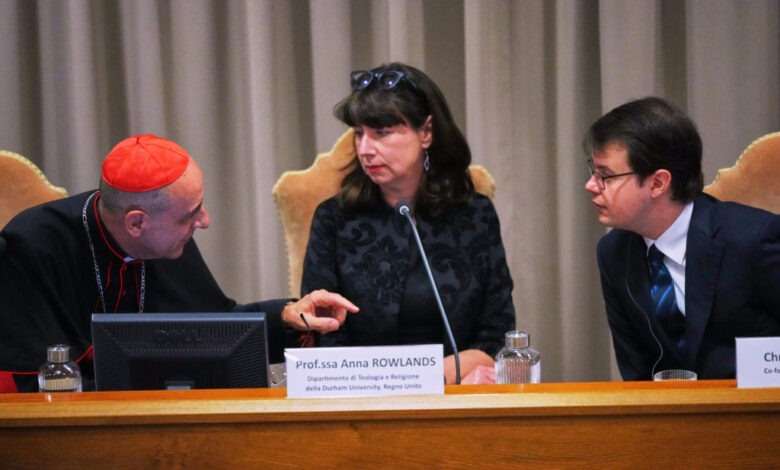
OpenAI CEO Sam Altman expressed last year that a chatbot should reflect a weighted average of humanity’s views. Meanwhile, Anthropic co-founder Chris Olah noted earlier this year during a Vatican presentation of Pope Leo XIV’s encyclical on AI that these are fundamental questions laboratories cannot answer on their own, but rather matters that traditions have carried for millennia. Representatives from Meta, Google, and Amazon have also met with officials at the Vatican, and Microsoft has maintained active religious outreach efforts.
Despite the frequent outreach, scholars of religion and ethics warn that Silicon Valley’s approach fails to account for how different traditions and worldviews frequently contradict one another. Anthropologist Webb Keane of the University of Michigan argues that tech companies risk perpetuating a widespread misunderstanding of religion as a set of extractable rules or principles divorced from practical, ad hoc daily life. Keane cautions that treating religion as a distinct rule book tends to prioritize scriptural, Abrahamic traditions while distorting or overlooking faiths that do not primarily view themselves as systems of ethics.
At the same time, participating scholars describe meaningful engagement from certain developers. Meghan Sullivan, a philosopher of religion leading an initiative on ethics and AI at the University of Notre Dame, participated in an Anthropic meeting earlier this year that brought together Christians from various denominations. Sullivan praised the company’s rigorous internal culture and intellectual curiosity, noting that the sessions were structured into two distinct parts: a plain-language explanation of current AI models followed by feedback and discussions with faith leaders covering complex moral questions, from human souls to educational chatbots for children.
Anthropic stated in a May blog post that it has consulted scholars, clergy, philosophers, and ethicists from more than 15 religious and cross-cultural groups, with plans to broaden that pool. The company emphasized that its work is not aimed at aligning models with any single tradition’s worldview, but rather drawing from religious, secular, and political viewpoints with equal rigor to understand how good character forms.
However, researchers continue to question whether large language models—which function by predicting subsequent words based on massive troves of human writing, including sacred texts—can adequately process theological nuance. Paolo Carozza, a legal expert studying Catholic social thought and a member of the independent Meta Oversight Board, warns that automated aggregation risks stripping living traditions of their defining characteristics. While sophisticated traditions organically interact with external ideas over time, Carozza suggests that artificial intelligence systems tend to homogenize distinct philosophies into an undifferentiated middle that may disproportionately reflect Western religious frameworks.