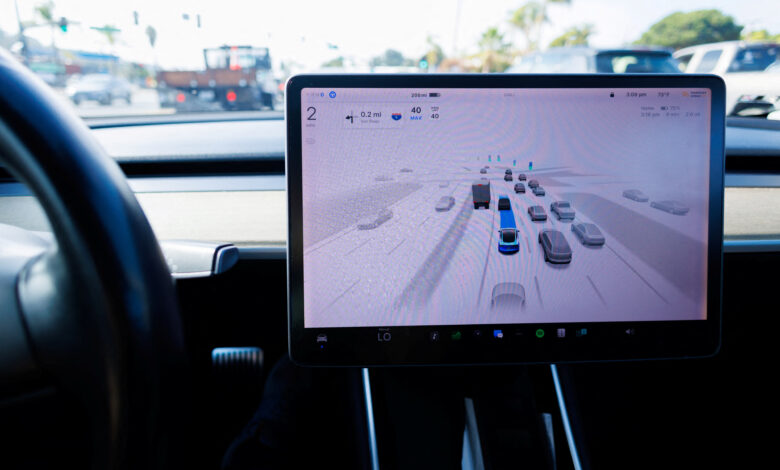
Latvia and Slovakia have emerged as the latest European nations to clear Tesla’s assisted-driving software, delivering a victory for local motorists who campaigned for its introduction as the automaker seeks broader regulatory approval across the continent. Latvia granted its approval on Monday, becoming the 10th European country to authorize the Tesla Assisted Driving software, which follows Slovakia’s clearance earlier in the month.
The regulatory milestones arrive as Tesla pushes to introduce the technology more widely in Europe, where the company is building support ahead of a pivotal vote that could clear the path for a broader bloc-wide rollout. Local enthusiasts have actively lobbied for the software’s deployment, frequently responding to encouragement from Tesla and Chief Executive Elon Musk to urge transport authorities for swift approval.
In Slovakia, the Tesla Owners Slovakia club mobilized its 1,500 registered members to press regulators for action. Club president Kristian Kratochvil noted that the organization reached out to the Slovakian Transport Ministry following initial approvals in the Netherlands and maintained frequent contact to request status updates. Members even staged a coordinated vehicle light display outside the transport ministry building to draw official attention to the automated driving technology.
For individual motorists like 35-year-old Igor Marcek, a financial agent and life coach in Bratislava who purchased a Tesla two years ago, the software represents a major step forward. Marcek expressed enthusiasm for the system, which recently underwent a name change from Full Self-Driving and carries a monthly subscription fee of 99 euros, or approximately $110.92. At some point, Marcek suggested, the vehicle will be capable of independent travel to save time and energy, allowing drivers to attend to other matters during transit.
Practical test drives of the software, however, have exposed notable safety and operational limitations. While a test vehicle equipped with the system navigated heavy highway congestion and traffic merges smoothly, Marcek was forced to intervene manually by slamming on the brakes when the car failed to decelerate for a closed barrier. During a subsequent stop at a Supercharger station, the vehicle also failed to steer itself into an open charging bay, prompting Marcek to take manual control.
Reflecting on the system’s performance, Marcek emphasized that constant driver vigilance remains essential. The technology continues to evolve, he noted, requiring motorists to stay alert and monitor the vehicle’s actions closely at all times.
Broader implementation faces continued regulatory friction across the European Union, where officials in various member states have raised safety apprehensions and questioned whether human drivers can maintain adequate attentiveness while using the software. Meanwhile, Tesla maintains that the assisted-driving technology can reduce collision rates by more than fourfold and save lives, though safety researchers strongly contest those figures.