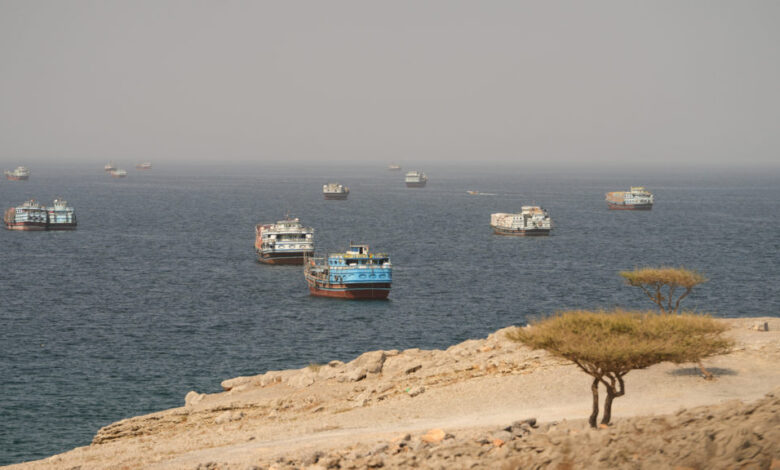
Seven oil tankers were damaged or set ablaze in the Strait of Hormuz overnight, according to Iranian state television, marking a significant escalation in maritime hostilities in the strategic waterway. The incident, which reportedly involved both targeted attacks and naval mines, represents the largest single-day number of vessels damaged in the corridor since the current conflict intensified on February 28, following joint strikes by the United States and Israel against Iran.
The Iranian report, citing the Revolutionary Guard’s navy, indicated that four of the tankers were in the process of transferring oil when they were targeted, subsequently catching fire. An additional three vessels were reportedly immobilized after striking naval mines. While the reports confirmed the damage, specific details regarding the flags of the tankers or the number of casualties were not immediately provided.
In response to the growing danger in the Strait, shipping data and analysis from Lloyd’s List Intelligence suggests that operators willing to risk the voyage are increasingly adopting evasive maneuvers. Tankers are reportedly navigating the waterway under the cover of night, utilizing a protected lane near the coast of Oman with U.S. military support. To avoid detection, these vessels are operating with their mobile phones and location tracking systems switched off. Once through the strait, the oil is transferred to other tankers in the Gulf of Oman for final delivery to customers in Asia.
The disruption has forced a major shift in how regional oil is exported. Amin Nasser, the President and CEO of Saudi Aramco, revealed that the volume of oil bypassing the Strait of Hormuz via the East-West pipeline has more than tripled. The pipeline, originally constructed in the early 1980s, has seen its capacity surge from 2 million to 7 million barrels per day. Nasser noted that the company is also utilizing drones to survey damage from recent attacks by Yemen’s Houthi rebels and to assist in firefighting efforts at oil facilities.
Beyond the maritime corridor, the regional conflict claimed more lives on Wednesday night. The Saudi Arabian Civil Aviation Authority confirmed that the death toll from an attack on King Fahd International Airport has risen to two. The victims were identified as a Saudi citizen and an Indian national residing in the kingdom. Eight others were injured in the strike. Houthi rebels claimed responsibility for the airport attack, while also asserting they had targeted the Saudi Defense Ministry in Riyadh and an Aramco facility in Yanbu. Evidence for the latter two strikes was not provided.
In Yemen, the internationally recognized government’s Defense Ministry issued a stark warning on Thursday, stating that public rallies and mobilization programs organized by Houthi rebels will now be considered legitimate military targets. Officials warned residents in Houthi-controlled areas to avoid these gatherings, alleging that the Iranian-backed group is using such programs to mobilize fighters, including children. The ministry characterized the move as an escalation necessitated by Houthi combat recruitment tactics.
Meanwhile, in the Gaza Strip, at least four people were killed on Thursday during a series of Israeli military strikes. Hospital officials at Shifa, Nasser, and Awda hospitals reported fatalities across Gaza City, Khan Younis, Jabaliya, and the Nuseirat refugee camp. The Israeli military stated that its operations in Gaza City and Khan Younis were targeting Hamas militants, though it did not immediately comment on the reported deaths in Jabaliya or Nuseirat.
Iran also used the day to showcase its military advancements, with state media broadcasting footage of dozens of new military drones in an underground facility. Among the systems unveiled was a new version of the “Arash” drone, which Iranian Army Chief Gen. Amir Hatami claimed now carries a 100 kg warhead—double the payload of previous models. Hatami stated that Iran has reached a “significant level of maturity” in unmanned systems and promised further unveilings in the future.
On the diplomatic front, United Nations Secretary-General António Guterres is scheduled to arrive in Egypt on Friday to discuss mediation efforts for the U.S.-Iran conflict. Guterres praised Egypt’s role in defending Palestinian rights and noted that his agenda includes addressing the ongoing wars in Sudan and Libya, as well as the siege of Taiz and Houthi attacks on Saudi civilian infrastructure, which he described as totally unacceptable.