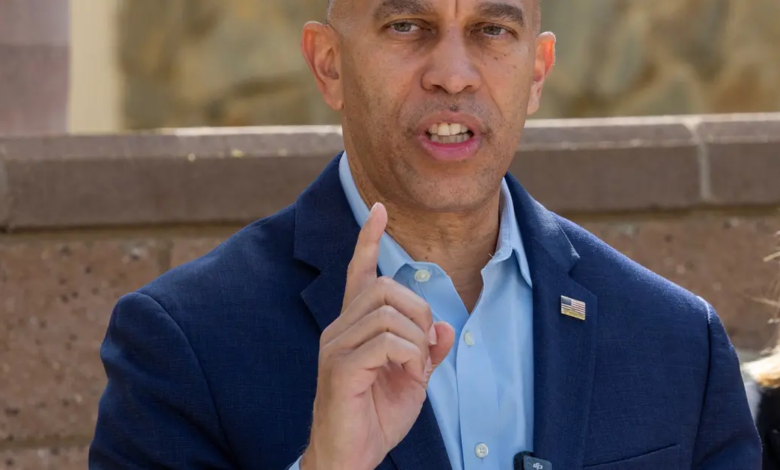
House Minority Leader Hakeem Jeffries is launching a strategic push into Texas this weekend, signaling a growing belief among Democratic leadership that Republican-drawn congressional maps in the Sun Belt may be vulnerable to a demographic and political backfire. The visit comes as the party shifts its focus toward a handful of seats in Texas and Florida that were once considered safe Republican territory or high-probability targets for the GOP.
Central to the Democratic strategy is the assessment that aggressive gerrymandering by Republican legislatures may have spread the party’s voter base too thin across too many districts. This tactical overextension, combined with shifting sentiments among Latino voters and sagging approval ratings for former President Donald Trump, has turned several races into unexpected battlegrounds.
In Texas, Jeffries is scheduled to campaign alongside Johnny Garcia, a candidate running in a district where Republicans had initially anticipated an easy victory. The GOP’s confidence in the seat was high enough that its initial redistricting maneuvers already successfully pressured a long-time Democratic incumbent into retirement. However, recent polling suggests the race has since tightened significantly. Democratic internal data and independent surveys now show candidates in several similar districts either leading or running even with their Republican opponents.
Republicans are responding with a high-profile offensive of their own. Donald Trump is set to visit Florida on Friday before traveling to Corpus Christi, Texas, next week. These stops represent a concerted effort by the GOP to shore up its standing in these two critical states during the final stretch of the campaign cycle. While the Republican party has spent years working to expand its House majority through redistricting, the current environment appears more volatile than early cycle projections suggested.
A primary focus of this volatility is South Texas, where Tejano star Bobby Pulido is vying to flip a majority-Hispanic seat. Although this specific region showed a notable swing toward the former president in 2024, Pulido claims that the local political climate is undergoing another transformation. He described a sense of “buyer’s remorse” among some voters who previously supported Trump, suggesting that the initial shift toward the GOP may not be as permanent as redistricting officials assumed.
The role of Latino voters remains a pivotal factor in both Texas and Florida. While Republicans have made historical gains with this demographic in recent years—particularly in the Rio Grande Valley and South Florida—Democrats are betting that a combination of local candidate appeal and shifting national headwinds will stall that momentum. As the election approaches, the outcome in these overextended districts will likely determine whether the GOP’s redistricting strategy was a masterstroke or a calculation that left their incumbents exposed to an shifting electorate.