Serbia Faces Institutional Limbo as Student List Prepares to Govern Following Election Victory

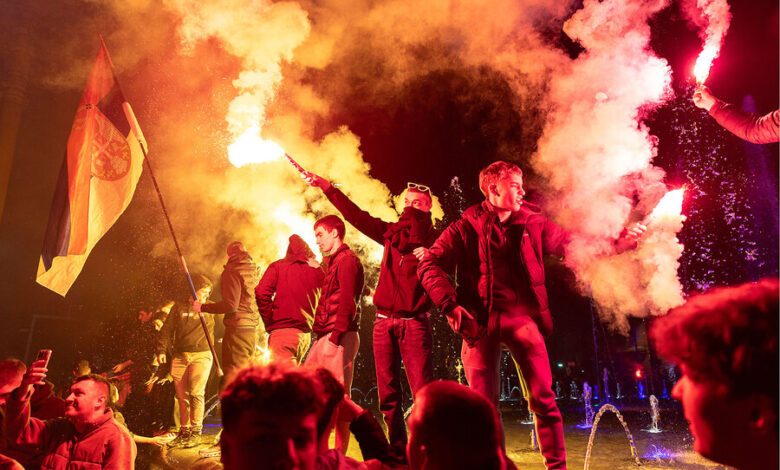
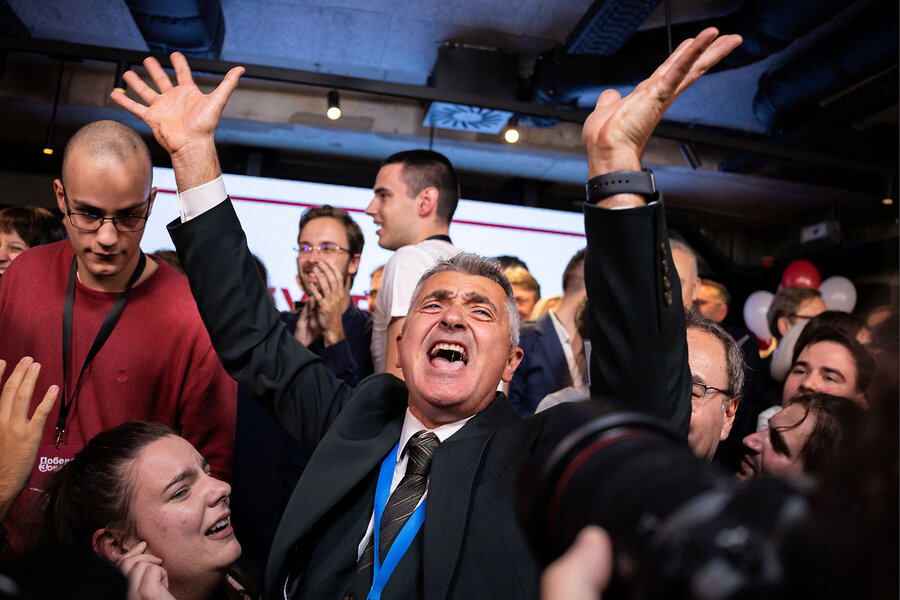
Serbia is experiencing a period of institutional limbo following the Student List’s decisive victory in the Oct. 25 parliamentary elections, where the coalition secured a comfortable majority of approximately 140 seats in the 250-member parliament. Despite celebrations that extended across Belgrade for days, the newly successful movement currently holds no direct administrative power, as official verification of the parliament and a lawful transition of authority will take at least another month.
Governmental control remains under a caretaker mandate held by the outgoing Serbian Progressive Party (SNS) and its leader, Aleksandar Vučić. The outgoing administration continues to oversee state institutions, including the security services, army, prosecutors, police, and the majority of state-influenced media. The office of the president is currently held by the speaker of the recently dissolved parliament, Ana Brnabić, a close associate of Mr. Vučić and former prime minister. Mr. Vučić previously held the presidential post for nine years before resigning in September.
Slobodan Bubnjević, a physicist, science journalist, and incoming member of parliament for the Student List, emphasized that the transition will follow strict legal procedures rather than an irregular interregnum. “A vacuum is felt among the public, but this is about ‘removing the handcuffs’ from institutions, not about anarchy,” Mr. Bubnjević said. He added that institutions and prescribed public duties remain functional while mandate verification is completed.
The incoming majority has outlined its governing agenda in a program titled “The Student Plan,” which focuses on anti-corruption measures, the expansion of education and innovation, and economic reforms. Specific anti-corruption goals include confiscating illegally acquired wealth, establishing a special prosecutorial police force, dismissing police personnel tied to organized crime, vetting public officials, and securing the independence of the judiciary and media.
However, Dušan Spasojević, a professor at the Faculty of Political Sciences at the University of Belgrade, noted that managing public expectations represents an immediate challenge for the incoming leadership. “The desire for change is great, and expectations are even greater,” Professor Spasojević said, pointing out that the SNS may employ active resistance or obstruction to limit the effectiveness of the new majority.
Foreign policy positioning has emerged as a key area of discussion as the Student List prepares for governance. Maintaining Serbia’s traditional diplomatic balance between Russia and the European Union, future representatives have addressed various international outlets. Following the election, one future deputy stated on the Russian channel RT Balkan that Serbia would not impose sanctions on Russia, while another candidate highlighted appreciation for a favorable gas arrangement with Moscow. Simultaneously, Ilija Srdanović, a cardiologist and the top candidate on the Student List who is a contender to lead the government, told media outlets in Croatia and Montenegro that the movement’s core values align with European civilizational values. Dr. Srdanović expressed support for continuing European Union integration and establishing the rule of law, noting that Serbia has remained an EU candidate nation since 2012 despite a stalled integration process over the past five years.