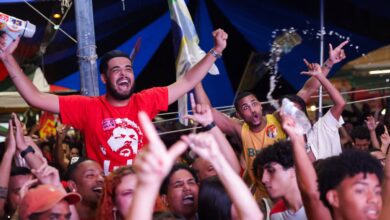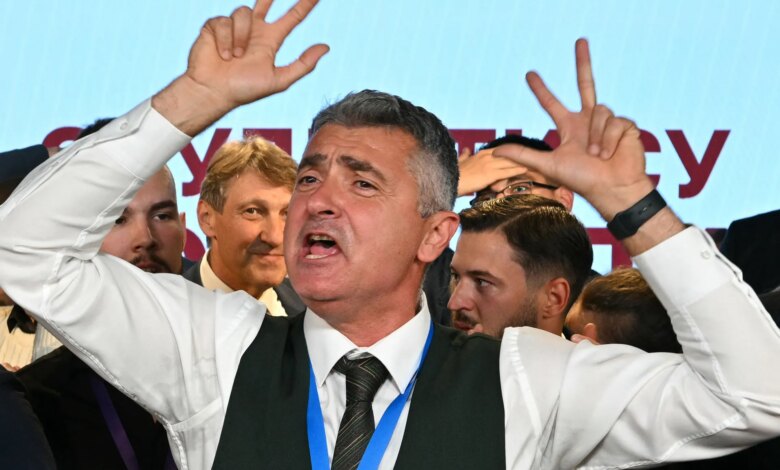
In a seismic shift for Balkan politics, a student-led opposition movement has claimed a landslide victory in Serbia’s snap parliamentary elections, effectively ending the decade-long political dominance of former President Aleksandar Vucic. The Republic Election Commission (RIK) announced on Monday that the “Student List” had secured an absolute majority, a result that follows years of escalating public frustration over government accountability and institutional integrity.
Preliminary data from 8,077 of the country’s 8,392 polling stations show the Student List captured 52.54 percent of the vote. In contrast, the United Serbia list, led by Vucic’s Serbian Progressive Party (SNS), trailed significantly with 39.29 percent. The election saw a record-shattering voter turnout of 68.78 percent, the highest recorded in Serbia in more than 30 years.
The surge in voter participation is largely attributed to the origins of the Student List movement, which transitioned from street activism to a formal political force. The movement was catalyzed by a 2024 tragedy in Novi Sad, where 16 people died following the collapse of a railway station canopy. What began as a demand for accountability for that specific disaster evolved into a broader campaign against alleged state capture, corruption, and organized crime.
With the current figures, the Student List is projected to control 140 seats in the 250-member National Assembly, comfortably surpassing the 126-seat threshold required to govern alone. United Serbia is expected to hold 103 seats. The remaining mandates will be distributed among minority lists, including the Alliance of Vojvodina Hungarians with three seats, the Albanian political bloc with two, and single seats for both the Rasim Ljajc-Ljudski and SDA Sandzak lists.
While United Serbia campaigned with Vucic as its explicit candidate for the premiership, the Student List intentionally avoided naming a single figurehead. The movement sought to emphasize its collective nature, bringing together a diverse coalition of academics, medical professionals, and laborers. However, Ilija Srdanovic, a cardiologist and professor at the University of Novi Sad’s Faculty of Medicine, emerged as the movement’s public face during the campaign. Srdanovic is now widely considered the frontrunner to be the next prime minister, though the movement has yet to finalize its selections for key portfolios such as finance, justice, and internal affairs.
The transition of power comes as Serbia navigates a leadership vacuum in the executive branch. Vucic, who has dominated the nation’s political life since 2014, resigned as president on September 27. The presidency is currently being held on an interim basis by Ana Brnabic, the president of the National Assembly. Under Serbian law, Brnabic is required to call an extraordinary presidential election by December 27, exactly three months after Vucic’s resignation.
The Student List’s electoral platform, unveiled in September, promises a radical departure from the previous administration’s policies. Key priorities include restoring the independence of the judiciary, ensuring media freedom, and aggressively pursuing organized crime. On the international stage, the movement has pledged to de-escalate tensions with neighboring countries that characterized much of Vucic’s tenure.
The timeline for the new government depends on the official certification of the final results. Once the results are finalized, the new National Assembly must be constituted within 30 days. The Student List will then have 90 days to form a government. Given its clear majority, the movement is expected to bypass the protracted coalition negotiations that have historically delayed Serbian government formation.