Serbian voters are casting ballots today in a high-stakes parliamentary election that could signal a major political realignment for the Balkan nation. The vote pits the entrenched power of longtime populist leader Aleksandar Vucic against a burgeoning grassroots movement known as the Student List, which has mounted the most significant challenge to his authority in more than a decade.
The snap elections, called by Vucic in September, follow nearly two years of sustained social unrest and mass demonstrations. The protest movement was largely catalyzed by a 2024 tragedy in the city of Novi Sad, where a train station canopy collapsed, resulting in the deaths of 16 people. That incident ignited widespread public anger, with activists and citizens blaming government corruption and a lack of regulatory oversight for the fatal structural failure.
Vucic, who has served as both prime minister and president during his tenure, took the unusual step of resigning from the presidency in September 2026 to lead the Serbian Progressive Party’s bid to retain control of the legislature. His campaign has focused on his record of modernization, promising voters a future of higher pensions, increased public sector salaries, and expanded subsidies for young couples. He has also pledged further investment in the state healthcare system.
Throughout his time in power, Vucic has navigated a complex geopolitical landscape, maintaining a “multi-vector” foreign policy. He has fostered close ties with China, a primary source of infrastructure investment, and Russia, which remains Serbia’s traditional ally and its principal supplier of natural gas. While Vucic has kept the door open for European Union membership, relations with the bloc have become increasingly strained. EU officials have frequently expressed frustration over a perceived lack of progress in judicial reforms and efforts to bolster the rule of law.
Contrasting with the established political class, the Student List has presented a roster of 250 candidates that includes university professors, actors, and farmers. Led by cardiologist Ilija Srdanovic, the movement has focused its platform almost exclusively on domestic issues, primarily the eradication of state corruption and the improvement of the national schooling system. The group has remained largely silent on international ambitions, focusing instead on the anti-authoritarian sentiment that has grown since the Novi Sad disaster.
Recent polling suggests the race is exceptionally tight, with the outcome far from certain. An Ipsos poll released on Thursday placed Vucic’s Serbian Progressive Party at 47 percent, with the Student List trailing at 40 percent. However, other independent surveys have indicated that the students may have already overtaken the incumbent party in popular support.
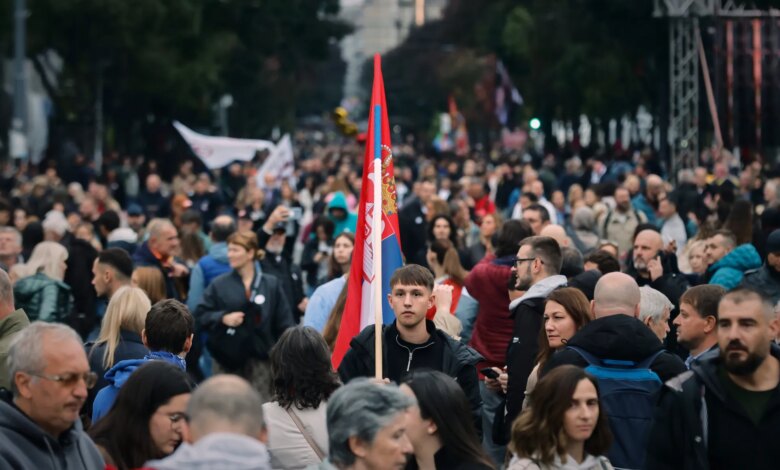
The final days of the campaign were marked by massive displays of public sentiment. On Thursday, an estimated 150,000 supporters of the student movement gathered in central Belgrade for a rally. Human rights organizations have noted a simultaneous increase in state repression, alleging that the government has intensified efforts to monitor and silence critics since the 2024 protests began.
Vucic has repeatedly denied accusations of corruption and authoritarianism, instead framing the opposition as a tool of external powers. He has claimed that the Student List is being funded by foreign agents in neighboring Croatia and Montenegro, a charge the movement has dismissed as a baseless attempt to delegitimize a domestic grassroots cause. For a nation of 6 million people, the results of today’s vote will determine whether Serbia continues its current path under Vucic or moves toward the profound political shift desired by the student-led opposition.