Luiz Inácio Lula da Silva has been declared the victor in Brazil’s presidential election, securing a historic fourth term in a result that is expected to reshape the political landscape of South America. The 80-year-old leader of the Workers’ Party defeated Senator Flavio Bolsonaro, the eldest son of former President Jair Bolsonaro, in a high-stakes runoff that tested the resilience of the nation’s democratic institutions.
The victory marks yet another extraordinary chapter in the career of a man who has dominated Brazilian politics for decades. Lula, a former metalworker and union leader, has now successfully navigated a path from the presidency to a prison cell and back to the highest office in the land. His win follows a period of intense polarization and a campaign that pitted a familiar social-democratic path against a burgeoning far-right movement led by the Bolsonaro family.
Senator Flavio Bolsonaro had entered the runoff with significant momentum after finishing first in the election’s initial round of voting. His campaign sought to capitalize on his father’s political legacy and the growth of right-wing sentiment across the country. However, pollsters noted that a higher-than-expected voter turnout eventually powered Lula to the finish line, as citizens weighed the uncertainty of the Bolsonaro movement against the established track record of the former president.
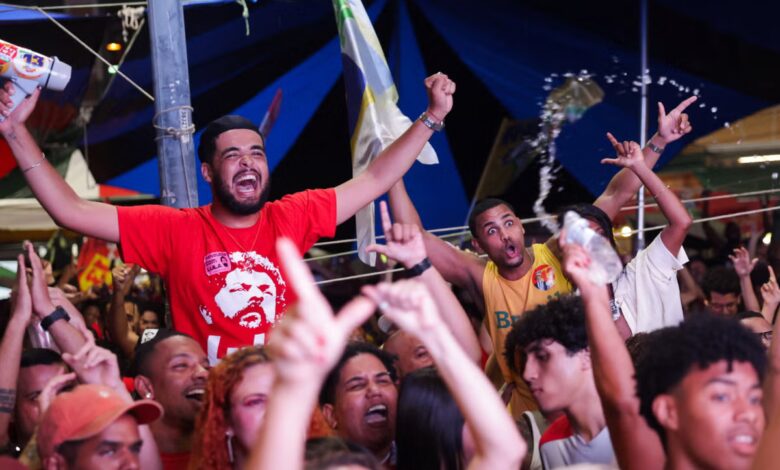
Leonardo Barreto, co-founder of the consultancy Think Policy, observed that the election became a referendum on stability. He noted that voters were ultimately forced to choose between “change, with some apprehension,” and a “known path” that offered the guarantee of specific social rights. This sentiment was echoed by Lula’s supporters during the vote count in Sao Paulo. Erika Hilton, a leftist federal lawmaker, described the president-elect as a “statesman” and a “giant” as the results became clear.
Lula’s path to this fourth term was far from certain. Throughout the campaign, he faced persistent criticism regarding past corruption scandals involving the Workers’ Party. He also struggled to connect with a changing workforce; critics argued the aging leader appeared out of touch with an increasingly digital, app-based economy and the growing ranks of informal workers who operate outside traditional labor unions.
To counter these concerns, Lula leaned heavily on his previous performance in office. He highlighted a legacy of reducing poverty and inequality and noted that during his most recent (third) term, Brazil achieved record lows in unemployment, illiteracy, and deforestation. He framed the election as a choice for national sovereignty, warning that a Bolsonaro victory would lead to the erosion of welfare spending and a rollback of social advances.
Lula also framed the contest in international terms, alleging that the State Department under former U.S. President Donald Trump had supported a campaign to return the Bolsonaro family to power. His victory is seen as a significant setback for the bloc of right-wing Latin American governments that have aligned closely with a specific Washington-led agenda on migration and security.
Celso Amorim, a former foreign minister under Lula, emphasized the regional importance of the result. He described the president-elect as a “point of balance” for Latin America, suggesting that Brazil will now play a more central role in stabilizing regional politics.
The win completes a personal and legal redemption for Lula, who served time in jail from 2018 to 2019 on corruption charges. Those convictions were later overturned, a legal shift that allowed him to challenge and defeat Jair Bolsonaro in 2022 before securing this latest term against the former president’s son. As Lula prepares to take office, he inherits a nation still grappling with the economic shifts and social divisions that defined this narrow and hard-fought race.