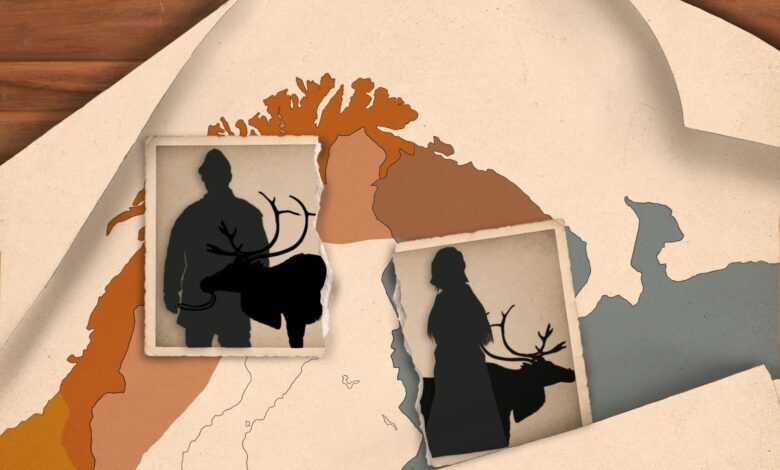
Along the shores of the Neiden Fjord in Norway’s northernmost county of Finnmark, the landscape tells a story of deep ancestral roots divided by geopolitical lines. Here, where the Neiden River splits around the craggy island of Skogerøya, king crabs lurk beneath the surface, and Sea Sámi families have fished for generations. Their homeland, Sápmi, stretches across northern Norway, Sweden, Finland, and Russia’s heavily militarized Kola Peninsula. Two centuries after Norway and Russia fixed their border in 1826, this remote Arctic territory has evolved into a multicultural enclave of Sámi, Norwegians, Finns, Ukrainians, Russians, and international visitors. Yet, as Russia’s war in Ukraine reshapes Europe’s northern flank, the flexible cross-border lifestyle that once sustained these communities is fracturing under the weight of security walls and bureaucratic hurdles.
For generations, residents enjoyed visa-free travel within 30 kilometers (18.5 miles) of the frontier. Today, those routine visits for shopping and socializing have ground to a halt. Nils Boine, a resident with Sea Sámi heritage who uses a pseudonym to protect his identity, notes that friendships and cross-border ties have been put on indefinite hold. Residents fear crossing due to safety concerns and political tension, heightened by the reported arrest of a local Kirkenes businessman in Russia. Meanwhile, Russian tourist numbers have plummeted from 250,000 in 2019 to 52,000 last year, leaving regional businesses and shops struggling to stay afloat. Even casual hiking carries risks; the border is marked primarily by posts and forest clearings, where a distracted walker can easily make a costly mistake. In June 2026, three Swedish tourists were reportedly fined 8,000 Norwegian kroner each—roughly $830—for throwing stones across the frontier.

Technology, too, has become an unreliable companion in the hills. Sámi reindeer herders have long used GPS tracking devices to monitor livestock across the vast tundra, but widespread Russian GPS jamming and spoofing in the borderlands have rendered digital trackers erratic. Tour guide Henrik Hoffmann, who co-founded Kirkenes Tours, notes that navigation systems frequently misplace users hundreds of kilometers away, forcing herders to revert to local GSM phone networks and satellite communication. At the same time, wildlife populations are shifting. Brown bear numbers are rising, leading to attacks on livestock and horses, while predators and harsh winter snowdrifts occasionally allow reindeer to breach traditional wooden fencing and wander into Russian territory. To curb these crossings, Norway has stepped up repairs, backed by European Union funding and a growing defensive footprint that includes the developing Finnmark Brigade.
Beyond herding and trade, the geopolitical squeeze is choking cultural preservation, particularly the practice of duodji—traditional Sámi handicrafts fashioned from birch burl and reindeer antlers. Håkon Mudenia, political adviser to the Sámi Parliamentary Council, warns that customs barriers and trade restrictions directly threaten the material foundation of Indigenous culture. The division also imperils linguistic survival. Centuries of historical assimilation policies, compounded by the 1826 border split, decimated local dialects, leaving fewer than 1,000 Skolt Sámi speakers remaining across Norway, Finland, and Russia. While the Sámi Parliament has designated 2026 a Skolt Sámi Year of Culture and pushed for official language recognition in Norway, Mudenia argues that state security measures must not violate Indigenous rights or international law under the United Nations Declaration on the Rights of Indigenous Peoples.

Murius Meisfjord Jøsevold, Norway’s state secretary at the Ministry of Local Government and Regional Development, acknowledges that sanctions and defense activities create constraints, affirming that the government is committed to consulting Sámi representatives as military operations expand in the North. Yet, despite the hardening border infrastructure, daily resilience persists in the Varanger Peninsula. Communities continue to share public recreational shelters tucked into the rocky hills, and local life in Kirkenes moves forward with remarkable multicultural cohesion. As the region marks the bicentennial of its frontier under the thematic banner that “the border crossed us,” Sámi communities remain determined to protect an indigenous heritage that predates both modern nation-states and the conflicts dividing them.