Israel’s parliament remains deadlocked after a high-turnout election that failed to deliver a 61-seat majority to either Prime Minister Benjamin Netanyahu’s coalition or the opposing Zionist alliance. Netanyahu’s camp secured 53 seats, outpacing the main opposition block by five, while Arab parties achieved a record 19 seats but were left on the sidelines of coalition talks. The outcome underscored a political landscape deeply entrenched in domestic disputes rather than external conflicts, despite the profound regional and humanitarian fallout from ongoing military campaigns.
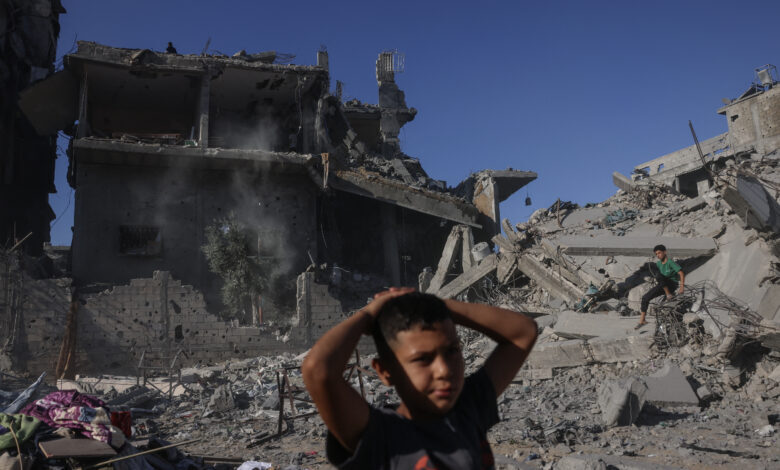
Roughly 2.38 million citizens voted for Netanyahu’s Likud-led coalition, while approximately 2.21 million supported the opposition. Throughout the campaign, minimal attention was directed toward the humanitarian catastrophe in Gaza, where military actions have killed more than 74,500 people, or toward surging violence in the occupied West Bank. Just prior to the vote, a United Nations commission of inquiry reported that Israel had committed crimes against humanity in the West Bank, including extermination, torture, and rape. Analysts noted that Gaza and the West Bank were absent from the ballot because they represented areas of broad agreement across both major political alliances.

Instead, the election hinged on internal matters, including judicial powers, military exemptions for the ultra-Orthodox minority, and government accountability for intelligence failures surrounding the October 7, 2003, attacks. Leading Israeli sociologist Yehouda Shenhav-Shahrabani observed that these issues were framed for the public in much the same way politicians enacted them. He suggested that many Israelis are aware of the devastation in Gaza through selective media exposure, but separate that awareness from its moral implications.
“Ordinary people, who love their families, care for their friends, and consider themselves decent human beings, can participate in or acquiesce to a political order that produces immense suffering for others,” Shenhav-Shahrabani said, pointing to a powerful mechanism of denial regarding the meaning rather than the basic facts of the conflict.

For Netanyahu’s core supporters, loyalty to the prime minister transcends policy debates. Israeli analyst Ahron Bregman, a senior teaching fellow at King’s College London, described the prime minister’s base as operating with intense tribal loyalty, where supporters view the left as a primary adversary and remain committed regardless of ongoing corruption trials dating back to 2019 or the polarizing judicial reforms introduced in 2022.
Roi Zur, an expert on voter behavior at Essex University, explained that turnout among Netanyahu’s base was heavily driven by the belief that any alternative coalition would be weaker on security. Netanyahu successfully cultivated a narrative portraying himself as the sole leader capable of navigating the nation through wartime conditions, transforming security and occupation into the fundamental prism through which voters interpret democracy and citizenship.
Shenhav-Shahrabani cautioned that replacing Netanyahu, while significant, would not resolve the underlying systemic issues, as decades of conflict have deeply shaped the nation’s political identity.