Clashes erupted between security forces and masked groups in Paris, Marseille, and several other European cities on Saturday as tens of thousands of citizens marched in a third wave of protests over the cost of living and declining public services.
While interior minister Laurent Nuñez reported that roughly 150 planned demonstrations nationwide passed off peacefully, police encountered an extraordinary level of violence from rioters as evening fell. Nuñez stated that one riot police officer was struck by a Molotov cocktail in Paris, describing the attack as attempted murder, and confirmed that 70,000 police and gendarmes had been deployed across the country alongside elite units.
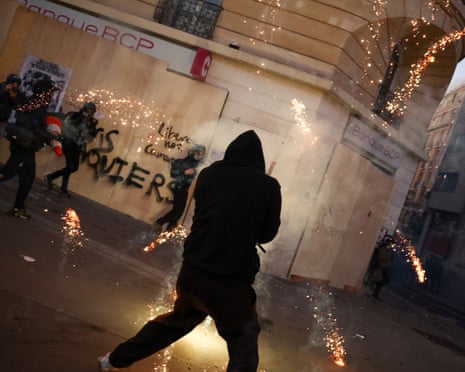
Nationwide turnout dipped to approximately 320,000 participants, down from an estimated 410,000 the previous weekend. In Paris, about 70,000 demonstrators marched along southeastern boulevards, avoiding the city centre. As dusk approached, police in multiple cities deployed teargas, stun grenades, and baton charges to disperse crowds that had been joined by masked agitators.
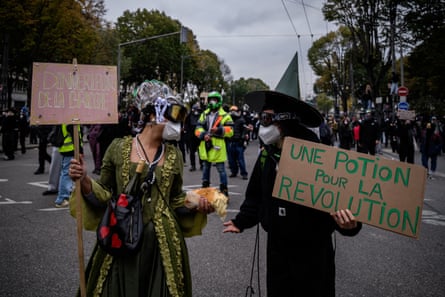
The interior ministry reported 565 arrests nationwide by late Saturday, with four police officers and one gendarme injured in Paris alone. Demonstrators in the French capital had set off peacefully from Porte de Bagnolet carrying placards reading “No need for teargas to make our future look bleak” and “Disguised as an angry citizen for Halloween,” with some marchers wearing holiday fancy dress.
However, violence flared around the destination point at Porte de Charenton. Dozens of individuals dressed in black used hammers to pry up paving stones to hurl at police, while at least one incendiary device was thrown at security forces. The Paris police prefecture noted that a hardcore of several hundred rioters attacked officers, prompting tactical manoeuvres to restore public order.
Similar disturbances occurred in other French cities. In Lyon, protesters threw projectiles at police, leading to teargas deployment, while authorities in Toulouse used water cannon against an unauthorized protest drawing several thousand mostly young demonstrators. The coalitions driving the protests combined school students seeking better educational conditions, labor unions, and gilets jaunes activists united against widening inequalities and President Emmanuel Macron’s administration.
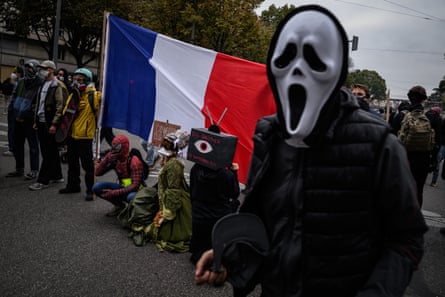
“The French economy is doing badly no matter what happens, because today we’re being run by a group of incompetents who juggle billions while families are struggling with a few cents,” said Jérôme Rodrigues, a participant on the Paris march. Another demonstrator in Nantes, Camille Guérin, added: “We say no to the cost of living, no to the far right, yes to high school students’ demands, yes to giving citizens a voice.”
Student groups announced plans for further high school and university blockades on Tuesday and Thursday, followed by a joint mobilization with trade unions on November 5. Saturday’s unrest follows widespread street violence and looting on October 17 during the initial wave of mass demonstrations.
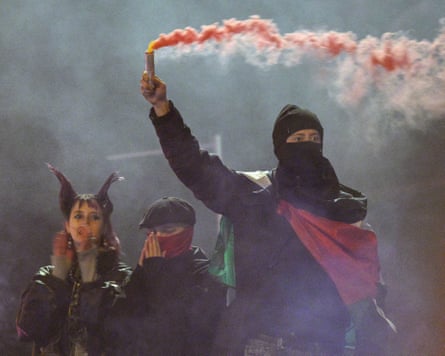
Unrest also spread to Germany, where youth-led protests organized under the banner “Gen Z regelt!” drew thousands of police officers. In Frankfurt, Germany’s financial hub, at least two stores were looted and several others damaged as protests turned violent, halting a march where fireworks were detonated. Police deployed water cannon in Cologne after officers were targeted with fireworks, while demonstrators threw bottles and eggs in Berlin and set barricades ablaze in Hamburg.
Additional anti-government demonstrations occurred in Tirana, Albania, where protesters outside the education ministry demanded the resignation of Prime Minister Edi Rama. The demonstration began peacefully before masked youths hurled paving stones and firebombs at police and ignited rubbish bins. Security forces remained on high alert in Barcelona and Italian cities following previous rounds of unrest.